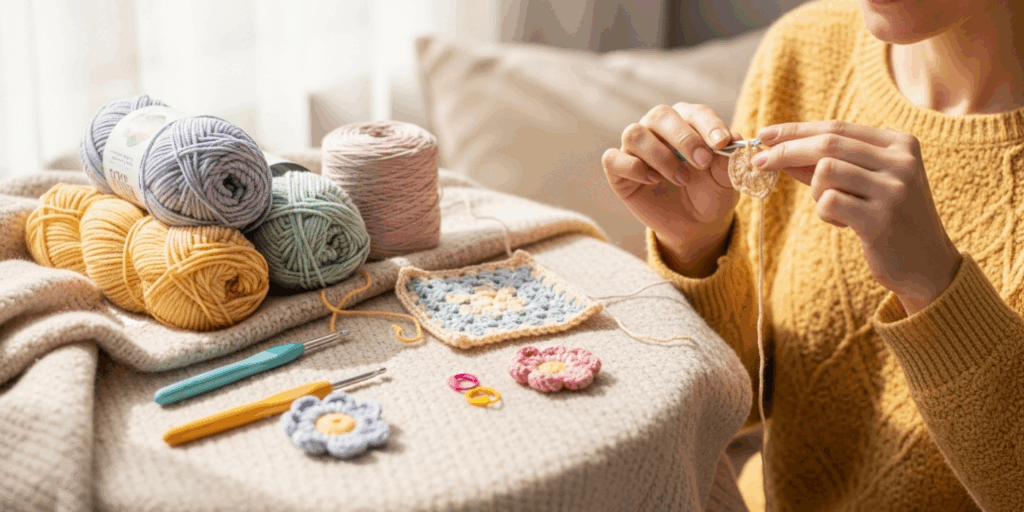
Imagine this: it’s a quiet Saturday afternoon. The sun is streaming through the window, your favorite tea is steaming beside you, and for the first time in your life, you’re holding a crochet hook and a soft, colorful ball of yarn. No pressure. No expectations. Just you, the rhythm of the hook, and the slow, satisfying transformation of thread into something beautiful—something yours.
If you’ve ever felt intimidated by crochet—thinking it’s too hard, too time-consuming, or just for “crafty people”—this article is for you. The truth? You don’t need years of experience to create something meaningful. In fact, some of the most rewarding, cozy, and practical crochet pieces are the simplest ones—and they can be completed in just a few days, even if you’ve never held a hook before.
In this guide, we’ll walk through five beginner-friendly crochet projects that are perfect for your first week of crafting. Each one is designed to build your confidence, teach you essential stitches, and leave you with something you can actually use—whether it’s a cozy coasters set for your coffee table or a cute phone holder that keeps your device within reach. These aren’t just patterns. They’re tiny victories. And they’re all achievable with just a hook, some yarn, and a little patience.
By the end of this week, you won’t just have made something—you’ll have discovered a new way to slow down, breathe, and create with your hands. Let’s get started.
1. The Coaster Set: Your First Tiny Triumph
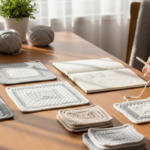
Let’s begin with something small, practical, and immediately satisfying: crochet coasters.
Why start here? Because coasters are tiny—usually just 4 to 5 inches across—and they’re made with simple stitches you can master in under an hour. You don’t need to memorize complex patterns. Most coaster designs use just the chain stitch and the single crochet stitch—the two absolute fundamentals of crochet.
Here’s the magic: each coaster takes about 15–20 minutes. Make four, and you’ve got a full set. Make eight, and you’ve got a thoughtful handmade gift for a friend. And because they’re small, you can finish them in a single afternoon—even if you’re juggling work, family, or a busy schedule.
Plus, coasters are forgiving. If you make a mistake? No big deal. Just unravel it (called “frogging” in crochet lingo—yes, that’s a real term!) and start again. No one will know. And honestly? That’s part of the beauty. You’re learning by doing, not by perfection.
Pro tip: Use cotton yarn for coasters. It’s absorbent, durable, and washable—perfect for catching spills. Try a fun color combo: navy and cream, mustard and sage, or even a rainbow stripe. Your kitchen will thank you.
And here’s the best part: after you finish your first coaster, you’ll feel that little spark of pride. I made this. That feeling? It’s addictive. And it’s the reason so many people keep crocheting long after their first project.
2. The Basic Beanie: Warmth You Can Wear in a Weekend
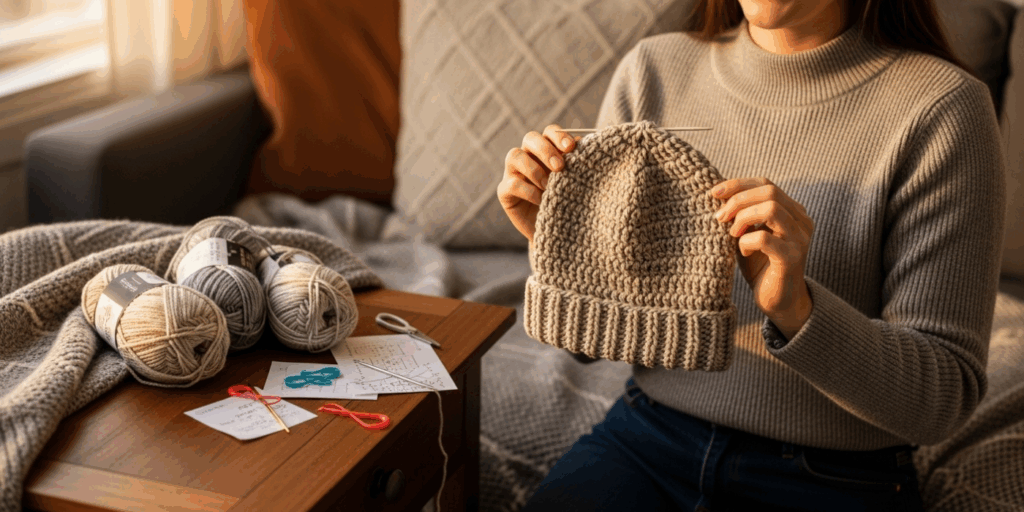
Once you’ve got the hang of single crochet and chaining, it’s time to level up—slightly—with a simple beanie.
Yes, a hat. And yes, you can make one in just 2–3 days.
I know what you’re thinking: “A hat? That sounds complicated.” But here’s the secret: beginner beanies are worked in the round using only single crochet (or half-double crochet if you want it a little looser). No shaping, no complex decreases—just a circle that grows taller until it fits your head.
You start with a magic ring (a fancy name for a small loop you crochet into), then work rounds of single crochet in a spiral. After about 6–8 rounds, you switch to working in rows, increasing just enough to form the crown. Then you keep going until it’s long enough to cover your ears. Done.
It’s like building a tiny, fluffy cylinder that turns into a hat. And because you’re working in rounds, you don’t have to sew anything together—no sewing machine, no needles. Just hook, yarn, repeat.
Why this matters: This project teaches you how to read your stitches, recognize when to increase, and understand gauge (how tight or loose your stitches are). These are the building blocks of every future project.
Plus, there’s something deeply personal about wearing something you made. On a chilly morning, pulling on a handmade beanie that keeps your ears warm? That’s not just fashion—it’s self-care. And it’s something you can do even if you only have 20 minutes between Zoom calls.
Quick tip: Use bulky or super bulky yarn to finish faster. A size J (6mm) hook works wonders. And if you’re unsure about sizing, measure a hat you already own—it’s your perfect template.
3. The Dishcloth: Function Meets Fiber Art
Let’s talk about something you probably never thought of crocheting: a dishcloth.
Yes, really.
Dishcloths are the unsung heroes of beginner crochet. They’re practical, quick, and made with cotton yarn that gets softer with every wash. And they’re often made with a simple granny square pattern or a textured stitch like the “basketweave” or “shell stitch”—which sounds fancy but is actually just a repetition of chains and double crochets.
Here’s why this project is a game-changer: it teaches you how to switch between stitch types without getting lost. You’ll learn to count stitches, maintain even tension, and follow a basic repeat pattern—all while making something you’ll use every single day.
Imagine this: you wash your dishes with a bright, handmade cloth you crocheted yourself. It’s more absorbent than a sponge, eco-friendly, and far more beautiful than anything you’d buy at the store. Plus, when it starts to wear out? You can make another one. And another. And another.
Bonus: Dishcloths make fantastic gifts. Tie one with a ribbon and a bar of handmade soap, and you’ve got a thoughtful, useful present for a neighbor, teacher, or new homeowner.
And here’s a little secret: many experienced crocheters still make dishcloths. Not because they need them—but because they’re meditative. The rhythm of the stitches, the feel of the cotton, the quiet repetition—it’s like yoga for your hands.
Start with a 7-inch square. Use a size H (5mm) hook and worsted weight cotton yarn. Follow a free pattern online (I’ll link a few in the notes below). In under 3 hours, you’ll have a piece of functional art.
4. The Phone Holder: Craft Meets Modern Life
Here’s a project that feels like it was made for 2025: a crocheted phone holder.
Think about it—how many times have you set your phone down on the couch, only to lose it under the cushion? Or spent 10 minutes digging through your bag to find it? A simple phone holder, draped over your arm or clipped to your bag, keeps your device right where you need it.
This project is perfect for your second or third day of crocheting. It uses a combination of single crochet and chain stitches to form a pouch with a strap. Some designs even include a little pocket for your keys or credit card.
The best part? You can customize it. Make it in your favorite color. Add a tassel. Use recycled yarn from an old sweater. Sew on a button for closure. The possibilities are endless—and it all comes from one simple pattern.
This project teaches you how to work in rows (not rounds), how to sew a seam (just with a yarn needle and a few stitches), and how to add functional details like straps or pockets. It’s your first step into designing, not just following.
And let’s be real: in a world where everything’s digital, holding something handmade in your hands feels grounding. It reminds you that you can still create, fix, and make things with your own two hands—even if you’re just starting out.
Pro tip: Use a slightly smaller hook (like size G or F) to keep the fabric tight enough to hold your phone securely. And if you’re worried about slipping, add a little piece of non-slip grip tape inside the bottom.
You’ll be amazed how proud you feel walking around with your handmade phone holder. People will ask, “Did you make that?” And you’ll smile and say, “Yep. Just last week.”
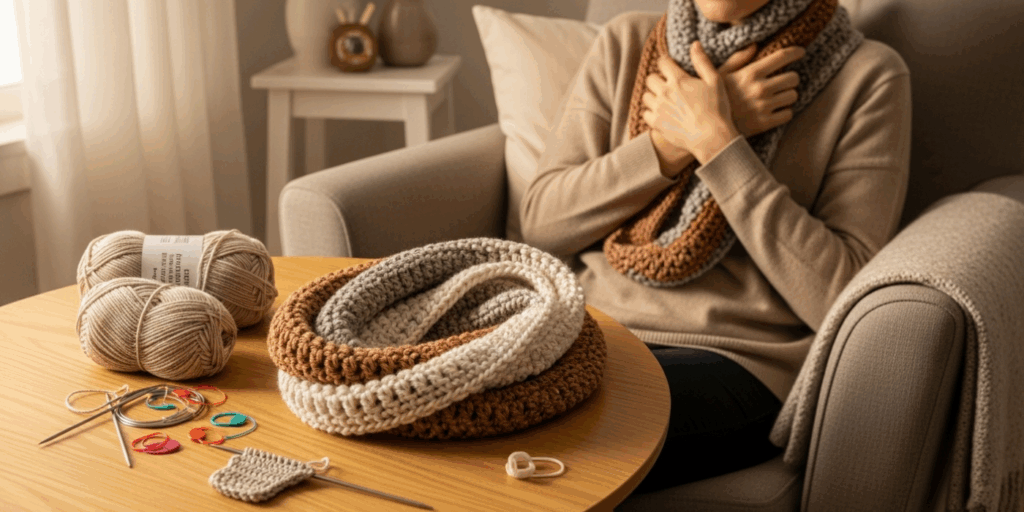
5. The Infinity Scarf: A Hug You Can Wear
Now, let’s dream big—for just a moment.
By day five or six, you’ve mastered the basics. You’ve made coasters, a hat, a dishcloth, and a phone holder. You’re starting to recognize stitch patterns. You’re no longer afraid of the yarn tangles. And now? It’s time for your first statement piece: the infinity scarf.
This isn’t your grandma’s bulky wool scarf. This is a lightweight, cozy, looped scarf made with just one long piece of yarn and a few simple stitches. You’ll work in rows, then join the ends to form a circle. That’s it.
The magic of the infinity scarf? It’s forgiving. You can use any weight of yarn—bulky for winter warmth, or sport weight for spring. You can make it as long or as short as you like. And because it’s a continuous loop, you don’t need to weave in a million ends.
This project teaches you about yarn management (how to handle a big skein without tangling), edge control (keeping your sides straight), and pattern repetition—all while creating something that feels luxurious and professional.
And here’s the emotional payoff: when you wear it, you’re not just wearing fabric. You’re wearing your progress. You’re wearing the quiet hours you spent with your hands busy and your mind calm. You’re wearing the proof that you didn’t give up.
I once made an infinity scarf in three days while watching my favorite Netflix show. I wore it every day for weeks. My sister asked where I bought it. When I said, “I made it,” she looked at me like I’d grown wings.
You don’t need to be an expert to make something beautiful.
You just need to start.
Why This Week Matters More Than You Think
Let’s pause for a moment.
Crochet isn’t just about making things. It’s about making time for yourself.
In a world that’s always pushing us to do more, faster, better—crochet is the quiet rebellion. It’s a slow, tactile, mindful practice that brings you back to your body. To your breath. To the present.
These five projects? They’re not just patterns. They’re milestones.
- The coaster? Your first stitch.
- The beanie? Your first shape.
- The dishcloth? Your first pattern repeat.
- The phone holder? Your first functional design.
- The scarf? Your first masterpiece.
Each one builds confidence. Each one proves you can learn something new—even if you’ve never done it before.
And here’s the truth: you don’t need to be “crafty.” You don’t need a Pinterest-perfect studio. You don’t even need to know the names of all the stitches.
All you need is a hook, some yarn, and the willingness to try.
Your Turn: Start Today
So here’s what I want you to do.
Right now, go grab a hook and a ball of yarn. If you don’t have any, head to your local craft store—or even Walmart or Target. A $5 skein of acrylic yarn and a size H hook will get you started.
Pick one project from above. Not all five. Just one.
Set a timer for 20 minutes. Sit down. Make your first chain. Then your first single crochet. Don’t worry if it’s messy. Don’t worry if it’s uneven. Just keep going.
By the end of this week, you’ll have something real in your hands. Something you made. Something no one else has.
And that’s powerful.
If you’ve made it this far, you’re already on your way. You’re not just learning to crochet—you’re learning to believe in yourself.
So go ahead. Make that coaster. Slip on that beanie. Wrap yourself in your scarf.
You’ve got this.
And I’d love to hear about it.
What’s the first project you’re going to make this week? Drop a comment below—I’ll reply to every one.
And if you know someone who’s been wanting to try crochet but doesn’t know where to start? Share this with them. Sometimes, the best gift you can give is the gift of possibility.
Luiza Santos is a passionate crochet and knitting enthusiast who finds joy in transforming simple yarn into meaningful, handmade creations. With a deep love for texture, color, and craftsmanship, she believes every stitch carries a story. Luiza brings warmth, creativity, and years of hands-on experience to everything she makes, inspiring others to discover the beauty of fiber arts.