There’s something almost magical about lace crochet—the way thin threads dance in the light, forming patterns that feel like frozen whispers of wind. It’s not just fabric; it’s art you can wear, wrap, or hang. Whether you’ve just picked up a hook for the first time or you’ve been crocheting for decades, lace crochet offers a gentle, meditative escape into delicacy and grace. In a world that often feels heavy—fast-paced, loud, cluttered—lace crochet invites us to slow down, breathe, and create beauty from nothing more than thread and patience.
In this article, we’ll explore the quiet art of making delicate, airy fabrics through lace crochet. You’ll discover why this technique is more than just pretty—it’s therapeutic, sustainable, and surprisingly practical for everyday life. We’ll walk through beginner-friendly patterns, real-life uses for lace fabrics (beyond just doilies!), how to choose the right yarn and hook, and even how to turn your creations into meaningful gifts or small income streams. By the end, you’ll see lace crochet not as a niche hobby, but as a gentle, accessible way to bring lightness into your world.
Why Lace Crochet Feels Like Breathing
Imagine holding a piece of lace so fine you can see through it—not because it’s thin, but because it’s open. That’s the soul of lace crochet: it’s built on spaces as much as stitches. Unlike dense, solid fabrics, lace relies on gaps, loops, and clusters to create texture and movement. It’s like embroidery without the fabric underneath—just thread, air, and intention.
This openness is what makes lace crochet so special. It doesn’t just look light—it feels light. A lace shawl drapes like a sigh. A lace-trimmed pillowcase lets the breeze slip through on a warm summer night. Even a lace-edged napkin feels more elegant, not because it’s expensive, but because it carries quiet intention.
And here’s the surprising part: lace crochet is often easier than it looks. Many patterns repeat the same few stitches—chains, double crochets, clusters, and shell stitches—over and over. The magic isn’t in complexity; it’s in rhythm. Once you find your groove, it becomes almost meditative. Studies show that repetitive, hand-based crafts like crochet can lower cortisol levels and reduce anxiety. Lace crochet? It’s like yoga for your fingers.
Plus, it’s incredibly sustainable. You don’t need yards of fabric or expensive tools. Just a small ball of cotton thread, a steel hook, and an hour or two. Many lace pieces use less than 100 yards of yarn. That’s less than a single skein of worsted-weight wool. You’re not just creating something beautiful—you’re crafting mindfully.
Beginner-Friendly Lace Patterns That Feel Like Magic
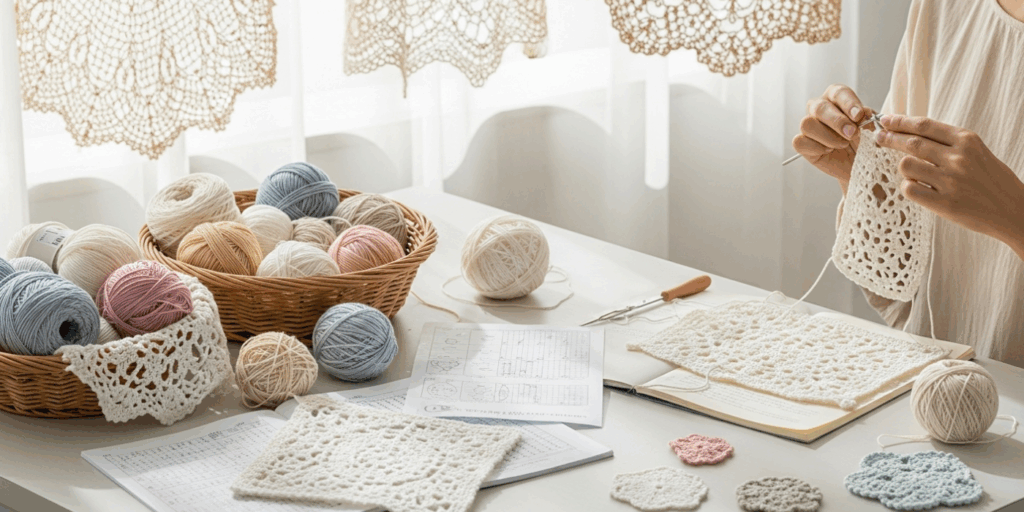
If you’ve ever looked at a vintage lace doily and thought, “I could never make that,” let me tell you: you absolutely can. The secret? Start small. Start simple.
One of the best patterns for beginners is the filet crochet lace. It uses only chain stitches and double crochets, arranged in a grid to form open and closed squares. Think of it like pixel art—but with thread. You can make delicate coasters, a tiny table runner, or even a simple bookmark. No fancy stitches. Just consistency.
Another favorite is the shell stitch lace. It’s made by grouping several double crochets together into a “shell,” then spacing them with chains. The result? A soft, scalloped edge that looks intricate but is built from just two basic moves. Try it on a scarf border—it transforms a plain piece into something that looks like it came from a boutique in Paris.
For those ready to stretch a little, try the pineapple motif. Yes, it sounds fancy, but it’s just a series of chains and clusters that form a flower-like shape. Once you master one pineapple, you can connect them into a blanket, a bag trim, or even a headband. Many modern designers are using pineapple lace in bridal veils and summer dresses—proof that this isn’t just “grandma’s craft.”
Here’s a pro tip: use cotton thread size 10 or 20 for lace. It’s strong enough to hold its shape but fine enough to create that airy look. Pair it with a 1.5mm or 1.75mm steel hook. Don’t be afraid to go smaller than you think—tighter stitches often create cleaner lace.
And don’t worry about perfection. Lace crochet thrives on imperfection. Slight unevenness? That’s character. A tiny gap where you lost count? That’s your signature. The beauty isn’t in machine-like precision—it’s in the human hand behind it.
Real-Life Uses for Lace Crochet (Beyond the Doily)
Let’s be honest: lace crochet used to be stuck in the “doily drawer.” But today, it’s having a renaissance—and for good reason.
Think about this: a lace-trimmed nightgown made from soft cotton thread feels like a cloud against your skin. Or a lace hair scrunchie that doesn’t snag your strands? Perfect for yoga mornings or lazy Sundays. Even phone straps made from lace add a touch of elegance to your everyday tech.
Lace isn’t just for clothing. Try lampshades. A simple lace panel wrapped around a wire frame casts the most romantic, dappled light. Or wall hangings—a small square of lace crochet hung with wooden beads becomes instant boho art. I once saw a woman hang a lace-edged curtain in her tiny apartment window. When the sun hit it just right, the whole room glowed like stained glass.
And here’s something practical: lace edging on towels. Yes, really. A narrow border of lace on a bath towel or hand towel adds texture and charm without adding bulk. It’s breathable, dries quickly, and feels luxurious—without the price tag of designer linens.
Even gift wrapping can get a lace upgrade. Tie a small lace square around a jar of honey or a candle with a ribbon. It turns a simple gift into something that feels handcrafted and heartfelt. No wrapping paper needed.
One of my favorite stories? A friend of mine started crocheting lace bookmarks for her students. Each one was unique—some with tiny beads, others with initials stitched in. She gave them out at the end of the school year. One boy, who rarely spoke in class, came up to her weeks later and said, “I keep it in my math book. It reminds me I’m still here.” That’s the quiet power of lace.
You don’t need to make a wedding dress to make lace meaningful. Start small. Start personal. Let your creations speak softly—and watch how they echo.
Choosing the Right Yarn and Hook: The Secret to Airy Elegance
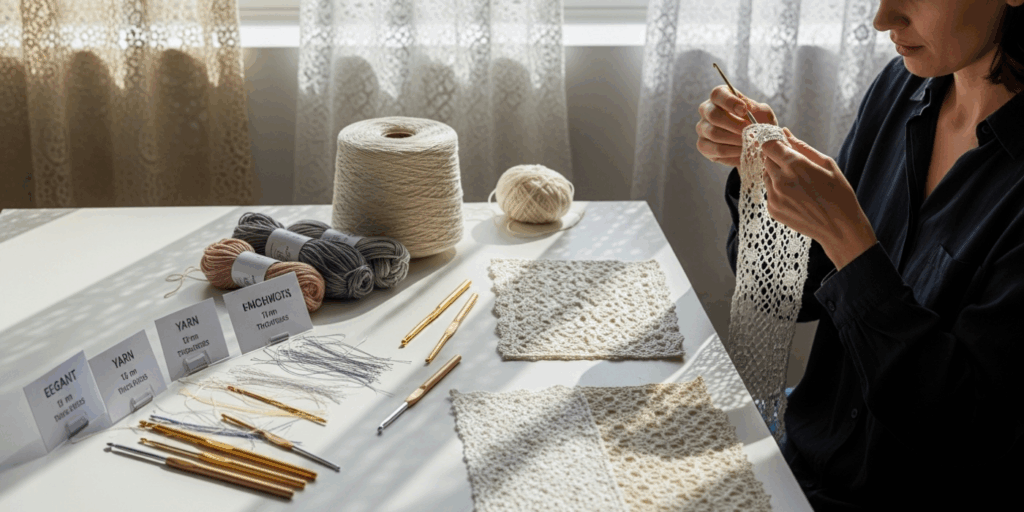
Not all yarns are created equal when it comes to lace. If you use something too thick or fuzzy, you’ll lose the delicate openness that makes lace so enchanting. So what should you use?
Cotton thread is the gold standard. Brands like DMC Cebelia or Aunt Lydia’s Crochet Thread are popular for good reason—they’re smooth, strong, and hold their shape beautifully. Cotton also breathes, making it perfect for summer garments or home decor in warm climates.
Linen is another excellent option, especially if you want a slightly more rustic, textured look. It’s naturally cool and gets softer with each wash. And if you’re feeling adventurous, silk blends (even 10% silk mixed with cotton) can give your lace a subtle sheen that catches the light like morning dew.
Now, about the hook: steel hooks are your best friend. They’re small, precise, and designed for fine threads. A size 7 (1.65mm) or size 9 (1.25mm) will give you the crisp definition lace needs. Don’t be tempted to use a plastic or aluminum hook meant for bulky yarn—it’ll just drag and stretch your stitches out of shape.
Here’s a simple trick: always swatch. Even if you’re following a pattern, make a 4×4 inch square first. This lets you see how the lace opens up, how tight or loose your tension is, and whether the yarn and hook combo really work together. You might be surprised how much difference a half-millimeter hook makes.
And here’s a bonus tip: block your lace. After you finish your piece, gently pin it out on a towel, mist it with water, and let it dry flat. This opens up the stitches, smooths the edges, and makes your lace look professionally finished—even if you’re a beginner. It’s like giving your work a spa day.
Turning Lace Crochet Into Joy (and Maybe Even Income)
You’ve made a few coasters. You’ve crocheted a lace scarf for your sister. Now what?
Here’s the beautiful truth: lace crochet doesn’t have to stay in your drawer.
Many crafters are turning their lace into small businesses—selling handmade lace trims on Etsy, offering custom wedding veil inserts, or even teaching online classes. You don’t need thousands of followers. You just need one beautiful piece that someone falls in love with.
Start by photographing your work in natural light. A white background, a single flower beside it, a soft shadow—simple, elegant, authentic. Write a short story about why you made it. Not “I made this with cotton thread,” but “I made this while listening to rain, thinking of my grandmother’s garden.”
People don’t just buy products—they buy meaning.
You could also collaborate with local boutiques. A handmade lace headband might be the perfect accent for a beachwear shop. A lace-trimmed journal cover could be a hit in a stationery store. Small, thoughtful items like these stand out in a world of mass-produced goods.
And if you’re not ready to sell? That’s okay. Give your lace as gifts. A lace bookmark for a teacher. A lace-edged handkerchief for a friend going through a hard time. A lace heart for your partner’s pillow. These aren’t just objects—they’re quiet acts of love.
Lace crochet teaches us that beauty doesn’t need to be loud. Sometimes, the most powerful things are the ones you have to lean in to see.
The Quiet Power of Creating Something Delicate
In a world that rewards speed, volume, and excess, lace crochet is a rebellion.
It asks you to slow down. To count stitches instead of scrolling. To choose thread over plastic. To make something that won’t last forever—but will be felt deeply while it does.
Every loop you make is a moment of presence. Every chain is a breath. Every shell stitch, a little act of kindness—toward yourself, toward the person who will hold your creation.
You don’t need to be an expert. You don’t need fancy tools. You just need a hook, a thread, and the willingness to try.
So pick up your hook today. Start with one small square. Let your fingers remember what it feels like to create something gentle, something airy, something that lets the light shine through.
And when you finish? Hold it up to the window. Watch how the sun dances across the spaces you made.
That’s not just lace.
That’s magic, stitched by hand.
Your Turn: What Will You Create?
I’d love to hear what you’re planning to make. Are you thinking of a lace shawl for a summer wedding? A delicate curtain for your bedroom window? Or maybe just a simple coaster to start?
Drop a comment below—tell me your idea, your dream project, or even your biggest lace crochet fear. (Yes, I’ve been there too—I once crocheted a lace doily and thought it looked like a spider’s web that had given up.)
And if this article sparked something in you, please share it with someone who needs a little more light in their life. Lace is meant to be passed on.
Because sometimes, the most powerful things we make aren’t meant to be seen from far away.
They’re meant to be held… close… and felt… with the heart.

Luiza Santos is a passionate crochet and knitting enthusiast who finds joy in transforming simple yarn into meaningful, handmade creations. With a deep love for texture, color, and craftsmanship, she believes every stitch carries a story. Luiza brings warmth, creativity, and years of hands-on experience to everything she makes, inspiring others to discover the beauty of fiber arts.