Have you ever finished a cozy blanket, a delicate lace shawl, or a pair of fingerless gloves—only to wonder, “Where did this yarn really come from?”
It’s easy to get lost in the joy of crocheting—the rhythm of the hook, the softness of the fiber, the satisfaction of creating something beautiful with your own hands. But behind every skein lies a story: one of water use, chemical dyes, plastic packaging, and sometimes even unethical labor practices. As more of us seek to live with intention, it’s time to ask: Can our craft be kinder—to the planet, to animals, and to people?
The good news? Absolutely.
In this article, we’ll explore the most eco-friendly yarn options available today—not just as a trend, but as a meaningful shift in how we create. Whether you’re a seasoned crocheter or just starting out, switching to sustainable yarns doesn’t mean sacrificing beauty, softness, or durability. In fact, it often means discovering richer textures, deeper stories, and a more fulfilling creative process.
We’ll walk through five standout eco-friendly yarn choices—each with its own unique benefits—and share real-life tips on how to source them, care for them, and even repurpose scraps. You’ll learn why your next project might just be the most responsible one yet. Plus, we’ll end with a simple challenge: try one sustainable yarn this month. You might be surprised how much it changes not just your craft—but your connection to it.
Let’s dive in.
Why Sustainable Yarn Matters More Than You Think
Let’s start with a simple truth: crochet is beautiful—but it doesn’t have to be wasteful.
The average American produces about 4.9 pounds of trash per day. And while your crocheted scarf isn’t likely to end up in a landfill, the materials used to make it might be. Conventional yarns often come from industrial cotton farms that use massive amounts of water and pesticides—or synthetic fibers like acrylic, which are made from petroleum and shed microplastics every time they’re washed.
Here’s a startling fact: one synthetic sweater can release over 700,000 plastic fibers in a single wash. Those fibers end up in oceans, in fish, and eventually, back in our food chain.
Even natural fibers like conventional cotton aren’t guilt-free. It takes about 2,700 liters of water to produce just one cotton t-shirt—equivalent to what one person drinks in 2.5 years. And that’s before dyeing, processing, and shipping.
But here’s the hopeful flip side: you have power as a maker.
Every time you choose organic cotton over conventional, recycled polyester over virgin plastic, or a hand-spun alpaca yarn over mass-produced acrylic—you’re voting with your hook. You’re supporting farmers who rotate crops, factories that reuse water, and small businesses that pay fair wages.
And the best part? These choices don’t mean you have to compromise. In fact, many sustainable yarns feel better—softer, more breathable, more alive with character.
This isn’t about perfection. It’s about progress.
So next time you’re browsing yarn, pause before grabbing the cheapest option. Ask: Who made this? What’s it made from? What happens to it after I’m done?
Your next project could be more than beautiful—it could be a quiet act of healing.
1. Organic Cotton: The Soft, Earth-Friendly Classic
If you love the feel of cotton but want to avoid the environmental toll, organic cotton is your new best friend.
Unlike conventional cotton, organic cotton is grown without synthetic pesticides or genetically modified seeds. Farmers use natural compost, crop rotation, and rainwater whenever possible. The result? Healthier soil, cleaner water, and safer working conditions for growers—especially important in countries like India and Uzbekistan, where cotton farming has historically been linked to exploitation.
Organic cotton yarns are soft, breathable, and perfect for baby clothes, summer tops, or dishcloths. Brands like Lion Brand 24/7 Cotton (Organic) and Purl Soho’s Organic Cotton offer beautiful, machine-washable options in a wide range of colors.
One crocheter, Maya from Portland, switched to organic cotton after her newborn developed sensitive skin. “I used to buy the cheapest cotton yarn,” she says. “But once I tried organic, I noticed the difference—not just in softness, but in how peaceful it felt to make something for my baby with zero chemicals.”
Pro Tip: Look for GOTS (Global Organic Textile Standard) certification. It ensures not just the fiber is organic, but that the dyeing and processing meet strict environmental and social criteria.
And here’s a bonus: organic cotton holds dye beautifully. Many brands use low-impact, plant-based dyes, so your colors stay vibrant without toxic runoff.
Just keep in mind: organic cotton still requires water—just less harmful water. So if you’re aiming for the lowest footprint, pair it with other sustainable choices below.
2. Bamboo & Tencel: Silky, Sustainable, and Surprisingly Strong
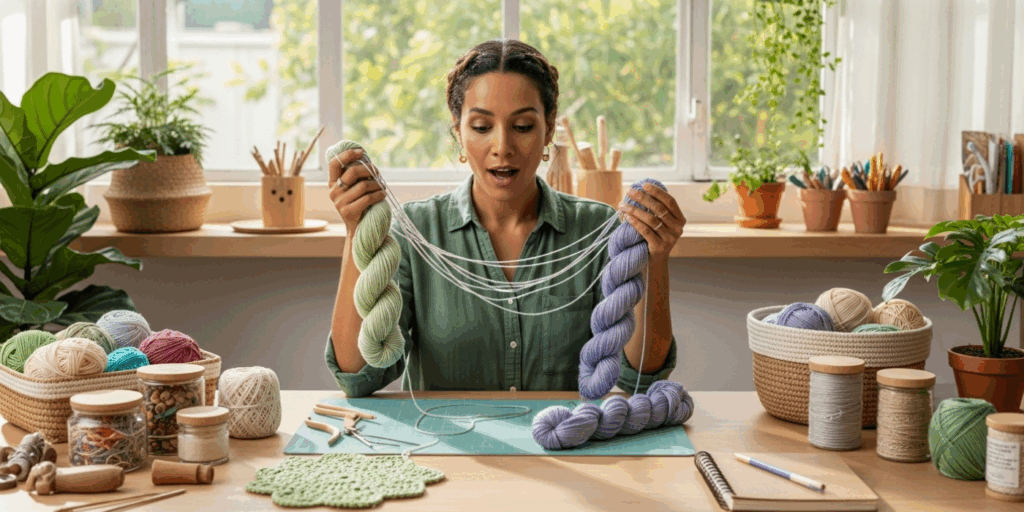
Think bamboo is just for toothbrushes and bedding? Think again.
Bamboo fiber, when processed responsibly, becomes bamboo yarn—a luxurious, silky-smooth material that drapes like silk but costs far less. It’s naturally antibacterial, moisture-wicking, and incredibly soft. Perfect for scarves, shawls, or even lightweight sweaters.
But here’s the catch: not all bamboo yarn is created equal. Some manufacturers use harsh chemicals (like carbon disulfide) to break down bamboo into fiber—a process that can pollute waterways and harm workers.
That’s where Tencel™ (or Lyocell) comes in. Made from wood pulp (often from sustainably harvested eucalyptus trees), Tencel uses a closed-loop system: 99% of the solvent is recycled, and very little is released into the environment. It’s like magic—nature turned into fiber with almost zero waste.
Brands like Knit Picks Eco Bamboo and Lion Brand Re-Spun (a blend of recycled cotton and Tencel) offer stunning options that feel like a dream against your skin.
I once made a shawl with Tencel for my sister’s wedding. It shimmered in the sunlight like liquid moonlight—and when I washed it, it didn’t pill, stretch, or lose its sheen. “It’s like wearing a cloud,” she said.
Pro Tip: Avoid “bamboo rayon” unless it’s certified by Oeko-Tex or FSC. Stick to Tencel™ or certified closed-loop bamboo for true sustainability.
And yes—it’s machine washable. Yes—it’s hypoallergenic. And yes, it’s a joy to crochet with.
If you want luxury that doesn’t cost the earth, this is your answer.
3. Recycled Yarns: Giving Old Threads a New Life
Imagine turning plastic bottles, discarded fishing nets, or worn-out sweaters into something beautiful.
That’s the magic of recycled yarns.
These yarns are made from post-consumer or post-industrial waste—like PET bottles transformed into polyester fiber, or old denim shredded and spun into a sturdy, denim-colored yarn. Some brands even collect used wool garments, deconstruct them, and re-spin them into new yarns with zero new resources.
One of my favorite examples? Patagonia’s Regenerated Wool Yarn. They collect worn-out wool sweaters, sort them by color, and re-spin them—saving water, energy, and dye. The result? A rich, heathered yarn that tells a story with every stitch.
Or try Lion Brand Re-Spun, made from recycled cotton and Tencel. Or Nahar Yarn’s Recycled Cotton, a soft, slightly rustic option that’s perfect for baskets, bags, or coasters.
Recycled yarns often have a unique character—slight variations in texture, color, or thickness. Some crocheters call it “imperfect beauty.” I call it soul.
Why this matters:
- One pound of recycled polyester saves about 24 gallons of water.
- Recycling one ton of plastic bottles saves the equivalent of 3.8 barrels of oil.
- And by choosing recycled yarn, you’re helping keep plastic out of landfills and oceans.
Pro Tip: Don’t be afraid of blends! A mix of recycled cotton and recycled polyester can give you strength, stretch, and softness—all in one skein.
Next time you see a thrifted sweater with a small hole? Don’t toss it. Cut it into strips and turn it into yarn yourself. It’s called “rag yarn,” and it’s the ultimate upcycled project.
4. Plant-Based & Animal-Friendly Alternatives: Beyond Wool and Silk
Not everyone wants to use animal fibers. And that’s okay.
The good news? There are now more plant-based yarns than ever—and they’re not just “alternatives.” They’re excellent.
Take hemp. Yes, hemp. Often mistaken for marijuana, industrial hemp is a fast-growing, low-water crop that requires no pesticides. Its fibers are strong, durable, and get softer with every wash. Hemp yarn is perfect for bags, dishcloths, or even sturdy sweaters. Brands like Cotton + Steel Hemp Blend and HempYarn offer beautiful, earthy tones that age like fine wine.
Then there’s linen—made from flax. It’s crisp, cool, and naturally antimicrobial. Ideal for summer wear.
And for those who love the warmth of wool but want to avoid animal products? Try soy silk or corn fiber. Soy silk is made from the leftover pulp of soybean processing—yes, the same beans you eat! It’s silky, warm, and biodegradable. Corn fiber, or PLA (polylactic acid), is derived from fermented corn starch. It’s soft, biodegradable, and even compostable under industrial conditions.
I made a hat from soy silk last winter. It was so cozy, my dog stole it. (He still has it.)
Pro Tip: Plant-based yarns can be a little stiff at first. But soak your finished piece in lukewarm water with a drop of gentle soap, then lay it flat to dry. It transforms overnight.
These fibers are also naturally hypoallergenic and breathable—great for sensitive skin or hot climates.
Choosing plant-based doesn’t mean you’re giving up warmth or beauty. It means you’re choosing a gentler path.
5. Supporting Small, Ethical Brands: Your Yarn Has a Story
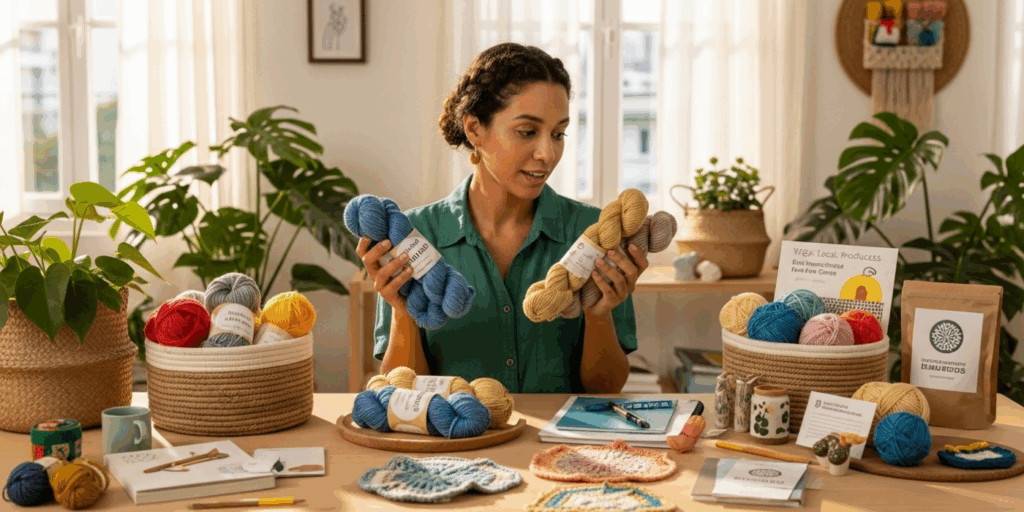
Here’s something most big-box stores won’t tell you: the most sustainable yarn might not be the cheapest—it’s the most human.
When you buy from small, independent yarn dyers and makers, you’re not just buying fiber. You’re supporting:
- A woman in Guatemala who hand-spins alpaca wool using traditional techniques.
- A family in Scotland who raises sheep on pasture, rotates grazing, and dyes with lichen and onion skins.
- A studio in Oregon that uses solar power and zero-waste packaging.
Brands like Wild Woolly, The Uncommon Thread, and Bamboo & Honey Yarn Co. offer hand-dyed, small-batch yarns made with care. Their packaging? Compostable paper. Their labels? Printed with soy ink. Their shipping? Carbon-offset.
I once bought a skein from a tiny Etsy shop run by a single mom in Vermont. The yarn came wrapped in a hand-stitched cotton bag, with a handwritten note: “This was dyed with avocado pits and madder root. I hope it brings you joy.”
I cried. Not because it was expensive. But because it felt real.
Your choices matter.
Every time you support a small business over a giant corporation, you help build a more ethical, transparent, and resilient craft community.
Pro Tip: Use platforms like Etsy, Makers Market, or Slow Fashion Movement to find ethical yarn sellers. Look for keywords like: “hand-dyed,” “small batch,” “fair trade,” “zero waste,” or “local.”
And don’t forget to ask questions! A good maker will be proud to tell you their process.
Putting It All Together: How to Start Your Sustainable Crochet Journey
You don’t need to overhaul your entire stash overnight.
Start small.
Here’s your 5-step plan:
- Swap one skein. Next time you need yarn, choose one eco-friendly option—even if it’s just for a coaster or a granny square.
- Check your labels. Look for certifications: GOTS, Oeko-Tex, FSC, or Recycled Claim Standard.
- Reuse what you have. Unravel old sweaters. Turn fabric scraps into rag yarn.
- Support local. Visit fiber festivals, craft fairs, or indie yarn shops.
- Share your journey. Post your project on Instagram with #SustainableCrochet. You might inspire someone else to change.
And remember: progress, not perfection.
Even if you only switch one yarn per year, you’re making a difference.
I once had a student who said, “I can’t afford sustainable yarn.” I asked her what she could afford. She said, “One skein.” So she bought one. Then another. A year later, her whole stash was eco-friendly.
She didn’t need to be perfect. She just needed to begin.
Final Thoughts: Your Hook, Your Impact
Crochet isn’t just about making things. It’s about making meaning.
Every loop you pull, every stitch you create, carries energy. That energy can be careless—or it can be conscious.
Choosing eco-friendly yarn isn’t about guilt. It’s about gratitude—for the earth that gives us fibers, for the hands that spin them, and for the quiet joy of making something that lasts.
You’re not just making a scarf.
You’re healing soil.
You’re saving water.
You’re supporting fair wages.
You’re keeping plastic out of oceans.
You’re showing the next generation that creativity and care can go hand in hand.
So what’s your next project going to be?
Will it be made from recycled plastic?
From organic cotton grown by a farmer you’ll never meet—but whose hands you honor with every stitch?
From a skein dyed with beetroot and sunflower petals?
You get to decide.
And if you’re not sure where to start?
Try one sustainable yarn this month. Just one.
Then tell me: What did you make? What did you feel?
Drop a comment below—I’d love to hear your story.
And if this article helped you see your craft in a new light? Share it with a fellow crocheter.
Because the most beautiful things aren’t just made with yarn.
They’re made with heart.
And yours? It’s already enough. 🌿🧶

Luiza Santos is a passionate crochet and knitting enthusiast who finds joy in transforming simple yarn into meaningful, handmade creations. With a deep love for texture, color, and craftsmanship, she believes every stitch carries a story. Luiza brings warmth, creativity, and years of hands-on experience to everything she makes, inspiring others to discover the beauty of fiber arts.