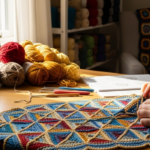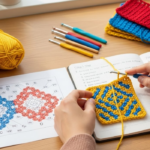
You’ve just finished your first granny square. It’s lopsided. The edges curl. And yet—you’re beaming. Because for the first time in weeks, maybe months, you felt present. The rhythmic pull of the hook, the soft whisper of yarn, the quiet focus—it was therapy you didn’t know you needed.
If you’ve ever crocheted, you know this feeling. It’s not just about making blankets or scarves. It’s about connection. In a world that moves too fast, where screens dominate our attention and loneliness is quietly epidemic, crochet has become more than a craft—it’s a lifeline. And the people who do it? They’re not just hobbyists. They’re a quiet, vibrant, global community waiting to welcome you.
This article isn’t just about where to find crochet groups. It’s about how finding your people—online or in person—can transform your mental well-being, spark creativity, and turn a solitary hobby into a deeply meaningful part of your life. Whether you’re a beginner holding your first hook or a seasoned maker feeling isolated after years of crocheting alone, you’re not alone. And we’re going to show you exactly how to find your tribe.
The Healing Power of Handmade: Why Crochet Connects Us
Let’s start with a simple truth: crochet is inherently slow. Unlike scrolling through social media or binge-watching a show, crocheting demands presence. Your hands are busy. Your mind is focused. And in that quiet rhythm, something remarkable happens—you begin to notice your thoughts. You breathe deeper. You relax.
But here’s the beautiful twist: when you share that experience with others, the healing multiplies.
Studies show that repetitive, tactile activities like knitting and crocheting can lower cortisol levels, reduce anxiety, and even help with symptoms of PTSD and depression. The American Psychological Association has noted that crafts like these offer “mindful engagement”—a form of meditation in motion.
Now imagine doing that alongside others.
In a crochet circle, you’re not just making stitches—you’re sharing stories. A grandmother teaching her granddaughter how to chain. A veteran finding peace after returning home, one loop at a time. A single mom crocheting while her baby naps, exchanging tips with a stranger online who’s in the same boat.
You don’t need to be an expert. You don’t need perfect tension. You just need to show up.
And that’s the magic of this community: it’s one of the few spaces where being “good enough” is not just accepted—it’s celebrated.
Where to Find Your Crochet Crew: From Zoom Calls to Local Cafés
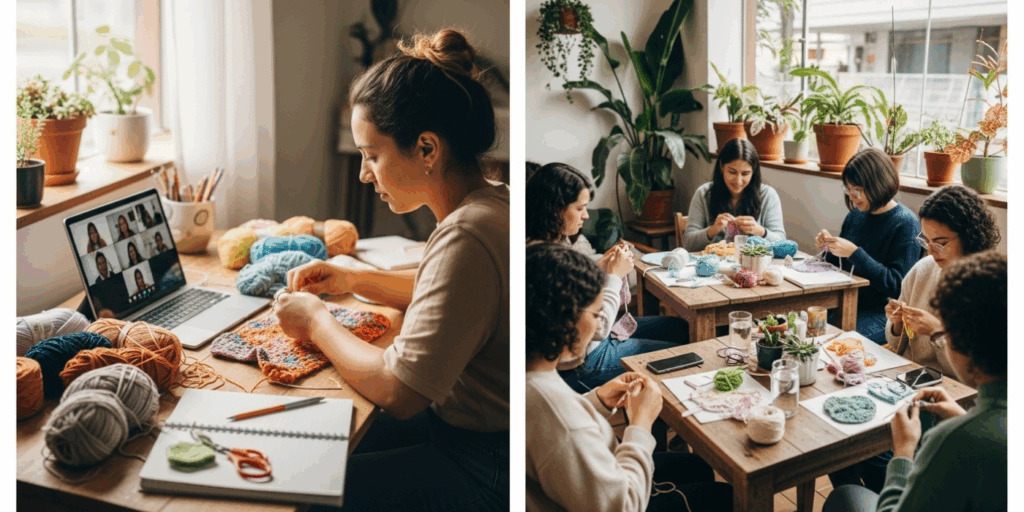
So where do you start? The good news? You have more options than ever.
Online communities are thriving. Facebook groups like Crochet Circle and Crochet Conundrums each have over 100,000 members. Reddit’s r/crochet has nearly 500,000 active subscribers. These aren’t just places to ask “How do I fix this?”—they’re vibrant spaces where people post photos of their latest projects, celebrate baby blanket milestones, and even organize virtual “stitch-alongs” where hundreds crochet the same pattern on the same night, sharing progress, laughs, and encouragement.
One member, Sarah from Ohio, shared how she joined a Facebook group after moving to a new city. “I didn’t know anyone,” she wrote. “I posted a picture of my first amigurumi unicorn—wobbly, uneven, but so proud. Within minutes, 27 people replied with hearts, tips, and memes. I cried. I hadn’t felt seen in months.”
Then there’s Instagram. Search #crochetcommunity and you’ll find thousands of posts—some from professional designers, others from teens in their bedrooms. The hashtag #crochettherapy has over 1.2 million posts. People tag their posts with #crochetandanxiety, #crochetandgrief, #crochetwithkids. Each one is a quiet cry for connection—and each one gets answered.
But if you crave something more tactile, more real, look locally.
Libraries, yarn shops, community centers, and even coffee shops often host weekly crochet circles. Try searching “crochet group near me” or checking out Meetup.com. Many groups are free and open to all skill levels. One woman in Portland told me she started going to a weekly group after her divorce. “I didn’t want to be alone on Tuesdays,” she said. “Now, Tuesdays are my favorite day of the week. We laugh, we cry, we share snacks. I’ve made friends I’ll have for life.”
Pro tip: Don’t wait for the perfect group. Start one. Post a flyer at your local yarn store. Invite a friend. Even two people make a community.
Beyond the Hook: How Crochet Builds Real Relationships
Here’s something most people don’t realize: when you crochet with others, you’re not just sharing patterns—you’re sharing vulnerability.
Think about it. You’re holding something you made with your own hands. It’s imperfect. It’s personal. When you show it to someone, you’re saying, “This is me.” That takes courage.
And when others respond with kindness—not judgment—you begin to trust.
I once attended a crochet night at a small café in Asheville. There was a woman in her 70s named Marjorie who’d been crocheting since the 1950s. She didn’t own a smartphone. But she brought a handmade afghan she’d spent two years making for her late husband. As she gently unfolded it, tears welled up—not from sadness, but from the joy of being able to share it.
A young college student, barely 19, sat beside her, quietly crocheting a beanie for her little brother. She didn’t say much. But when Marjorie offered her a stitch tip, the girl looked up and whispered, “Thank you. No one’s ever shown me how to do that.”
That moment? That’s the heart of this community.
Unlike social media, where likes and comments can feel hollow, crochet fosters authentic connection. You don’t need a viral post to matter. You just need to show up, be kind, and keep stitching.
And here’s the beautiful ripple effect: when you help someone else with their tension, you’re not just teaching a skill—you’re teaching them they’re not alone. When you gift a finished hat to a shelter, you’re not just donating wool—you’re saying, “I see you.”
Try this: Next time you finish a project, consider gifting it. To a hospital, a nursing home, or even a stranger you meet at a park. The act of giving transforms your craft from a solo hobby into a quiet act of love.
Bridging the Gap: How Online and Offline Communities Complement Each Other
You might think online and in-person groups are separate worlds. But they’re not. They’re partners.
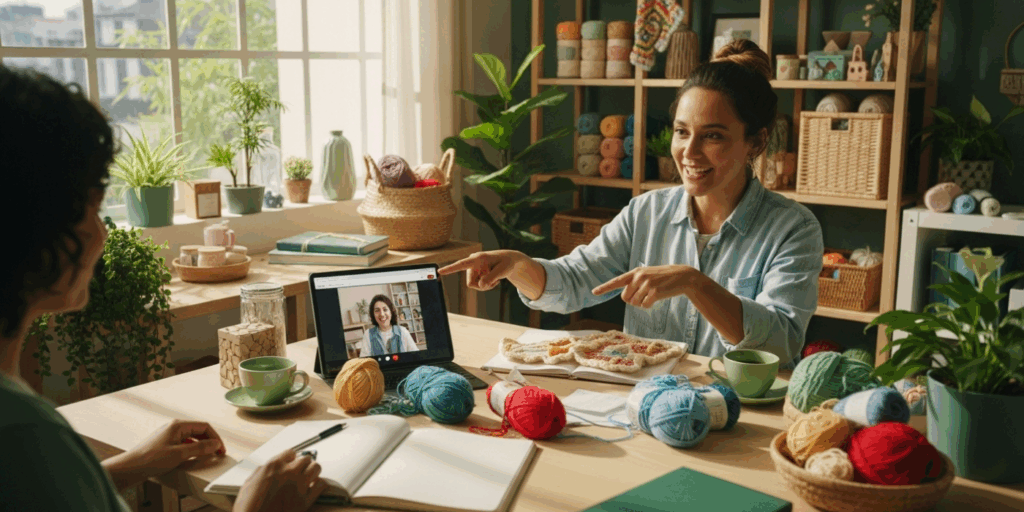
Online communities give you access to global perspectives, endless pattern ideas, and instant feedback. You can join a Zoom call with crocheters from Australia, Canada, and Brazil—all working on the same blanket, even if they’ve never met face-to-face.
Offline groups give you warmth. The smell of wool. The sound of laughter over mismatched stitches. The comfort of a hand on your shoulder when you’re frustrated.
The most powerful crocheters I’ve met? They do both.
Take Lena, a teacher from Chicago. She joins a weekly Zoom stitch-along every Thursday night. But on Saturdays, she meets her local group at the library. “The online group keeps me inspired,” she says. “The in-person group keeps me grounded.”
She uses Instagram to find new patterns, then brings them to her local circle for feedback. She shares photos of her progress online, and the comments motivate her to keep going. When she finishes a project, she brings it to the café group—and someone always says, “That’s beautiful. Can you teach me?”
That’s the cycle: inspiration → creation → connection → more inspiration.
Your action plan:
- Join one online group this week (start with r/crochet or Facebook’s “Crochet Lovers United”).
- Attend one local meetup in the next 30 days—even if you’re nervous.
- Share your online experience with your local group. Ask if they’ve heard of the pattern you’re using.
- Invite someone from your local group to join your online space.
You’re not choosing between online and offline. You’re expanding your world.
The Quiet Revolution: Crochet as a Tool for Inclusion and Empowerment
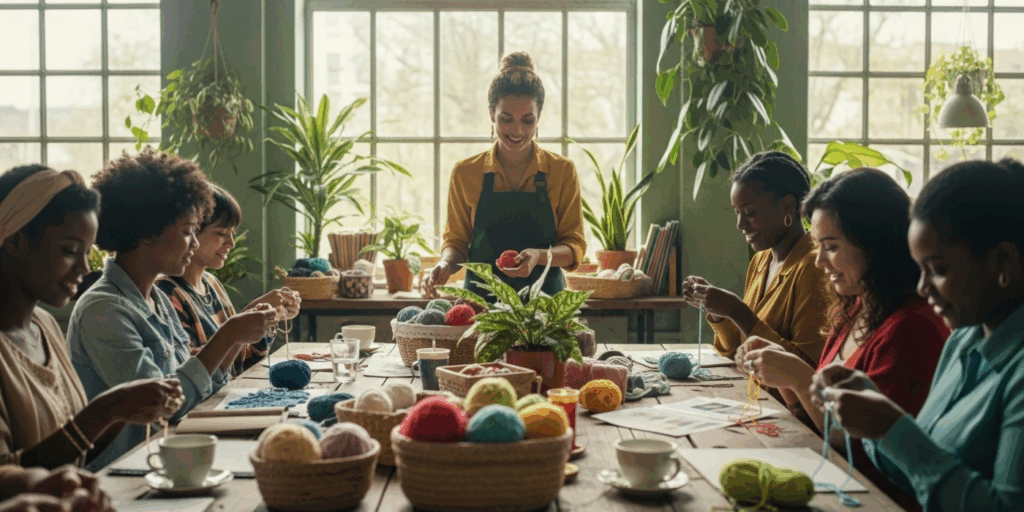
What makes this community so special isn’t just the craft—it’s who’s in it.
Crochet doesn’t care about your age, your income, your background, or your ability to speak perfect English. It welcomes refugees, seniors, neurodivergent individuals, veterans, single parents, and retirees. It’s one of the few hobbies that’s truly inclusive.
In fact, organizations like Crochet for Peace and Hooking Hope are using crochet to help refugees process trauma, teach English through patterns, and build social ties in new countries. In Detroit, a nonprofit called Stitch & Speak brings together women from different cultures to crochet while sharing stories in their native languages. One woman from Syria told me, “I didn’t know how to say ‘thank you’ in English. But I could make a scarf. And when she saw it, she cried. We didn’t need words.”
Even prisons have crochet programs. Studies show that inmates who participate in crafts like crochet have lower rates of recidivism. Why? Because they’re learning patience. Discipline. Purpose.
And for many of us, especially those who feel invisible in the noise of modern life—this is the antidote.
You don’t need to be famous. You don’t need to sell your work. You just need to hold a hook and choose to show up.
Remember: You are not just making blankets. You are weaving threads of compassion.
Your Invitation: Start Where You Are
So where do you go from here?
Maybe you’ve been crocheting alone for years. Maybe you’ve never picked up a hook. Either way—this is your moment.
Here’s how to begin:
- If you’re online: Comment on a post today. Say, “I’m new here. Can anyone recommend an easy pattern?” You’ll be amazed how many people will respond.
- If you’re local: Call your local yarn shop. Ask if they host a crochet group. If not, ask if you can start one. Most owners will say yes.
- If you’re unsure: Grab some yarn and a hook. Make one square. Take a photo. Post it. Say, “This is my first try. I’m learning. Come join me?”
- If you’re overwhelmed: Start small. One connection. One stitch. One conversation.
You don’t need to be perfect. You don’t need to be fast. You just need to be willing.
And when you do? You’ll find something you didn’t even know you were missing.
Conclusion: You Belong Here
Crochet is more than yarn and hooks. It’s a quiet rebellion against isolation. A gentle reminder that we’re meant to create together—not just alone.
In a world that pushes us to be faster, louder, and more productive, the crocheter chooses slowness. Choice. Presence. Connection.
The women in that Asheville café. The veterans in the prison program. The teen in Ohio posting her first unicorn. The grandmother in Texas teaching her granddaughter through FaceTime. They’re all part of the same story.
And so are you.
You don’t have to be the best crocheter in the room. You just have to be you.
So go ahead. Pick up your hook. Join a group. Send a message. Show up—even if you’re nervous. Even if you think no one will care.
They will.
Because somewhere out there, someone is waiting for you to say, “Hey, I’m here too.”
And when you do? You won’t just find a community.
You’ll find yourself.
What’s your crochet story?
Have you found your tribe online or in person? Did a simple stitch change your day—or your life? Drop a comment below. Share your journey. Let’s keep weaving this beautiful, quiet revolution—together. 🧶💛
Luiza Santos is a passionate crochet and knitting enthusiast who finds joy in transforming simple yarn into meaningful, handmade creations. With a deep love for texture, color, and craftsmanship, she believes every stitch carries a story. Luiza brings warmth, creativity, and years of hands-on experience to everything she makes, inspiring others to discover the beauty of fiber arts.