You spent weeks crafting that stunning amigurumi owl—each stitch deliberate, each color chosen with care. You posted it online, and within hours, someone else was selling it as their own. No credit. No thanks. Just your hard work, repackaged and profitably stolen.
If this sounds familiar, you’re not alone. In the vibrant, handmade world of crochet, creativity flows freely—but so does copying. Many crocheters don’t realize their designs are legally protectable. Worse, many assume that because they share patterns for free online, they’ve given up all rights. That’s not true. And it’s time you knew why.
This article will walk you through the essentials of copyright law as it applies to crochet designers—no legalese, no jargon, just clear, practical knowledge you can use today. Whether you sell patterns on Etsy, share free tutorials on Instagram, or dream of turning your hobby into a full-time business, understanding copyright isn’t optional. It’s your armor.
We’ll cover what you can and can’t copyright, how to protect your work without spending a dime, what to do if someone steals your design, and how to avoid accidentally infringing on others. Plus, we’ll share real stories from crocheters who’ve been protected—or hurt—by not knowing their rights. By the end, you’ll walk away with a simple, actionable plan to safeguard your creations… and the confidence to own them.
Your Crochet Patterns Are Copyrighted—Even If You Didn’t Know It
Let’s start with the biggest myth: “I didn’t register my pattern, so it’s not protected.” False.
In the United States (and most countries around the world), copyright protection is automatic the moment you create something original and fix it in a tangible form. That means: the moment you write down your pattern, record a video tutorial, or even save a digital PDF of your instructions—you already own the copyright.
You don’t need to file paperwork. You don’t need to pay a fee. You don’t even need to add a © symbol (though it helps—more on that later).
Think of it like this: if you paint a picture, you own the rights to that painting—even if you never took it to a gallery. Same goes for your crochet design. The stitch sequence, the shaping, the unique combination of textures and motifs? That’s your original expression. That’s protected.
But here’s the catch: copyright protects the expression of the idea—not the idea itself.
What does that mean?
- ✅ You own the written pattern, the photos, the step-by-step instructions.
- ❌ You don’t own the idea of a granny square, a shell stitch, or even a bunny shape.
So if someone else makes a bunny using the same basic single crochet increases and decreases? That’s fine. It’s the universal language of crochet. But if they copy your exact written instructions, your photo layout, your unique color sequence, or your PDF template? That’s infringement.
Many crocheters get confused here. They see a pattern that looks similar and assume it’s stolen. But often, it’s just two designers independently using common techniques. The difference? Copied content vs. common stitches.
Pro Tip: Always write your patterns in your own words. Don’t copy from other designers’ tutorials—even if they’re free. Rewrite them. Add your voice. Your personality is part of what makes your work uniquely yours.
And remember: copyright lasts for your lifetime plus 70 years. So even if you stop crocheting tomorrow, your designs remain protected.
Why Protecting Your Designs Isn’t Just About Money—It’s About Respect
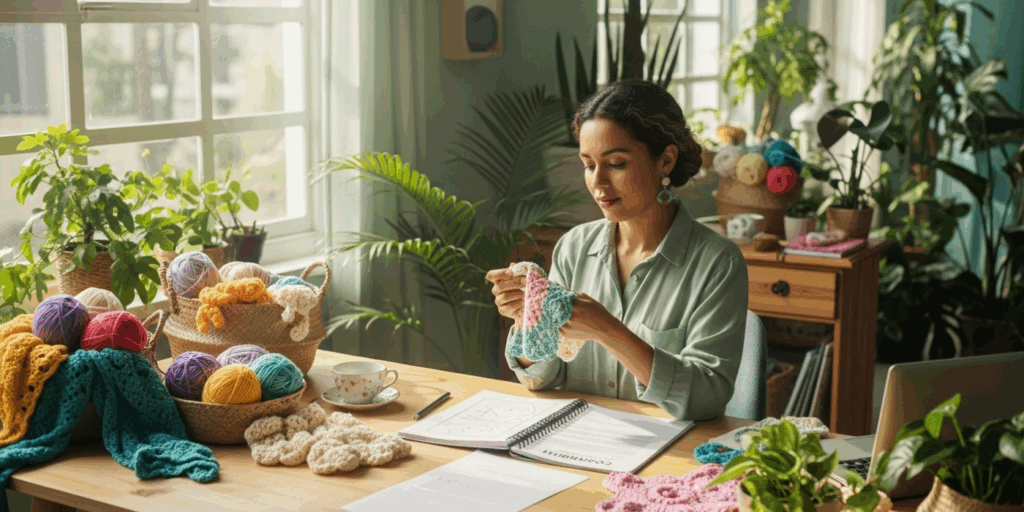
Let’s be honest: most crocheters aren’t out to get rich. We crochet because it’s calming, because we love creating, because we want to share beauty with others. So why bother with copyright?
Because respect matters.
Imagine you spent 40 hours designing a lace shawl with a custom stitch pattern you invented. You posted it for free on your blog. A popular YouTuber then made a video tutorial using your pattern—without credit, without linking back, and then monetized the video with ads. You get zero traffic. Zero recognition. Zero thanks.
That’s not just unfair. It’s demoralizing.
Copyright isn’t just about dollars. It’s about acknowledgment. It’s about saying, “I created this. My time, my skill, my joy—this is mine.”
When you protect your work, you’re setting a boundary. You’re telling the community: I value my craft, and I expect you to value it too.
And here’s the beautiful ripple effect: when you protect your rights, you help protect everyone’s rights. The crochet community thrives on creativity, but creativity dies when people stop sharing because they feel exploited.
Take the story of Maria, a crochet designer from Texas. She shared a free pattern for a textured baby blanket. Within weeks, a large Etsy shop started selling it as their own, with minor tweaks and no attribution. Maria reached out politely—no response. She filed a DMCA takedown notice (more on that soon), and the listing was removed. But here’s the twist: after she posted about the experience on Instagram, dozens of other designers came forward saying, “I had the same thing happen to me.”
Her quiet act of protection sparked a conversation. And now, more crocheters are adding copyright notices to their patterns.
You don’t have to be loud to make a difference. Just consistent.
How to Protect Your Work (Without Paying a Lawyer)
You don’t need a legal team to protect your crochet designs. Here are three simple, powerful steps you can take today:
1. Add a Clear Copyright Notice to Every Pattern
Place this at the top or bottom of every PDF, blog post, or social media caption:
© [Your Name] [Year]. This pattern is for personal use only. Do not copy, redistribute, or sell as your own. For commercial use, please purchase a license at [your website].
Simple. Clear. Professional.
You don’t need fancy fonts or logos. Just those few lines. It tells people: I know my rights, and I expect you to respect them.
2. Register Your Copyright (It’s Cheaper Than You Think)
While copyright is automatic, registering with the U.S. Copyright Office gives you legal superpowers.
Why register?
- You can sue for statutory damages (up to $150,000 per work!) if someone steals it.
- You can recover attorney’s fees.
- It creates a public record of your ownership.
The cost? $45–$65 for a single pattern. That’s less than a skein of luxury yarn.
You can do it yourself at copyright.gov . It takes about 20 minutes. Upload your PDF, fill out a form, pay with a credit card. Done.
And yes—it’s worth it. Even if you only sell 10 patterns a year. One infringement case could cover 100 years of registration fees.
3. Use Watermarks and Low-Res Images Online
Don’t post high-resolution photos of your finished items on Pinterest or Instagram without a watermark. Include your website or Instagram handle subtly on the image.
Why? Because thieves often steal images to sell as “free patterns” or use in ads. A watermark makes it harder—and less appealing—to steal.
Also, avoid posting complete patterns in public Facebook groups or forums. Offer a free “preview” (like the first 3 rows) and link to your full pattern on your website.
What to Do If Someone Steals Your Pattern (Without Losing Your Cool)
Let’s say you found it: your pattern, copied word-for-word, on a Facebook group. Someone’s selling it for $5. You’re furious. You want to scream.
Breathe.
Here’s your calm, effective 3-step response:
Step 1: Document Everything
Take screenshots. Save URLs. Note dates and times. Keep a folder labeled “Infringement Evidence.”
Step 2: Send a Polite but Firm Message
Email or DM the person. Say something like:
Hi [Name],
I noticed you’re sharing my pattern “[Pattern Name]” under your name. This pattern is my original work, protected under copyright law. I’d love for you to remove it and credit me if you’re sharing it for free. If you’re selling it, please reach out—I offer commercial licenses for $20.
Thank you for understanding.
—[Your Name]
Most people don’t realize they’re breaking the law. A polite message often fixes it.
Step 3: File a DMCA Takedown (If They Don’t Respond)
If they ignore you or get defensive? File a DMCA notice with the platform.
- Etsy? Go to their Intellectual Property Policy page.
- Instagram? Use the “Report” feature → “It’s violating my copyright.”
- YouTube? Use their Copyright Removal Tool.
Platforms are legally required to respond within 1–2 weeks. Most take down infringing content within 48 hours.
Pro Tip: Never threaten legal action unless you’re ready to follow through. Stay calm. Stay professional. Your reputation matters more than revenge.
Avoiding Accidental Copyright Violations: The Flip Side
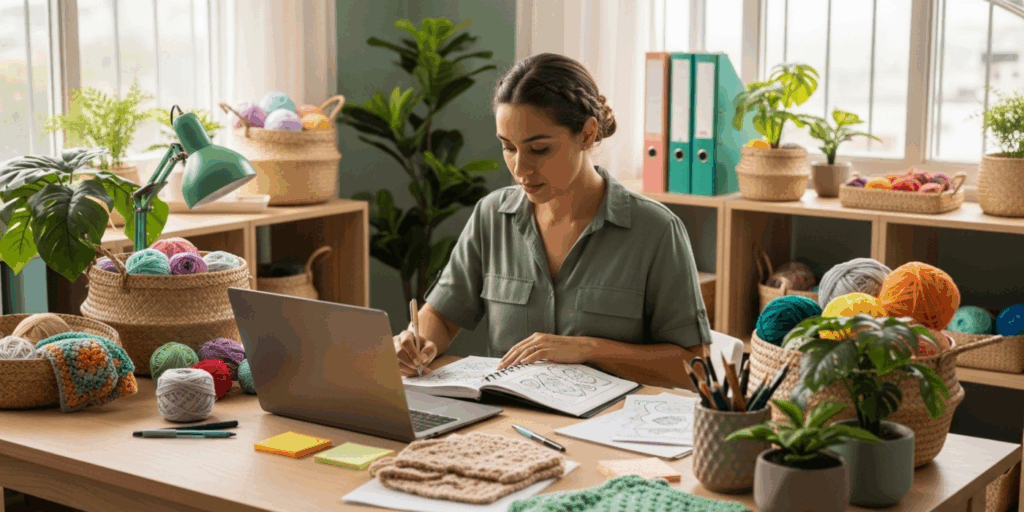
Protecting your work also means respecting others’.
I once saw a crochet designer post a pattern titled “Free Crochet Hat Like @FamousDesigner’s” and used the exact same stitch pattern and photo layout. She didn’t copy the text—but she copied the structure, the aesthetic, the flow. It felt… stolen.
Even if you don’t copy words, copying the entire design concept—especially if you’re profiting from it—can cross ethical (and sometimes legal) lines.
Here’s how to stay on the right side:
- ✅ Use common stitches (single crochet, double crochet, popcorn stitch)—they’re public domain.
- ✅ Create your own variations—change the color order, add a new border, tweak the sizing.
- ❌ Don’t recreate someone’s unique design and call it “inspired by.” If it looks identical, it probably is.
- ✅ Always credit if you’re adapting a technique. Say: “Based on the shell stitch pattern by [Designer Name].”
Think of it like cooking: anyone can make spaghetti. But if you copy Chef Gordon Ramsay’s exact recipe, plating, and sauce technique? That’s not inspiration. That’s imitation.
Respect the craft. Give credit. Build your own voice.
Turning Your Patterns into a Business—Without Getting Stolen
If you’re selling patterns, you’re not just a crafter—you’re a small business owner. And business owners protect their assets.
Here’s how to scale your crochet business safely:
- Bundle your patterns into themed collections (e.g., “Winter Animal Set”)—it’s harder to copy a whole bundle than one item.
- Offer a commercial license for $15–$30. Many small sellers want to legally make your designs to sell. Give them a simple, affordable option.
- Use platforms like Gumroad or Payhip—they offer built-in copyright protection and PDF locking.
- Consider trademarking your brand name (e.g., “Bella’s Bunnies”) if you’re building a recognizable brand. That’s a separate process, but worth exploring as you grow.
One designer, Sarah from Oregon, started selling her amigurumi patterns on Etsy. Within a year, she had 12 knockoffs. She registered her top 3 patterns, added clear licensing terms, and started offering a “Commercial Use Pack.” Her sales doubled. Why? Because buyers trusted her. They knew they were buying from the real creator.
Your brand is your reputation. Protect it.
The Bigger Picture: Why Your Voice Matters in the Crochet Community
Crochet has always been a craft of connection. We share patterns, swap tips, cheer each other on. But that generosity shouldn’t be taken for granted.
When you protect your designs, you’re not being selfish. You’re safeguarding the future of handmade creativity.
Every time you stand up for your rights, you give other crocheters permission to do the same. You help turn a community of sharing into a community of respect.
You’re not just protecting a PDF. You’re protecting hours of joy, late-night stitching, the pride of finishing something beautiful, and the dream that one day, your craft might support you.
So next time you finish a new pattern, don’t just hit “publish.”
Add your copyright notice. Register it. Watermark your photos. Share your story.
You didn’t just make a blanket. You made something original.
And that deserves to be honored.
Final Thoughts: You Are the Creator. Own It.
You didn’t need permission to start crocheting. You didn’t need a degree. You didn’t need a fancy studio.
You just needed yarn, a hook, and the courage to create.
Now, you don’t need a lawyer to protect your work either.
You just need to know your rights.
Copyright isn’t about locking your patterns away. It’s about setting boundaries so your creativity can thrive—without fear, without theft, without silence.
Whether you sell one pattern a year or five hundred, your voice matters. Your work matters. Your time matters.
So take that next step today.
- Write your copyright notice.
- Register your next pattern.
- Share this article with a fellow crocheter who needs to hear it.
Because the world doesn’t need more copies.
It needs your designs.
What’s one pattern you’ve created that you’re proud of—and want to protect? Drop it in the comments below. Let’s build a community where every stitch is respected. 🧶💛

Luiza Santos is a passionate crochet and knitting enthusiast who finds joy in transforming simple yarn into meaningful, handmade creations. With a deep love for texture, color, and craftsmanship, she believes every stitch carries a story. Luiza brings warmth, creativity, and years of hands-on experience to everything she makes, inspiring others to discover the beauty of fiber arts.