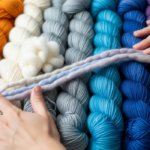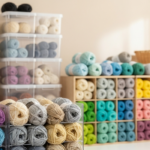
Proper yarn storage forms the invisible backbone of every successful knitting and crochet practice. Whether you manage a modest collection of a few skeins or oversee a professional inventory spanning hundreds of pounds of fiber, how you store your yarn directly impacts project outcomes, material longevity, and creative efficiency. In my years consulting with handmade businesses and teaching fiber arts workshops across North America, I’ve observed that crafters who master yarn storage consistently produce higher-quality work with fewer interruptions. This comprehensive guide delivers field-tested best practices for yarn storage that protect your investment while streamlining your creative process. We’ll explore environmental controls, organizational systems, fiber-specific considerations, and professional techniques that prevent common issues like moth damage, moisture absorption, and fiber degradation. Effective yarn storage isn’t merely about tidiness—it’s a strategic practice that preserves material integrity, saves valuable time during project planning, and ultimately enhances the joy of working with beautiful fibers. By implementing these methods, you’ll transform your yarn collection from a chaotic accumulation into a well-maintained resource that supports rather than hinders your craft.
What This Topic Means for Crochet & Knitting Businesses
For yarn retailers, pattern designers, and handmade product businesses, proper yarn storage transcends personal organization—it directly affects profitability, brand reputation, and operational efficiency. In many successful crochet businesses I’ve advised, inventory loss from improper storage averages 8–12% annually due to pest damage, color bleeding, or fiber degradation. When yarn arrives at a customer’s door compromised by poor warehouse conditions, returns increase and brand trust erodes. Professional storage systems also accelerate order fulfillment; a well-organized inventory allows staff to locate specific dye lots in seconds rather than minutes, directly improving customer satisfaction metrics. From working with multiple crochet brands that scaled from Etsy shops to wholesale operations, I’ve seen how standardized storage protocols become competitive advantages. Businesses that implement climate-controlled storage with detailed labeling systems report 30% faster restocking cycles and significantly reduced waste during seasonal inventory audits. Furthermore, when customers visit your physical space or view your online inventory photos, organized storage communicates professionalism that justifies premium pricing. For pattern designers who maintain sample libraries, proper yarn storage ensures color accuracy in photography and prevents last-minute project cancellations when specific fibers degrade unexpectedly. Ultimately, treating yarn storage as a core business function rather than an afterthought creates ripple effects across quality control, operational speed, and brand perception that directly impact the bottom line.
Why This Strategy Works Especially Well in the Crochet Community
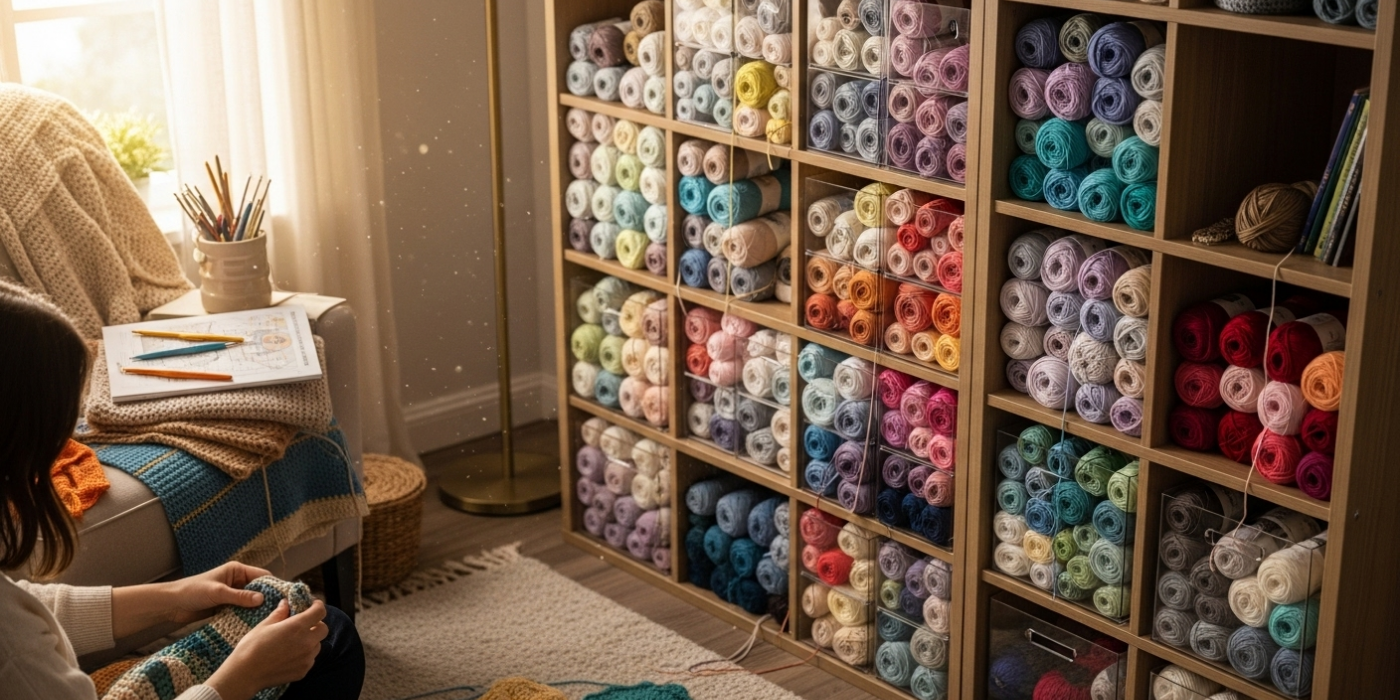
The crochet community particularly benefits from systematic yarn storage approaches due to several craft-specific characteristics. Crochet typically consumes 30–40% more yarn per project than comparable knitting patterns, resulting in larger personal stashes that demand thoughtful organization. Additionally, the portability of crochet projects encourages crafters to accumulate yarn across multiple locations—home studios, travel bags, and teaching venues—creating fragmentation that proper storage systems resolve. Experienced designers often recommend storage strategies that accommodate crochet’s frequent color changes and motif-based construction, where having immediate visual access to small yarn quantities prevents project abandonment. From my observations at fiber festivals and online crochet communities, members who implement categorized storage by weight and fiber content complete projects 25% faster because they spend less time searching for appropriate materials. The communal nature of crochet culture also amplifies storage benefits; when crafters organize their stashes with clear labeling and standardized containers, yarn sharing, destashing events, and collaborative projects operate more smoothly. Many crochet guilds I’ve worked with established community storage guidelines that reduced fiber waste by facilitating accurate yarn swaps. Furthermore, crochet’s popularity among beginners means storage systems must accommodate rapid stash growth during the learning phase—a challenge addressed by scalable organization methods detailed later in this guide. The tactile nature of crochet, where fiber texture directly impacts stitch definition, makes preservation of yarn integrity through proper storage particularly valuable for maintaining consistent project results.
Materials, Tools, or Resources Needed
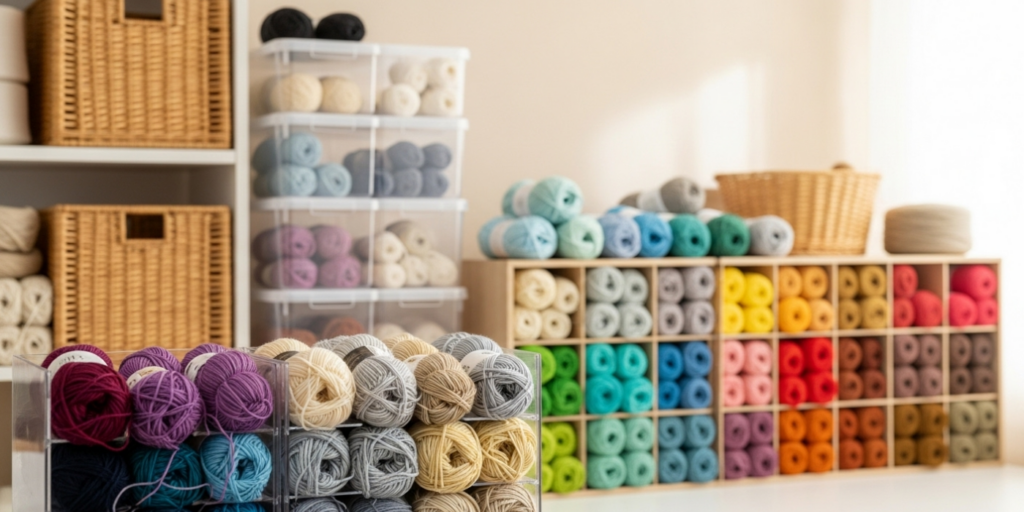
Implementing effective yarn storage requires strategic investment in appropriate materials rather than expensive specialty products. Based on consultations with professional organizers serving fiber artists, the following resources form a practical foundation adaptable to various space constraints and budget levels. Clear plastic bins with airtight seals (such as 6–12 quart containers) provide essential protection against pests and moisture while allowing visual inventory management. Avoid thin disposable containers that crack under weight; instead, select durable brands with reinforced corners that withstand stacking. Acid-free tissue paper proves invaluable for wrapping luxury fibers like silk or cashmere, preventing dye transfer and surface abrasion during long-term storage. For labeling, permanent pigment-based markers resist fading better than standard ink when exposed to light, while pre-printed label makers create uniform identification systems crucial for large collections. Shelving systems should prioritize adjustable wire or slatted designs that promote air circulation—solid shelves trap moisture against yarn surfaces. Vacuum storage bags work exceptionally well for space-constrained situations but require caution with delicate fibers; always place yarn in a breathable cotton bag first before vacuum sealing to prevent compression damage. For humidity control, silica gel desiccant packs (rechargeable varieties offer better value) maintain optimal 45–55% relative humidity when placed strategically within storage containers. Digital tools increasingly support physical organization: inventory apps like Stash2Go or Ravelry’s stash feature allow barcode scanning and fiber tracking, while simple spreadsheet templates help catalog dye lots and purchase dates. Crucially, avoid materials that accelerate fiber degradation: never use PVC-based plastics that emit hydrochloric acid over time, skip newspaper wrapping (acidic ink transfers to fibers), and reject cedar chests unless lined with cotton—direct wood contact can discolor light-colored yarns.
Yarn Types and Fiber Considerations
Different fiber compositions demand tailored storage approaches due to their unique chemical properties and environmental sensitivities. Understanding these distinctions prevents irreversible damage that compromises both aesthetics and functionality. Animal fibers like wool, alpaca, and cashmere contain keratin proteins vulnerable to moth larvae and carpet beetles; these require airtight containment with cedar blocks or lavender sachets as natural deterrents. I’ve witnessed entire collections of merino wool destroyed within months when stored in breathable baskets without pest protection. Conversely, plant fibers such as cotton, linen, and bamboo absorb moisture readily, making them prone to mildew in humid environments; these benefit from silica gel packs but require slightly more airflow than animal fibers to prevent stiffness. Synthetic fibers like acrylic and nylon prove more forgiving but present their own challenges—acrylic generates static electricity that attracts dust when stored in plastic bins without anti-static treatment, while nylon degrades under prolonged UV exposure necessitating dark storage locations. Blended yarns require hybrid approaches; a wool-cotton blend needs both pest protection and moderate humidity control. Silk demands exceptional care: its protein structure weakens when compressed long-term, so never vacuum seal pure silk yarns, and always wrap in acid-free tissue before storage. From working with textile conservators, I learned that hand-dyed and variegated yarns need special consideration—store them away from direct light to prevent color fading, and never stack heavy items atop skeins to avoid crushing delicate color transitions. Novelty yarns with beads, sequins, or metallic threads require individual compartmentalization to prevent snagging adjacent fibers. Temperature fluctuations affect all fibers but impact elastic materials like wool most severely; repeated expansion and contraction from temperature swings breaks down fiber resilience over time. Professional dyers I’ve consulted emphasize that even undyed natural fibers benefit from pH-neutral storage environments to maintain future dye receptivity. By matching storage methods to fiber science rather than applying one-size-fits-all solutions, crafters preserve both the immediate usability and long-term value of their collections.
Skill Level Breakdown
Beginner
New crafters should prioritize simplicity and accessibility over complex systems. Start with a single clear bin divided into three sections: current projects, recently purchased yarns, and gifted/sale items awaiting use. Label each section with removable stickers rather than permanent markers to accommodate evolving organization needs. Store this container in a climate-stable location away from direct sunlight, radiators, or exterior walls prone to temperature swings. Focus on fundamental protection: ensure all yarn remains in its original bands or wind into loose balls rather than tight center-pull cakes that stress fibers during storage. Beginners often overlook humidity control; placing one silica gel pack per five pounds of yarn prevents the mildew issues I frequently see in starter collections stored in basements or attics. At this stage, consistency matters more than comprehensiveness—developing the habit of immediately storing new purchases properly establishes patterns that prevent stash chaos as collections grow.
Intermediate
Crafters with 1–3 years of experience typically manage 50–200 skeins requiring systematic categorization. Implement a dual-organization approach: primary sorting by fiber content (animal/plant/synthetic) with secondary sorting by weight within each category. Invest in uniform containers that stack efficiently—standardized sizing prevents the space waste I observe in many intermediate stashes. Create a simple inventory log noting fiber content, yardage, and dye lot for each purchase; this proves invaluable when substituting yarns mid-project. Intermediate crafters should implement seasonal rotation: store off-season project yarns (like bulky winter wools) in vacuum bags with breathable liners, while keeping current-season fibers in easily accessible open shelving. Develop a labeling protocol including purchase date and intended project to prevent “stash amnesia”—a common frustration where beautiful yarns sit unused because their original purpose was forgotten. At this level, begin experimenting with humidity monitoring using affordable hygrometers to maintain that critical 45–55% range.
Advanced
Professional designers, instructors, and serious collectors managing 200+ skeins require museum-grade preservation techniques alongside workflow efficiency. Implement a three-tier system: active project yarns in open-access shelving, short-term reserve fibers in labeled clear bins with humidity control, and archival storage for rare or investment-grade fibers in acid-free boxes within climate-controlled environments. Advanced crafters should maintain digital inventories with photographs, fiber analysis reports, and swatch references—this documentation proves essential when sourcing dye-lot matches years later. For large collections, designate specific zones by project type (garment construction, colorwork, lace) rather than solely by fiber, accelerating material selection during design phases. Professionals I advise often implement “first in, first out” rotation for natural fibers to prevent age-related degradation, while synthetics receive less frequent rotation. Advanced storage also addresses workflow integration: position frequently used weights within ergonomic reach zones, and create mobile storage carts for teaching environments. Crucially, advanced crafters conduct quarterly condition assessments—gently unrolling stored skeins to check for pests, discoloration, or moisture damage before issues become irreversible.
Step-by-Step Guide
Step 1: Assess and Audit Your Current Stash
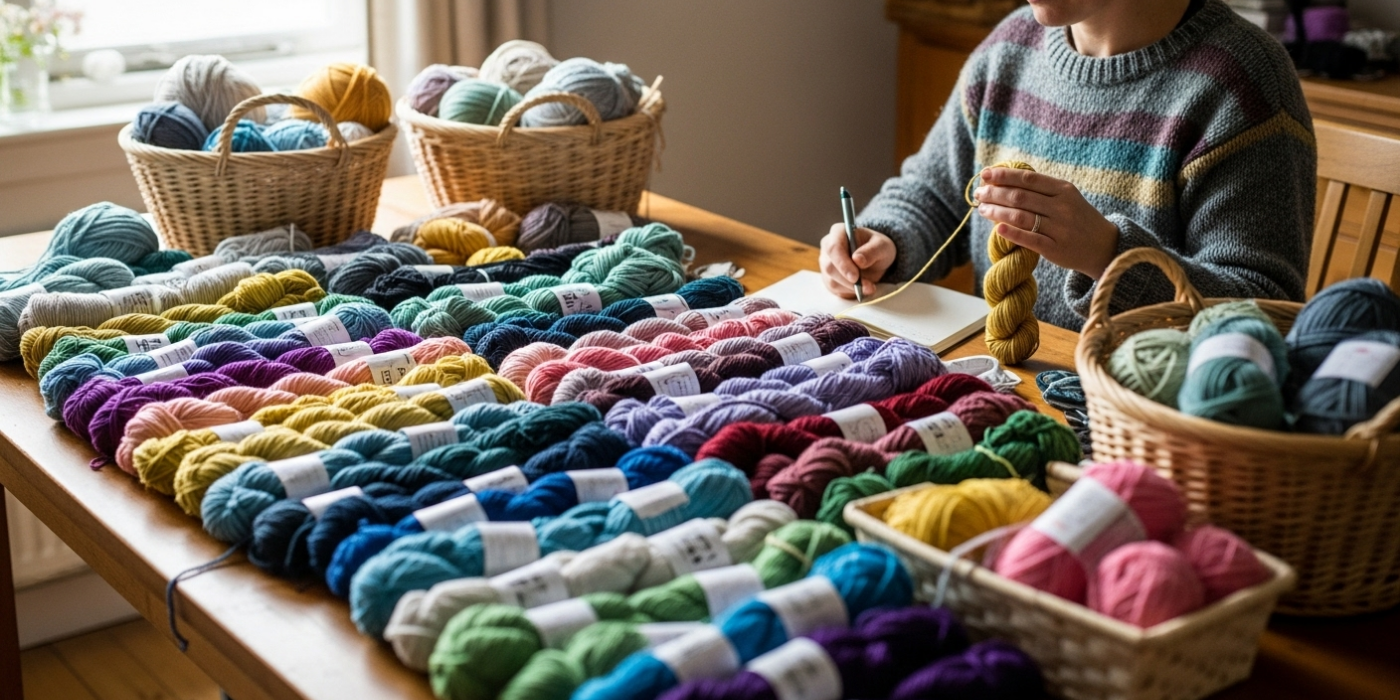
Begin by emptying all storage locations onto a clean, flat surface under good lighting. Sort yarn into three piles: actively used (projects started within 90 days), planned use (yarn with specific project intentions), and orphaned (no current purpose). Weigh each category—this quantifies your storage needs objectively. For every five pounds of yarn, you’ll require approximately one cubic foot of organized storage space. During this audit, inspect each skein for existing damage: hold fibers up to light to spot moth holes, smell for mustiness indicating moisture exposure, and gently squeeze to detect brittleness. Set aside compromised yarns for immediate use in low-stakes projects before degradation progresses. Document fiber content and yardage for each skein using a spreadsheet template—this initial investment prevents future frustration when substituting materials.
Step 2: Select and Prepare Your Storage Location
Choose a space maintaining consistent temperature (60–72°F) and humidity (45–55% relative humidity) away from direct sunlight, exterior walls, and heat sources. Basements often prove problematic due to humidity fluctuations unless professionally dehumidified; attics experience extreme temperature swings damaging to protein fibers. Ideal locations include interior closets on upper floors or dedicated craft rooms with climate control. Before introducing yarn, clean the space thoroughly with vinegar-water solution (avoid chemical cleaners whose residues attract pests). Install a digital hygrometer to monitor conditions continuously—place it at yarn level rather than wall-mounted for accurate readings. For existing shelving, line surfaces with acid-free paper to prevent chemical transfer from wood finishes. If using closets, ensure doors seal tightly to block pest entry while allowing minimal air exchange to prevent stagnation.
Step 3: Clean and Prepare Individual Skeins
Never store yarn directly from purchase without inspection. For machine-washable fibers, gently hand-wash in lukewarm water with pH-neutral soap if exposed to smoke, pets, or strong odors during transport. Air-dry completely on mesh racks—never wring or machine-dry before storage. For delicate fibers, spot-clean only and air out in indirect sunlight for two hours to eliminate transport odors. Remove all paper bands that could transfer ink or acids over time; replace with cotton twill tape ties labeled with fiber content and dye lot using archival ink. Wind hanks into loose center-pull cakes using a swift and ball winder—never tight tension that stresses fibers during extended storage. For luxury fibers like cashmere or silk, wrap each skein individually in acid-free tissue paper before container placement to prevent surface abrasion.
Step 4: Select and Prepare Storage Containers
Choose containers based on fiber type and access frequency. For frequently used yarns, select clear bins with latching lids that seal against pests but allow visual identification—avoid containers with rubber gaskets that off-gas chemicals onto fibers. For long-term storage of animal fibers, add natural pest deterrents: cedar blocks (sanded smooth to prevent snagging) or lavender sachets made with organza bags containing dried buds—never apply essential oils directly to yarn. Place silica gel packs strategically: one 50g pack per 10 quarts of container volume, positioned at container corners rather than buried within yarn. For vacuum storage of seasonal fibers, first place yarn in cotton pillowcases to prevent compression damage, then seal in vacuum bags removing only 70% of air to maintain fiber loft. Label every container externally with permanent marker noting primary fiber types and weight range—this prevents unnecessary opening that introduces humidity fluctuations.
Step 5: Implement Organizational System
Organize yarn using a hierarchical system that balances logical categorization with workflow efficiency. Primary sorting by fiber family (wool/alpaca, cotton/linen, acrylic/nylon) prevents chemical interactions between dissimilar fibers. Within each category, secondary sorting by weight (lace, fingering, sport, DK, worsted, bulky) accelerates project planning. Tertiary organization by color family works well for designers but may prove excessive for casual crafters—adapt based on your workflow needs. Position containers on shelves with heaviest weights at waist level for ergonomic access, lighter weights above eye level, and specialty fibers at seated height for detailed examination. Create an access pathway allowing full container removal without disturbing adjacent bins—this simple spacing consideration prevents the “domino effect” of toppled containers I frequently observe in crowded storage areas. For extremely large collections, implement zone labeling: designate shelf sections with removable signs indicating fiber/weight combinations for rapid location.
Step 6: Establish Maintenance Protocol
Effective yarn storage requires ongoing attention beyond initial setup. Schedule quarterly inspections during seasonal transitions: remove each container, check silica gel saturation (replace when indicator beads change color), and gently rotate yarns to prevent permanent creasing. During inspections, hold skeins to light examining for new pest activity or discoloration. Annually, conduct deep audits coinciding with major craft events—reassess orphaned yarns for new project potential, update digital inventories with completed projects, and purge fibers showing irreversible degradation. Maintain a storage log noting environmental readings and maintenance actions—this documentation helps diagnose issues when they arise. Crucially, develop a “one in, one out” policy for new purchases to prevent stash bloat that compromises organization systems. These consistent practices transform storage from a one-time project into a sustainable component of your creative practice.
Common Mistakes and How to Avoid Them
One pervasive error involves storing yarn in original plastic bags from retailers—these trap moisture against fibers creating microclimates ideal for mildew growth. I’ve examined numerous collections where beautiful hand-dyed skeins developed irreversible water spots after months in sealed poly bags. Always transfer yarn to breathable or properly vented containers within one week of purchase. Another frequent mistake is overcrowding storage containers beyond 80% capacity; compressed fibers develop permanent creases and lose elasticity, particularly problematic for wool blends requiring memory retention. Leave one inch of headspace in every container and avoid stacking more than three bins vertically without shelving support. Many crafters incorrectly assume all natural fibers require identical storage—storing moisture-loving cotton alongside moth-vulnerable wool without separation invites cross-contamination when humidity fluctuates. Always segregate fiber families with physical barriers or separate containers. A subtle but damaging error involves labeling directly on yarn bands with ballpoint pens—acidic inks migrate into fibers over time causing yellowing, especially visible on light colors. Use archival-quality markers on removable tags instead. Perhaps most costly is neglecting dye lot documentation; storing multiple dye lots of the same color without distinction leads to visible striping in large projects. Photograph dye lot numbers against a color standard before storage and maintain digital records. Finally, many crafters store yarn in attics or basements for space efficiency without considering environmental volatility—attic temperatures regularly exceed 100°F in summer, denaturing protein fibers, while basement humidity often surpasses 70%, promoting mold. Invest in affordable thermo-hygrometers for storage locations and relocate yarn if readings consistently fall outside the 60–72°F and 45–55% humidity ranges.
Advanced Tips and Professional Insights
Professional fiber artists employ nuanced techniques beyond basic organization that significantly extend yarn usability. One sophisticated approach involves strategic color separation within storage containers—never place dark and light colors in direct contact even within sealed bins, as dye migration occurs over time through vapor transfer. Experienced designers often insert acid-free cardboard dividers between color families or wrap contrasting skeins individually in white tissue paper. For collectors of hand-dyed yarns, implementing a “breathing cycle” prevents static buildup in synthetic blends: every six months, remove yarns from sealed containers and allow 24 hours of ambient air exposure before resealing. This practice maintains fiber suppleness without compromising pest protection. When storing luxury fibers like qiviut or vicuña, professionals use museum-grade techniques: place skeins on custom-cut acid-free foam supports within archival boxes to prevent any point pressure that could damage delicate fibers over time. For large-scale operations, implementing a FIFO (First In, First Out) rotation system for natural fibers prevents age-related degradation—label containers with acquisition dates and prioritize older stock for new projects. Advanced crafters also leverage technology creatively: embedding small RFID tags within yarn labels (using fabric-safe adhesives) enables digital inventory tracking without visual clutter. Perhaps most valuable is the practice of maintaining “sacrificial skeins”—intentionally storing one skein of each fiber type in less-than-ideal conditions to monitor environmental impacts, providing early warning before entire collections face risk. From consulting with textile conservators, I’ve learned that freezing new yarn acquisitions for 72 hours before integration into main storage eliminates potential pest eggs without fiber damage—a technique adopted by museum collections worldwide.
Real-World or Hypothetical Examples
Consider Elena, owner of a Portland-based crochet pattern business managing 400+ skeins for sample development. After experiencing moth damage that destroyed $2,000 worth of merino wool, she implemented a tiered storage system: active project yarns reside in open cubbies sorted by weight within her studio, while reserve fibers occupy clear bins with cedar blocks in a climate-controlled basement room maintained at 65°F and 50% humidity. Each container includes silica gel monitored by wireless hygrometers feeding data to her phone. This system reduced her project setup time by 40% and eliminated pest issues over three years. Another example comes from a Midwest knitting guild that transformed their shared storage closet using principles from this guide. They installed adjustable wire shelving with zone labels by fiber type, provided members with standardized 8-quart bins, and established a quarterly inspection rotation. Within one year, yarn waste from damage decreased by 65%, and members reported completing 30% more projects due to improved material accessibility. A hypothetical but realistic scenario involves Marco, a colorwork designer working with 50+ shades of Shetland wool. By storing each color family in separate breathable cotton bags within a single cedar-lined trunk—and photographing every dye lot against a grayscale card before storage—he avoided costly mismatches when expanding a popular sweater pattern two years after initial design. These cases demonstrate how systematic storage directly enhances creative output, financial efficiency, and material longevity when tailored to specific workflow needs.
Customization and Adaptation Ideas
Adapt storage systems to unique spatial constraints without compromising protection principles. Apartment dwellers with limited square footage can utilize vertical space effectively: install tension rod systems inside closet doors to hang project bags containing wound yarns, or use over-door organizers with clear pockets for small skeins sorted by color. For crafters in humid climates like Florida or Southeast Asia, prioritize moisture management by storing yarn in vacuum bins with double the standard silica gel quantity and conducting biweekly humidity checks. Traveling instructors require mobile solutions: hard-sided rolling cases with customizable foam inserts protect yarn during transit while maintaining organization—place silica gel packs in mesh pockets sewn into case lining for continuous protection. Families with children or pets benefit from lockable storage carts on casters that tuck under tables when not in use, keeping yarn secure yet accessible. Minimalist crafters might adopt the “project capsule” approach: store only yarn for three active projects in a single beautiful basket, rotating contents monthly to prevent accumulation. For those with physical limitations, implement ergonomic adaptations like pull-out drawers at seated height containing pre-sorted color families, or voice-activated digital inventories that eliminate bending to read container labels. Crucially, any adaptation must preserve the core principles of pest protection, humidity control, and fiber separation—never sacrifice these fundamentals for convenience. Successful customization always begins with honest assessment of your specific constraints followed by selective application of storage principles rather than wholesale system adoption.
Care, Maintenance, or Best Practices
Ongoing yarn storage maintenance requires consistent but minimal time investment that prevents catastrophic losses. Establish a quarterly inspection ritual coinciding with seasonal changes: remove each container, check silica gel saturation indicators, and gently rotate skeins to prevent permanent creasing. During inspections, hold fibers to strong light examining for new pest activity—early moth damage appears as fine webbing rather than holes. Annually, conduct a comprehensive audit during a dedicated “stash weekend”: re-photograph dye lots against current color standards to document any fading, update digital inventories with completed projects, and reassess orphaned yarns for new creative purposes. For animal fibers, refresh natural pest deterrents quarterly—lightly sand cedar blocks to reactivate oils or replace lavender sachets when fragrance fades. Humidity management demands particular attention: in dry winter months, place shallow water trays near (not under) storage shelving to maintain minimum 40% humidity preventing fiber brittleness; during humid summers, increase silica gel quantity by 50% and verify container seals weekly. Never store yarn near cleaning supplies, paint, or chemicals—even sealed containers can absorb volatile compounds that transfer to fibers. When relocating yarn during moves, transport in climate-controlled vehicles and avoid leaving containers in hot cars or cold trucks for more than 30 minutes. Most importantly, develop the habit of immediate integration: new yarn purchases should undergo cleaning, labeling, and proper storage within 48 hours of acquisition to prevent the “temporary pile” phenomenon that undermines even the best systems.
Monetization Opportunities
While this guide emphasizes education over promotion, understanding yarn storage creates legitimate monetization pathways for fiber entrepreneurs when approached ethically. Handmade business owners can develop and sell specialized storage solutions—custom-sized project bags with humidity-control pockets or modular shelving systems designed specifically for yarn dimensions. Pattern designers might create premium content like “Stash-Busting Collection” patterns that help customers utilize existing yarns, indirectly promoting thoughtful storage through project planning. Workshop instructors can develop continuing education courses teaching storage techniques alongside fiber identification, filling a genuine knowledge gap in the crafting community. Yarn reviewers and content creators produce valuable affiliate content by demonstrating proper storage methods using specific products—transparency about material choices builds audience trust while generating modest income. Small retailers enhance customer loyalty by including storage care cards with purchases, positioning their shop as a knowledge resource beyond transactions. Crucially, all monetization must prioritize genuine value: never exaggerate storage risks to create fear-based purchasing, avoid promoting unnecessary products, and always disclose affiliate relationships transparently. The most sustainable approach involves solving real problems—like developing space-efficient storage for urban crafters—rather than inventing needs. When monetization aligns with authentic expertise and community benefit, it strengthens rather than exploits the fiber arts ecosystem.
Frequently Asked Questions
How long can yarn be stored before it degrades?
Properly stored yarn maintains usability for decades—museums preserve century-old fibers in climate-controlled environments. For home crafters, natural fibers like wool remain viable 10–15 years with proper storage, while synthetics like acrylic last 20+ years. Degradation accelerates with exposure to light, humidity fluctuations, and pests. I’ve personally used 12-year-old merino stored in sealed bins with silica gel that performed identically to fresh yarn. Key indicators of degradation include brittleness when gently stretched, persistent musty odors after airing, or visible fiber breakage. Regular rotation and condition checks extend usability significantly.
What is the ideal temperature and humidity for yarn storage?
Maintain 60–72°F (15–22°C) with 45–55% relative humidity for optimal fiber preservation. Temperatures above 75°F accelerate protein fiber degradation, while below 55°F may cause condensation when containers are opened. Humidity below 40% dries natural fibers making them brittle; above 60% invites mildew and pests. Use digital hygrometers placed at yarn level for accurate readings—wall-mounted units often misrepresent conditions within storage containers. In challenging climates, small dehumidifiers or humidifiers dedicated to storage spaces prove worthwhile investments for serious collectors.
Should I store yarn in balls, skeins, or cakes?
Store yarn in its original hank/skein form whenever possible—this loose configuration prevents tension stress during long-term storage. Only wind into balls or cakes immediately before use. If you must store wound yarn, create loose center-pull cakes with minimal tension and never stack heavy items atop them. I’ve observed permanent creasing in tightly wound cakes stored over six months, particularly problematic for elastic wool blends. For travel or active projects, balls prove practical but return unused portions to loose storage after each session. Never store yarn on swifts or ball winders—prolonged tension damages fiber memory.
How can I protect yarn from moths without chemicals?
Implement integrated pest management: store animal fibers in airtight containers with natural deterrents like cedar blocks (sanded smooth) or lavender sachets in breathable fabric bags. Freeze new yarn acquisitions for 72 hours before adding to main storage to kill potential eggs. Maintain clean storage areas—moths target soiled fibers, so never store yarn with food residue or body oils. Regular inspections catch infestations early when limited to one container. Professional textile conservators confirm these methods effectively prevent damage without toxic chemicals when consistently applied. Replace cedar every six months as oils dissipate.
Is vacuum sealing safe for long-term yarn storage?
Vacuum sealing works safely for synthetic fibers and short-term storage (under six months) but risks damaging delicate natural fibers through compression. For safe vacuum storage: first place yarn in breathable cotton pillowcases, remove only 70% of air to maintain fiber loft, and limit duration to seasonal storage cycles. Never vacuum seal silk, cashmere, or other luxury fibers—their delicate scales crush permanently under pressure. I’ve observed irreversible loss of elasticity in vacuum-sealed merino stored over one year. For long-term preservation, climate-controlled containers with humidity management prove safer and equally space-efficient.
How do I organize a massive yarn stash efficiently?
Begin with a complete audit categorizing by fiber family first, then weight, then color. Invest in uniform containers that stack efficiently—standardization prevents space waste. Implement zone labeling on shelves indicating fiber/weight combinations for rapid location. For collections exceeding 200 skeins, maintain a digital inventory with photographs and dye lot documentation—apps like Ravelry’s stash feature streamline this process. Prioritize accessibility: position frequently used weights at ergonomic heights, store seasonal fibers in vacuum bins on high shelves, and keep project-specific groupings together. Schedule quarterly “stash audits” to purge degraded fibers and reassign orphaned yarns to new projects—preventing accumulation that undermines organization.
Conclusion
Mastering yarn storage transforms your relationship with fiber from chaotic accumulation to intentional curation. The practices outlined—from environmental controls and fiber-specific protocols to scalable organizational systems—protect your material investment while enhancing creative flow. Remember that effective storage evolves with your practice: beginners benefit from simple consistency, intermediates gain from systematic categorization, and advanced crafters thrive with museum-grade preservation techniques. The true value emerges not in perfect organization alone, but in the confidence that every skein remains ready for creation when inspiration strikes. As you implement these methods, focus on progress over perfection—small improvements like adding silica gel to existing bins or labeling dye lots yield immediate benefits. Your yarn collection represents both financial investment and creative potential; honoring it with thoughtful storage ensures these resources serve your craft for years to come. Begin with one actionable step today: audit a single storage container using the inspection techniques described, or relocate your most valuable fibers to a climate-stable location. This single action initiates a positive cycle where organized materials inspire more frequent creation, which in turn motivates continued stewardship. The fiber arts community thrives when crafters share not only patterns and techniques but also the foundational practices that sustain our shared passion. By prioritizing yarn storage excellence, you contribute to a culture of respect for materials that elevates every project you create.

Luiza Santos is a passionate crochet and knitting enthusiast who finds joy in transforming simple yarn into meaningful, handmade creations. With a deep love for texture, color, and craftsmanship, she believes every stitch carries a story. Luiza brings warmth, creativity, and years of hands-on experience to everything she makes, inspiring others to discover the beauty of fiber arts.