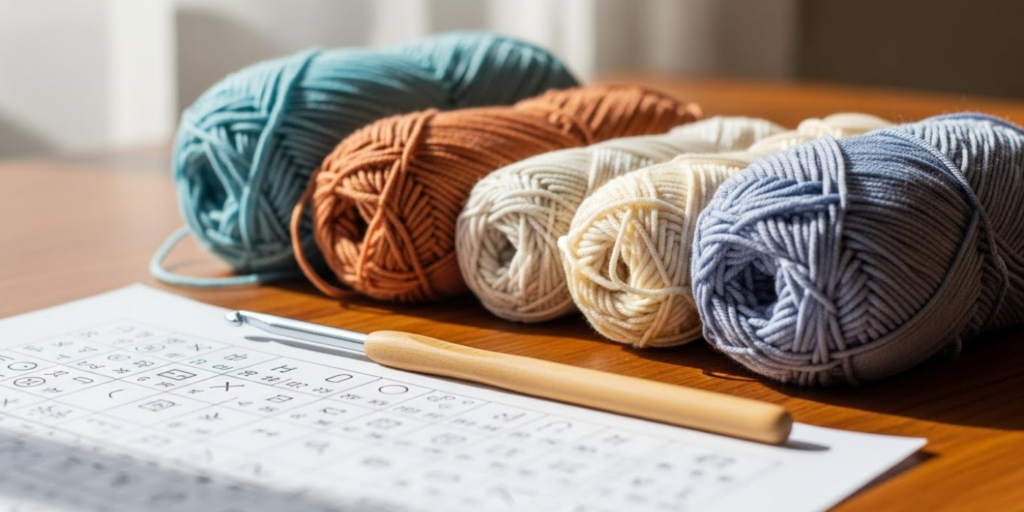
Have you ever picked up a crochet pattern only to feel like you’re reading a secret code? You’re not alone. Terms like “sc,” “dc,” “ch-2 sp,” and “rep from *” can seem like a foreign language to beginners—but they’re actually the universal shorthand that makes crochet patterns concise, clear, and consistent worldwide.
Understanding crochet abbreviations and symbols isn’t just helpful—it’s essential. Without them, patterns would be pages long, confusing, and full of repetitive instructions. Once you learn this “crochet alphabet,” you’ll unlock the ability to follow any pattern, from cozy blankets to trendy sweaters, with confidence.
In this beginner’s guide, we’ll break down the most common U.S. crochet abbreviations, explain how to read pattern structure, decode those mysterious asterisks and brackets, and even introduce you to stitch charts (yes, the ones with little symbols!). By the end, you’ll feel empowered to tackle your first real project—without Googling every other word.
Let’s unravel the mystery together, one stitch at a time.
Why Crochet Uses Abbreviations (And Why You’ll Love Them)
At first glance, abbreviations might seem like an unnecessary hurdle. But imagine reading:
“Make a chain stitch. Then make another chain stitch. Then another…”
Twenty times just to start! Abbreviations streamline instructions so you can focus on stitching—not decoding sentences.
The Craft Yarn Council (CYC) standardized U.S. crochet terms to ensure consistency across patterns, books, and yarn labels. This means “dc” always means “double crochet” in the U.S.—not “double treble” (that’s the British term!). Knowing you’re working with U.S. terminology is crucial, especially when using online patterns (more on that later!).
Bonus benefit: Once you memorize a few core abbreviations, you’ll read patterns faster, make fewer mistakes, and even start to “see” the fabric forming in your mind as you read. It’s like learning to read music—you eventually hear the melody in your head!
The Essential U.S. Crochet Abbreviations Every Beginner Must Know
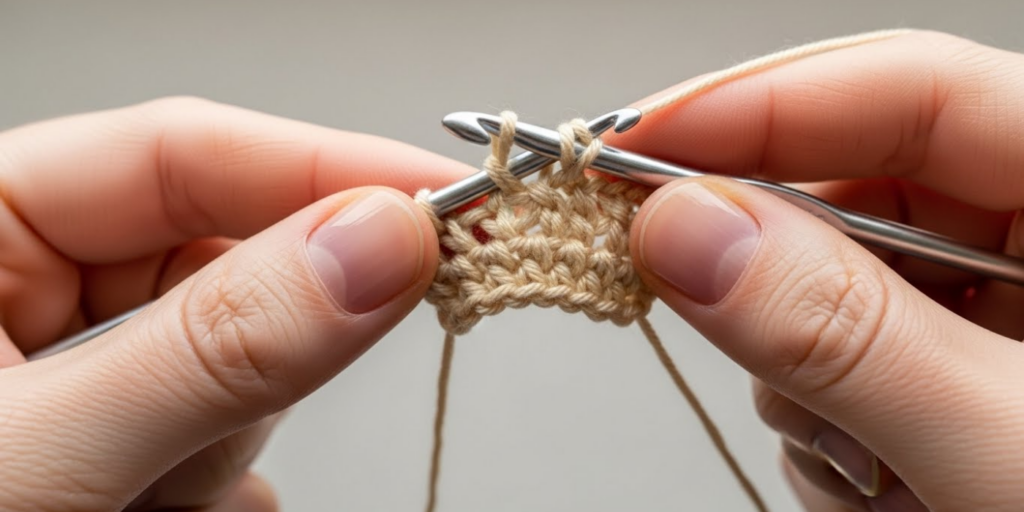
Start with these foundational terms—they appear in almost every pattern:
- ch = chain
- sl st = slip stitch
- sc = single crochet
- hdc = half double crochet
- dc = double crochet
- tr = treble (or triple) crochet
- st(s) = stitch(es)
- sp(s) = space(s)
- yo = yarn over
- rnd(s) = round(s)
- rep = repeat
- prev = previous
- RS/WS = Right Side / Wrong Side
Pro Tip: Print a cheat sheet (many free ones online!) and keep it in your project bag. Within a few projects, these will become second nature.
Example in action:
“Ch 15. Sc in 2nd ch from hook and in each ch across.”
Translation: Make 15 chains. Skip the first chain (closest to your hook), then work one single crochet into each of the remaining 14 chains.
Decoding Pattern Structure: Asterisks, Brackets, and Parentheses
Patterns often use punctuation to avoid repetition. Here’s what those symbols mean:
- * (asterisk): Marks the beginning of a repeat section.
Example: Sc, dc, sc; rep from * to end.
→ Work “sc, dc, sc,” then repeat that exact sequence until the row ends. - ( ) (parentheses): Usually indicate a group of stitches worked into one stitch or space, or the total stitch count.
Example: (Sc, ch 2, sc) in next ch-2 sp
→ Work all three actions—sc, ch 2, sc—into the same chain-2 space.
Or: Work 10 sc (10 sts)
→ You should have 10 stitches total after this row. - [ ] (brackets): Often used for larger repeats or nested instructions.
Example: [Ch 3, dc] 4 times
→ Repeat “ch 3, dc” four times in a row.
Common beginner mistake: Forgetting to count stitches after parentheses. Always check the stitch count if it’s provided—it’s your safety net!
Reading Rows vs. Rounds: How Patterns Change
Crochet projects are worked in either rows (flat pieces like scarves) or rounds (tubes like hats or amigurumi). The pattern will tell you which, but the structure differs:
Flat patterns (rows) often say:
- Row 1 (RS): …
- Row 2 (WS): …
You turn your work at the end of each row, alternating right and wrong sides.
In-the-round patterns say:
- Rnd 1: …
- Rnd 2: …
You do not turn your work. Instead, you stitch continuously in a spiral (or join with a slip stitch at the end, depending on the pattern).
Watch out: Some round patterns use a “joining” method (sl st to close the round), while others are spiral (no join). The pattern will specify—follow it closely to avoid gaps or twists!
U.S. vs. U.K. Terms: Avoiding Costly Confusion
This is critical. U.S. and U.K. crochet terms use the same abbreviations for different stitches. For example:
| U.S. Term | U.K. Term | What It Actually Is |
|---|---|---|
| Single Crochet (sc) | Double Crochet (dc) | The shortest basic stitch |
| Double Crochet (dc) | Treble Crochet (tr) | A taller stitch |
If you use a U.K. pattern with U.S. technique (or vice versa), your project will turn out too loose, too tight, or just plain wrong.
How to tell the difference:
- Check the pattern source: U.S. blogs, yarn brands (like Lion Brand, Red Heart), and Ravelry filters typically use U.S. terms.
- Look for clues: If the pattern includes “single crochet,” it’s U.S. (U.K. patterns skip this stitch name entirely).
- When in doubt, check the gauge or look for a terms note at the beginning.
Safety net: Many designers now specify “U.S. terms” or “U.K. terms” right in the title or notes. Always double-check before starting!
Intro to Crochet Charts: When Pictures Replace Words
Some patterns—especially for lace, motifs, or colorwork—use stitch diagrams instead of (or alongside) written instructions. These charts use standardized symbols:
- ⚪ = chain stitch
- ▢ = single crochet
- △ = double crochet
- 🌀 = treble crochet
- — = slip stitch
- ⬤ = stitch marker or special stitch
Each symbol is drawn to scale, showing how stitches sit relative to one another. Rows are usually numbered from bottom to top; rounds spiral outward from the center.
Don’t panic! Start with simple charted squares or granny squares. Many apps (like Crochet Symbol Charts or Stitch Fiddle) let you practice reading them interactively. Charts are incredibly helpful for visual learners and multilingual crafters—they truly are a universal language.
Practical Tips to Master Abbreviations Faster
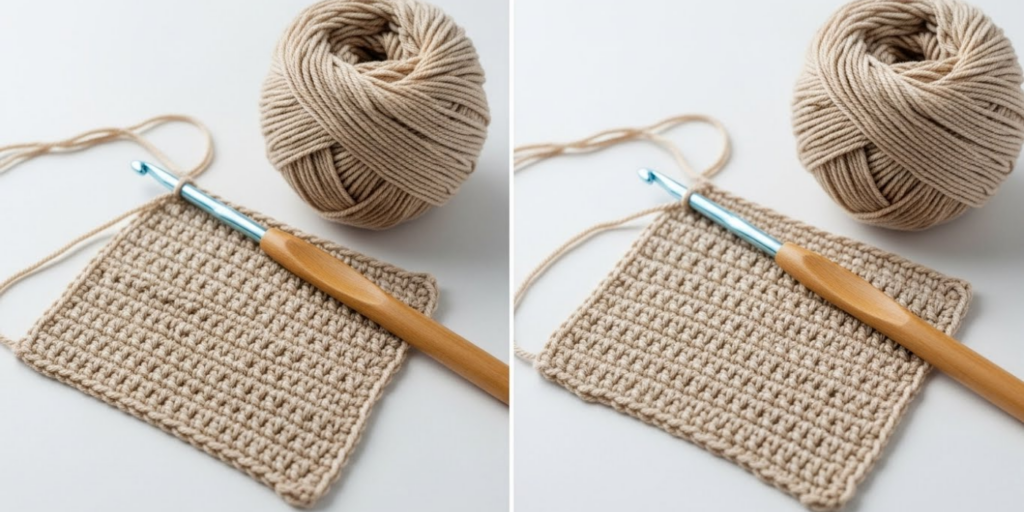
- Practice with a “cheat project”: Make a simple dishcloth using only sc, hdc, and dc. Read the pattern out loud as you go.
- Highlight as you stitch: Use a highlighter or sticky notes to mark your place in complex repeats.
- Watch video tutorials: Seeing an instructor say “yo, pull through two loops” while doing it helps cement the terms.
- Keep a personal glossary: Jot down new abbreviations you encounter (like “bps” for back post stitch) in a notebook or phone note.
- Join a crochet group: Ravelry forums, Facebook groups, or local yarn shops are full of people who’ve been exactly where you are.
Remember: Even expert crocheters double-check abbreviations now and then. There’s no shame in looking things up!
Common Pitfalls (And How to Avoid Them)
- Skipping the “Notes” section: Designers often explain special techniques or clarify terms there. Always read it first!
- Assuming all “dc” are the same: Some patterns use “front post dc” (fpdc) or “cluster dc”—check for modifiers.
- Ignoring gauge: Abbreviations tell you how to stitch, but gauge ensures your project is the right size. Always swatch!
- Rushing through repeats: Misreading “rep from * 3 times” as “rep 3 sts” is a classic error. Slow down on punctuation.
Real-life example: A beginner once asked why her baby blanket was 6 feet long—it turned out she’d worked “ch 3, dc in next st” across, but the pattern said “(ch 3, skip 2 sts, dc in next st)”—she’d missed the skip! Punctuation matters.
Why This Skill Opens Doors to Creative Freedom
Once you’re fluent in crochet abbreviations, the entire crafting world opens up. You can:
- Follow designer patterns on Ravelry or Etsy
- Customize stitch counts to fit your needs
- Join crochet-alongs (CALs) with confidence
- Even write your own patterns someday!
More than that, you’ll join a global community that speaks this quiet, beautiful language of loops and yarn. Every “sc” and “ch” is a word in a story you’re creating with your hands.
Conclusion: You’ve Got This—One Stitch at a Time
Crochet abbreviations might seem intimidating at first, but they’re simply tools to make your crafting journey smoother, faster, and more enjoyable. By mastering the core U.S. terms, understanding pattern structure, and staying aware of U.K. differences, you’ll eliminate frustration and unlock endless creative possibilities.
Remember: every expert crocheter was once a beginner staring at “ch-2 sp” in confusion. What separates them from the rest isn’t talent—it’s persistence and the willingness to learn the language of their craft.
So grab your hook, your favorite yarn, and a simple pattern. Use this guide as your reference, and don’t be afraid to go slow. With each row, you’re not just making stitches—you’re building confidence.
Now we’d love to hear from you: What’s the first abbreviation you learned? Or which one still trips you up? Share your story in the comments below—your question might be the key to someone else’s “aha!” moment. Happy crocheting! 🧶
Luiza Santos is a passionate crochet and knitting enthusiast who finds joy in transforming simple yarn into meaningful, handmade creations. With a deep love for texture, color, and craftsmanship, she believes every stitch carries a story. Luiza brings warmth, creativity, and years of hands-on experience to everything she makes, inspiring others to discover the beauty of fiber arts.