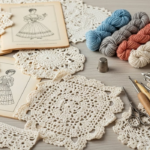
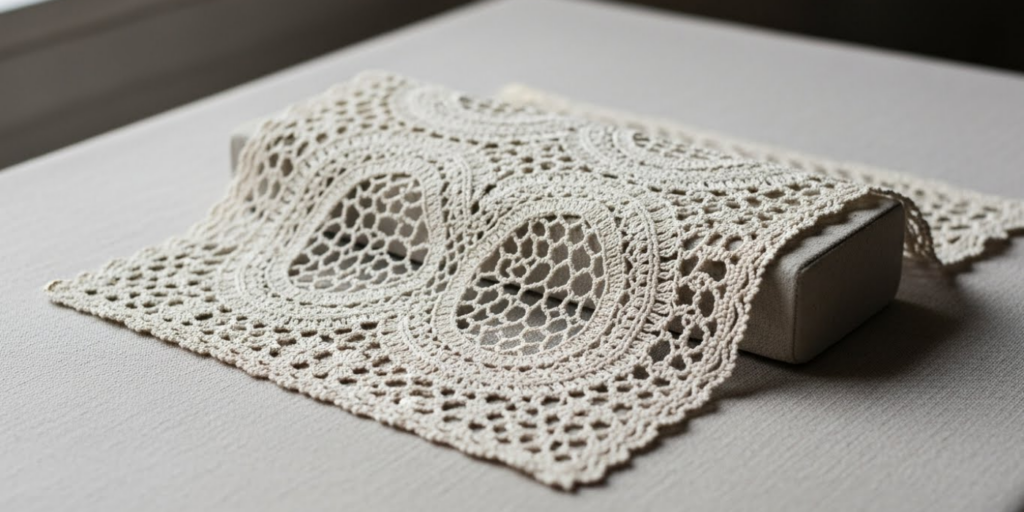
Imagine delicate, flowing motifs that mimic antique lace—yet are made not with bobbins or needles, but with just a crochet hook and thread. Welcome to the world of Bruges lace crochet, a stunning technique that bridges centuries of Flemish textile art with today’s handmade aesthetic.
Born in the cobblestone alleys of Bruges, Belgium—a city famed for its medieval canals and lace-making heritage—this method transforms simple chains and picots into intricate, ribbon-like edgings, collars, and even full garments. And while it may look complex, Bruges lace is surprisingly accessible to crocheters who know basic stitches.
In this article, you’ll discover the history and charm of Bruges lace, learn how it actually works, get step-by-step guidance to start your first motif, and explore fresh, modern ways to use this vintage technique—from minimalist jewelry to boho home décor. Whether you’re a history lover, a texture enthusiast, or just looking for a new creative challenge, Bruges lace offers timeless beauty with contemporary flair.
Ready to weave a little European elegance into your next project? Let’s begin.
A Glimpse into History: Where Bruges Lace Began
Long before machine-made fabrics dominated, handmade lace symbolized luxury, patience, and artistry. In 15th-century Flanders (modern-day Belgium), cities like Bruges, Ghent, and Brussels became epicenters of lace production. Originally, this was bobbin lace—a painstaking craft using dozens of bobbins wound with thread, manipulated on a pillow to create intricate geometric and floral patterns.
But by the late 19th century, as industrialization threatened traditional crafts, crocheters sought ways to replicate lace using only a hook. What emerged was Bruges lace crochet: a method that mimics the look of bobbin lace by creating “tape” (a flat, chain-based strip) and connecting it with decorative picots, arches, and motifs.
Unlike filet or Irish crochet, Bruges lace doesn’t rely on solid blocks or heavy thread. Instead, it’s light, airy, and fluid—like ribbon dancing through space.
This technique nearly vanished in the mid-20th century but has seen a quiet revival in recent years, thanks to makers who appreciate its sculptural quality and historical roots.
How Bruges Lace Works: It’s Simpler Than It Looks
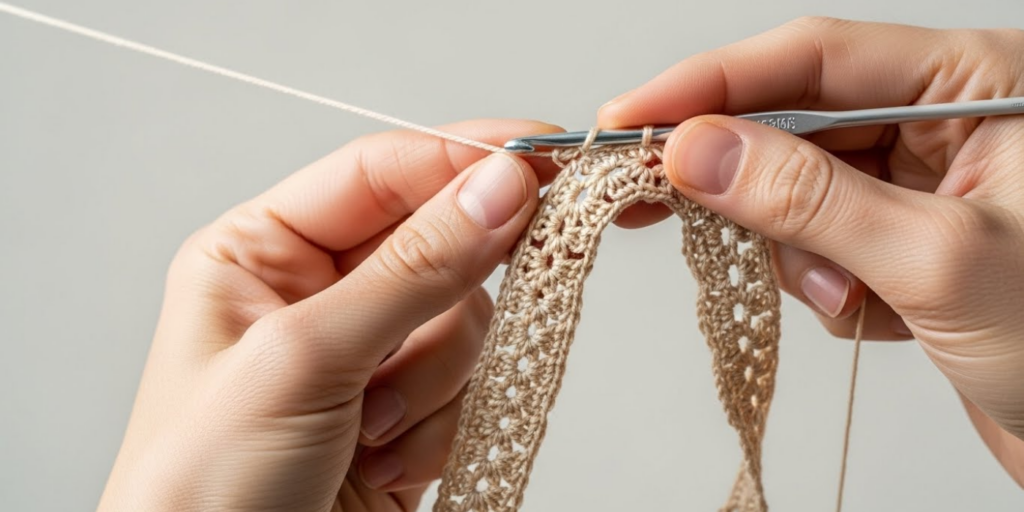
At its core, Bruges lace is built from two basic elements:
- The Tape (or Braid) – A flat, reversible strip made from chains and double crochets, worked back and forth.
- The Connectors – Chains, picots, or small clusters that join sections of tape to create curves, flowers, or geometric shapes.
Think of the tape as a train track, and the connectors as the switches that guide it into loops, waves, or rosettes.
You never work in rounds or spirals. Instead, you shape the design by folding and joining the tape as you go. This gives Bruges lace its signature dimensional quality.
Why crocheters love it today:
- Creates openwork elegance without dense stitching
- Uses minimal yarn/thread—great for stash-busting
- Offers endless design flexibility: make it floral, geometric, or freeform
- Perfect for eco-friendly projects (works beautifully with linen, cotton, or recycled threads)
And despite its delicate appearance, Bruges lace is sturdy enough for wearables—especially when blocked properly.
Getting Started: Materials and Mindset
You don’t need a treasure chest of supplies—just a few thoughtful choices:
✅ Thread or Yarn:
- Traditional: Size 20–40 crochet thread (like DMC or Aunt Lydia’s) for authentic lace.
- Modern twist: Use sport or fingering weight yarn (cotton, bamboo, or linen blends) for bolder, wearable pieces. Avoid wool—it lacks the crisp drape Bruges lace needs.
✅ Hook:
- Steel hooks (0.6–1.5mm) for fine thread
- Regular hooks (2.0–3.0mm) for light yarn
✅ Extras:
- Stitch markers (to track turns)
- Blocking mat and pins (essential for finishing)
- Scissors and tapestry needle
Pro tip: Start with light-colored, smooth cotton—it’s easier to see your stitches and correct mistakes.
Most importantly, adopt a patient, meditative mindset. Bruges lace rewards slowness. Rushing leads to tangled tape or uneven tension. Put on some soft music, pour a cup of tea, and let your hands move with care.
Step-by-Step: Creating Your First Bruges Tape
Let’s make a basic tape—the foundation of every Bruges project.
Step 1: Foundation Chain
Chain an odd number (e.g., 11 chains). This creates symmetry.
Step 2: First Row
- Skip the first chain (counts as turning chain).
- Work 1 double crochet (dc) in the next chain.
- Chain 1, skip 1 chain, dc in next chain.
- Repeat from * across. You’ll end with a dc in the last chain.
- Turn.
This creates a zigzag “ladder”—the spine of your tape.
Step 3: Continue the Tape
On the next row:
- Chain 3 (counts as first dc).
- Work dc in the first dc of the previous row (not in the chain space!).
- Chain 1, dc in next dc.
- Repeat across. Turn.
Key insight: You’re always working dc into the dc posts, never into the chain spaces. The chain-1 spaces create the open channel down the center—this is what gives Bruges tape its flat, ribbon-like look.
Repeat rows until your tape is the desired length. For a first swatch, try 15–20 rows.
Shaping the Lace: From Tape to Art
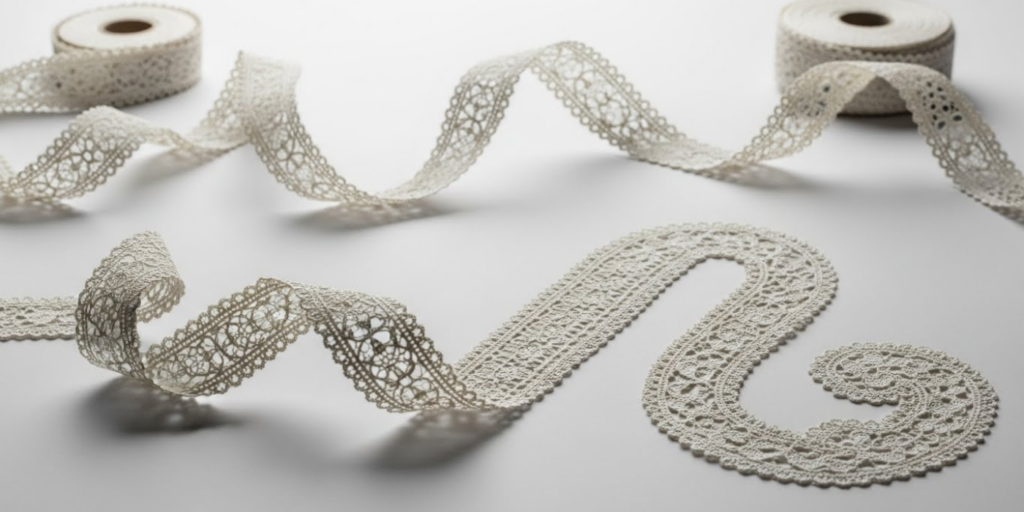
Now comes the magic: turning straight tape into curves and motifs.
Method 1: The Picot Join
To create a loop (great for edgings or flowers):
- Work your tape to the turning point.
- Instead of turning, chain 5–7 stitches (this forms an arch).
- Slip stitch into the edge of the tape several rows back.
- Continue working tape from that join point.
Each arch acts like a hinge, allowing the tape to bend into scallops or petals.
Method 2: Motif Building
For a rosette:
- Make a short tape (10 rows).
- Chain 6, slip stitch to the base to form a ring.
- Work another tape segment, joining it to the ring with picots every few rows.
- Repeat 4–6 times to form a flower.
Design tip: Sketch your motif lightly on paper first. Bruges lace is modular—you can plan shapes like puzzle pieces.
Common Challenges (and How to Overcome Them)
Even experienced crocheters face hurdles with Bruges lace. Here’s how to navigate them:
❌ “My tape curls or twists!”
This usually means uneven tension. Try:
- Using a larger hook for the chain-1 spaces
- Blocking every few inches as you go
- Counting stitches carefully—missing a dc post throws off the whole tape
❌ “The joins look messy.”
Practice slip stitching neatly into the edge dc posts, not the chain spaces. A smaller hook for joining can help.
❌ “I can’t visualize the final shape.”
Start with simple borders before tackling 3D motifs. Many free vintage patterns (like those from Weldon’s Practical Needlework) show classic Bruges edgings—great for learning.
Remember: mistakes add character. Slight irregularities give handmade lace its soul.
Modern Projects That Shine With Bruges Lace
Don’t relegate this technique to doilies! Today’s makers are reimagining Bruges lace in fresh, functional ways:
- Boho Earrings & Necklaces: Use fine metallic thread for lightweight, heirloom-worthy jewelry.
- Wedding Accessories: Veil edgings, garter trims, or bouquet wraps.
- Home Décor: Table runners, curtain tiebacks, or framed wall art.
- Fashion Accents: Collars for blouses, yoke details on dresses, or lace insets on tote bags.
- Baby Gifts: Christening gowns, bonnet trims, or delicate booties.
Real example: A popular indie designer recently released a Bruges lace market bag using unbleached cotton—combining sustainability with vintage charm.
The key is scale and contrast: pair delicate Bruges elements with modern silhouettes or bold colors to avoid looking “dated.”
Why This Technique Matters Today
In a world of fast fashion and mass production, Bruges lace is a quiet act of resistance and reverence. It honors the hands of Flemish lacemakers who worked by candlelight, yet adapts beautifully to mindful making in the 21st century.
Moreover, it teaches precision, patience, and spatial thinking—skills that transfer to all fiber arts. And because it uses so little material, it’s inherently sustainable.
As one modern lacemaker puts it: “Bruges lace isn’t just about making something pretty—it’s about slowing down enough to see beauty in the space between stitches.”
Final Tips for Success
To make your Bruges journey joyful and successful:
🔁 Start small – Master a 6-inch border before attempting a full shawl.
🧵 Block religiously – Gently stretch your finished piece on a mat, pin into shape, and mist with water. Let dry completely.
📚 Study vintage patterns – Books like Bruges Lace Crochet by Geraldine Wilkes offer timeless inspiration.
❤️ Embrace imperfection – Handmade lace should whisper, not shout.
Conclusion: Weave History Into Your Hands
Bruges lace crochet is more than a technique—it’s a conversation across centuries. With every chain and picot, you join a lineage of artisans who believed beauty lives in detail, patience, and care.
And the best part? You don’t need to live in a Belgian canal house or wear a bonnet to enjoy it. Whether you’re trimming a summer dress, crafting a gift for a loved one, or simply enjoying the rhythm of hook and thread, Bruges lace offers a rare blend of heritage and handmade joy.
So dust off that spool of thread, choose a sunny corner, and give this vintage method a try. You might just find that the most modern thing you can make is something deeply, beautifully old.
Have you tried Bruges lace before? Or are you inspired to start your first project? Share your ideas or questions in the comments below—and if you love vintage techniques with a modern twist, share this article with a fellow maker! Happy stitching! 🌸

Luiza Santos is a passionate crochet and knitting enthusiast who finds joy in transforming simple yarn into meaningful, handmade creations. With a deep love for texture, color, and craftsmanship, she believes every stitch carries a story. Luiza brings warmth, creativity, and years of hands-on experience to everything she makes, inspiring others to discover the beauty of fiber arts.