
Imagine this: You’ve just launched a new line of hand-dyed yarn kits, and instead of hoping strangers find your post on social media, you send a personal email to 500 people who already love your work. Within hours, half your stock is sold—not because of an algorithm, but because you built a real relationship with real people.
That’s the power of an email list.
In today’s noisy digital world, social media platforms come and go, trends shift overnight, and algorithms decide who sees your content. But your email list? It’s yours—forever. No one can take it away, silence it, or charge you to reach your audience.
For crochet entrepreneurs—whether you sell finished goods, patterns, yarn, or kits—building an email list is one of the smartest, highest-return investments you can make. It turns casual browsers into loyal customers, helps you launch products with confidence, and gives you a direct line to your community.
In this guide, you’ll learn exactly how to start and grow an email list from scratch, even if you’ve never sent a marketing email before. We’ll cover free tools, lead magnet ideas tailored to crocheters, simple sign-up strategies, and how to write emails that feel personal—not pushy.
Ready to stop shouting into the void and start talking directly to your ideal customers? Let’s build your list—one stitch at a time.
Why Email Still Wins (Even in the Age of TikTok)
You might be thinking: “Isn’t email outdated? Everyone’s on Instagram or Pinterest now!”
Here’s the truth: Social media is rented land. Email is your home.
On social platforms, you don’t own your followers. If Instagram changes its algorithm (again), your reach plummets. But with email, you control the conversation. Studies show email has an average ROI of $36 for every $1 spent—far higher than any social channel.
Plus, email subscribers are high-intent buyers. They’ve raised their hand and said, “Yes, tell me more!” That’s gold for a small business.
Real example: Sarah, a crochet pattern designer, grew her email list to 2,000 subscribers in 18 months. When she launched her first paid e-book, she earned $1,200 in 48 hours—all from her email list. Social media helped spread the word, but email drove the sales.
Step 1: Choose the Right Email Service Provider (It’s Easier Than You Think)
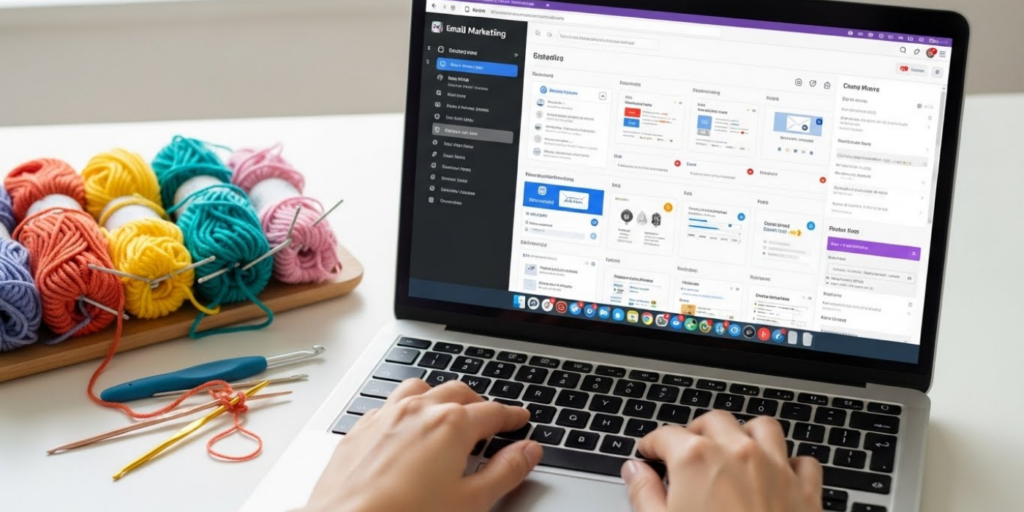
You don’t need fancy tech skills to start. In fact, most email platforms are free up to 1,000–2,000 subscribers.
Top beginner-friendly options:
- MailerLite: Free up to 1,000 subscribers. Drag-and-drop editor, pop-ups, automation.
- Mailchimp: Free up to 500 contacts. Great templates but limited features on free plan.
- ConvertKit: Free up to 1,000 subscribers. Built for creators, with easy tagging and sequences.
What to look for:
- Easy sign-up form builder
- Mobile-friendly templates
- Automation (so you can send welcome emails automatically)
- GDPR/privacy compliance (don’t worry—they handle it for you)
Pro Tip: Start with MailerLite if you’re new—it’s simple, powerful, and generous on its free plan.
Once you pick a platform, connect it to your website or Etsy shop (yes, you can do this!). Most have step-by-step guides or even chat support.
Step 2: Offer a “Lead Magnet” They Can’t Resist
People won’t give you their email just because you ask. You need to offer something valuable in return—a lead magnet.
For crocheters, your lead magnet should solve a problem, spark joy, or save time. Here are 5 proven ideas:
- Free Beginner Crochet Guide
A printable PDF with basic stitches, yarn weights, and hook sizes. Perfect for new crafters. - Exclusive Pattern
A simple but beautiful pattern (e.g., “Rainbow Striped Coaster Set”) only available to subscribers. - Yarn Substitution Cheat Sheet
Help customers swap yarns confidently—especially useful for international buyers. - Stitch Dictionary with Video Links
A visual guide to 10 essential stitches, each linked to your YouTube tutorials. - “Crochet Emergency Kit” Checklist
A fun, printable list: scissors, tapestry needle, stitch markers, etc.—great for beginners.
Key: Make it immediately useful and visually appealing. Use Canva (free) to design it in 20 minutes.
Pro Tip: Name it something benefit-driven:
❌ “Free PDF”
✅ “Your First Crochet Project: A Stress-Free Starter Guide”
Step 3: Place Sign-Up Forms Where People Actually See Them
You could have the best lead magnet in the world—but if no one sees the sign-up form, it won’t grow your list.
Best places to add sign-up prompts:
- Your website homepage (use a pop-up or embedded form)
- Blog posts (add a callout at the end: “Love this tutorial? Get 3 more like it!”)
- Etsy shop announcement (“Join my list for new pattern alerts + 10% off your next order!”)
- Instagram bio link (use Linktree or Beacons to direct to your sign-up page)
- Product packaging (include a small card with a QR code to your lead magnet)
Don’t:
- Ask for too much info (name + email is enough)
- Hide the form in your footer
- Use vague language like “Subscribe”
Do:
- Use clear, benefit-driven copy:“Get my free ‘5-Minute Granny Square’ pattern—yours instantly when you join!”
Real result: One crocheter added a pop-up to her blog offering a free amigurumi pattern. Her list grew by 300 subscribers in one month—all from existing traffic.
Step 4: Send Emails That Feel Like a Friendly Note (Not a Sales Pitch)
Once someone joins, don’t disappear for weeks—and don’t spam them with sales right away.
Instead, build trust first. Here’s a simple 3-email welcome sequence:
Email 1 (Instant):
- Deliver the lead magnet
- Say thank you
- Share a little about you: “Hi! I’m Maya. I’ve been crocheting since I was 10, and I believe everyone can make something beautiful.”
Email 2 (Day 3):
- Share a quick tip: “How to avoid curling edges in granny squares”
- Include a photo of your workspace or current project
- End with a question: “What are you making this week?”
Email 3 (Day 7):
- Softly introduce your shop: “P.S. My ‘Cozy Winter Hat’ pattern just dropped—50% off for subscribers this week!”
Golden Rule: For every 1 sales email, send 3–4 value emails (tips, stories, tutorials, behind-the-scenes).
Tone: Write like you’re texting a friend who loves yarn. Use short paragraphs, emojis (sparingly!), and warmth.
Advanced Tip: Segment Your List for Better Results
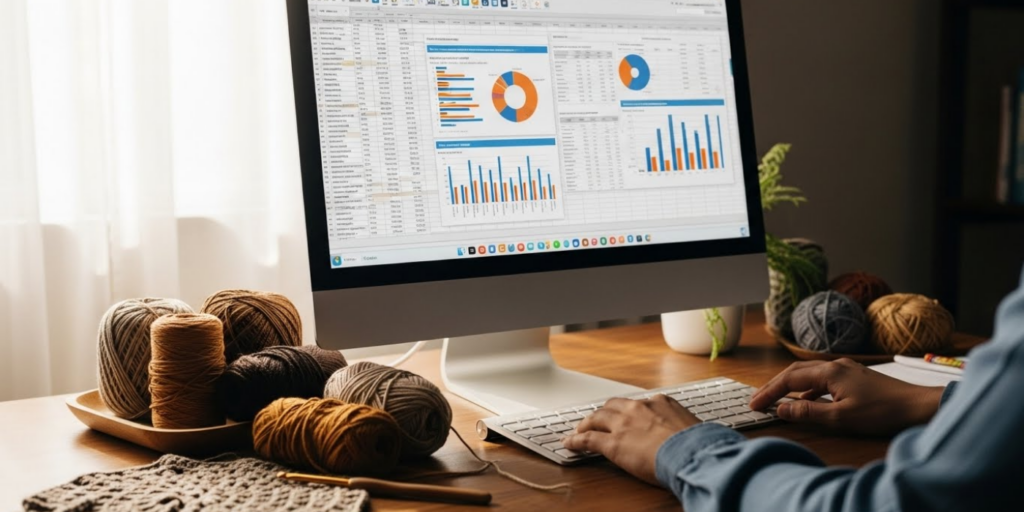
As your list grows, not everyone wants the same thing. A beginner needs different content than a pattern collector.
Use simple tags or segments:
- “Beginner” → send basic tutorials
- “Amigurumi Lover” → share new toy patterns
- “Yarn Buyer” → notify about new colorways
Most email platforms let you do this with click-based tags (e.g., if someone clicks a link about sock yarn, tag them “Socks”).
This way, your emails feel personalized, not generic—and your open rates (and sales) go up.
What NOT to Do (Common Email Mistakes)
🚫 Buying email lists: It’s spammy, illegal in many places, and destroys trust.
🚫 Sending too often: 1–2 emails per week is plenty for a small biz.
🚫 Using ALL CAPS or too many exclamation points!!!
🚫 Not including an unsubscribe link: It’s required by law (and good practice).
🚫 Ignoring analytics: Check open rates. If they’re below 30%, your subject lines need work.
Remember: Email is a long-term relationship, not a quick sale.
Real Success Story: From 0 to 1,000 Subscribers in 6 Months
Lena sells handmade crochet baby blankets on Etsy. She had 50 sales but no email list.
She took these steps:
- Created a free “Baby Blanket Stitch Guide” PDF.
- Added a pop-up to her Etsy shop via a Linktree in her bio.
- Included a QR code in every package.
- Sent a weekly email with a “Project of the Week” and care tips.
In 6 months, she built a list of 1,200 subscribers. Now, every new product launch sells out in 24 hours—and 60% of her sales come from email.
Her secret? Consistency + generosity.
Final Thought: Your List Is Your Creative Community
An email list isn’t just a marketing tool—it’s a circle of people who believe in your craft. They want to see you succeed. They’re rooting for you.
When you email them, you’re not “selling.” You’re sharing your passion, your process, and your progress. And in return, they support your art.
That’s not business. That’s belonging.
Conclusion: Start Small, Think Big
Building an email list doesn’t require a huge budget or tech skills. It just takes one lead magnet, one sign-up form, and one heartfelt email.
In this guide, you’ve learned how to:
- Choose a free, beginner-friendly email platform
- Create a lead magnet your ideal customer will love
- Place sign-up forms where they convert
- Write emails that build trust, not pressure
The best time to start was yesterday. The second-best time? Today.
So pick one idea from this article—maybe design that free pattern or set up your MailerLite account—and take the first step. Your future customers are waiting.
What’s your biggest fear about starting an email list? Or what lead magnet idea are you excited to try?
Share in the comments below—we’re all learning together, one stitch (and one subscriber) at a time! 🧶✉️

Luiza Santos is a passionate crochet and knitting enthusiast who finds joy in transforming simple yarn into meaningful, handmade creations. With a deep love for texture, color, and craftsmanship, she believes every stitch carries a story. Luiza brings warmth, creativity, and years of hands-on experience to everything she makes, inspiring others to discover the beauty of fiber arts.