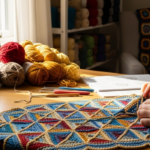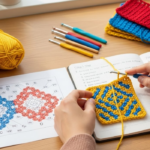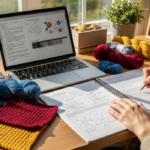
Imagine holding a crocheted blanket that looks like a painted masterpiece—vivid dragons soaring over mountain ranges, blooming florals that seem to leap off the fabric, or a cozy sweater adorned with your favorite city skyline. All of it, stitched by hand, one colorful loop at a time. This isn’t magic. It’s colorwork crochet—and it’s easier than you think.
If you’ve ever admired a vibrant, multi-colored crochet project and thought, “I could never do that,” this article is for you. Today, we’re diving deep into two of the most beautiful and rewarding color techniques in crochet: Intarsia and Tapestry. Whether you’re a beginner nervous about switching yarns or an experienced crocheter ready to level up, you’ll walk away with clear explanations, practical tips, and the confidence to create your own colorful masterpieces.
We’ll explore how these techniques differ, when to use each one, common mistakes to avoid, and even how to turn your favorite photos into crochet patterns. Plus, you’ll discover why colorwork isn’t just about aesthetics—it’s a mindful, creative practice that brings joy, focus, and a sense of accomplishment to your craft.
Let’s unravel the secrets behind those stunning, multi-hued designs—and get you crocheting color like a pro.
What Is Colorwork Crochet? (And Why It’s More Accessible Than You Think)
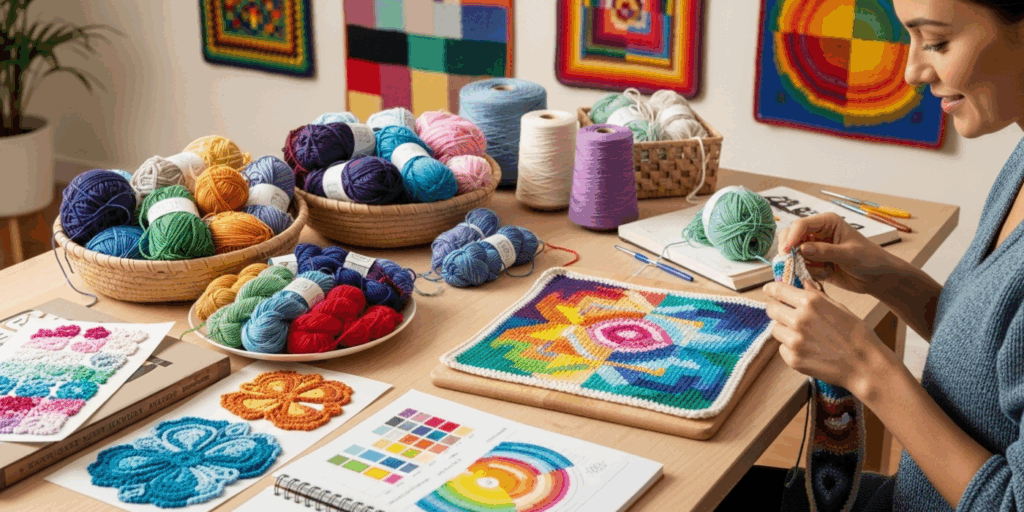
Colorwork crochet is the art of using multiple yarn colors in a single project to create images, patterns, or textures. Unlike simple stripe patterns, colorwork lets you draw with yarn—literally. Think of it like coloring inside the lines, except your crayon is a crochet hook and your paper is a grid of stitches.
Two main techniques dominate this world: Intarsia and Tapestry. Both produce stunning results, but they work in very different ways.
Intarsia is like piecing together stained glass. You use separate balls of yarn for each colored section. When you finish one color, you drop it and pick up the next—no carrying yarn across the back. This makes it perfect for large blocks of color, like a yellow sun against a blue sky.
Tapestry, on the other hand, is like weaving a rug. You carry the unused yarn along the back of your work, hiding it within the stitches. This is ideal for intricate, detailed patterns—think geometric motifs, tiny animals, or pixel-art designs.
Many crocheters assume colorwork requires advanced skills or special tools. But here’s the truth: you already know how to crochet. Colorwork just adds a new layer—literally—to what you’re already doing. The hardest part? Choosing which colors to use.
And the payoff? Absolutely worth it. A single colorwork project can transform a simple beanie into a conversation starter. A blanket becomes a family heirloom. Even a small coaster can feel like a work of art.
The best part? With today’s free patterns, YouTube tutorials, and user-friendly yarns, you don’t need to be a professional to create professional-looking results. All you need is curiosity—and maybe a few extra bobbins of yarn.
Intarsia Crochet: Building Color Like a Puzzle
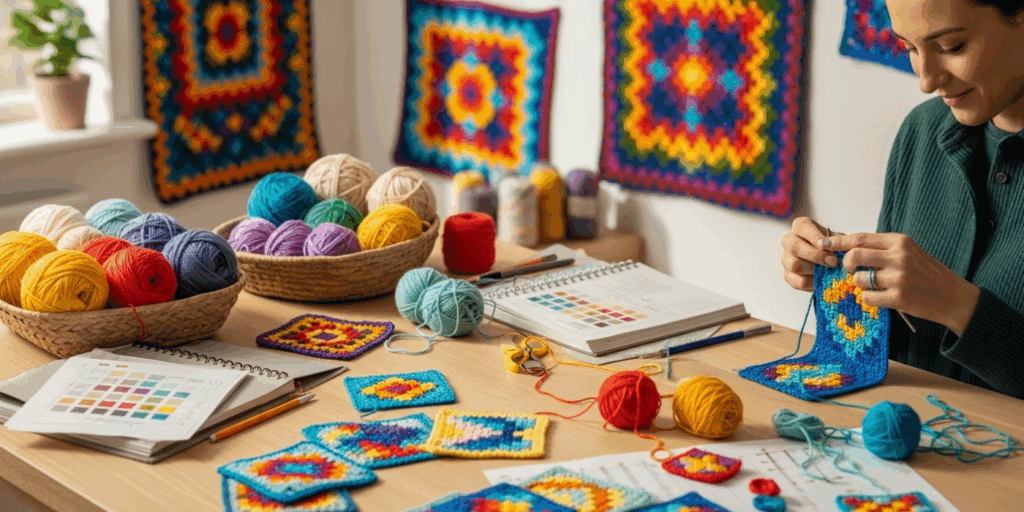
Let’s start with Intarsia—the technique that feels like assembling a jigsaw puzzle with yarn.
In Intarsia, each color block has its own separate ball or bobbin of yarn. When you finish one color and move to another, you drop the first yarn and pick up the next. There’s no carrying yarn across the back. This means your work stays smooth and lightweight—perfect for blankets, sweaters, or anything where bulk matters.
Here’s how it works in practice: Imagine you’re crocheting a heart. The outer edge is red, the center is white. You start with red. When you reach the point where white begins, you drop the red yarn (don’t cut it!), pick up the white, and continue. When you return to red, you pick it up again from where you left off.
Pro tip: Use small bobbins or wind your yarn around cardboard to keep it neat. Tangled yarn is the #1 reason people quit Intarsia. Keep each color organized, and you’ll thank yourself later.
One of the biggest advantages of Intarsia? No long floats. In tapestry, you sometimes carry yarn across several stitches, which can make your fabric stiff or pucker. Intarsia avoids this entirely. That’s why it’s the go-to for large, bold designs—like a bear’s face on a baby blanket or a palm tree on a beach towel.
But here’s the catch: you’ll have more ends to weave in. Each time you switch colors, you leave a tail. For a complex design, that could mean 20+ ends. It sounds tedious, but think of it as a mindful, meditative task—like knitting in silence after a long day.
Try this: Start small. Crochet a 6” square with just two colors. Make a simple shape—a star, a circle, a smiley face. Practice switching yarns cleanly. Then, next time you’re watching TV, weave in those ends. You’ll be amazed at how quickly you build confidence.
Intarsia is also ideal for photographic or realistic designs. Want to crochet your pet? Your favorite coffee cup? Intarsia gives you the clean edges you need to make those details pop.
Tapestry Crochet: Weaving Color Into Every Stitch
Now, let’s flip the script and talk about Tapestry crochet—the technique that turns your hook into a mini loom.
In tapestry, you carry the unused yarn along the back of your work, trapping it inside each stitch. This means you never drop a yarn. You just switch colors within the same row, and the old color hides neatly behind the new one.
This method is perfect for intricate, repeating patterns—think Moroccan tiles, Celtic knots, or pixel art of your favorite video game character. Because the yarn is carried, you can create fine details that would be impossible with Intarsia.
Here’s how it works: Say you’re crocheting a row with three colors: green, white, and blue. You crochet a few stitches in green, then switch to white for one stitch, then blue for two, then back to green. As you go, you gently pull the unused yarn (white and blue) along the back, twisting it around the active yarn every few stitches to prevent long, loose floats.
Key rule: Always twist your yarns every 2–3 stitches when carrying them. If you let the yarn float too far across the back, it can catch on things, stretch out, or make your fabric pucker. A quick twist keeps everything secure and invisible.
Tapestry is also great for small projects—coasters, hats, bags, even socks. Because you’re not constantly switching yarn balls, it’s faster and less messy than Intarsia for dense patterns.
One of my favorite tapestry projects? A set of Christmas ornaments shaped like snowflakes. Each petal had 5 colors, all carried within one round. It looked complicated—but once I got the rhythm, it felt like painting with stitches.
Pro tip: Use a hook one size larger than recommended for your yarn. Tapestry can be dense, and a slightly bigger hook helps keep your fabric flexible and drapey.
And here’s a game-changer: Tapestry crochet is reversible. The back looks almost as neat as the front—perfect for items that will be seen from both sides, like scarves or pillow covers.
The downside? It can be slower than Intarsia, and the back can get bulky if you’re using too many colors. But with practice, you’ll learn to carry yarns efficiently—and the results? Breathtaking.
Choosing Between Intarsia and Tapestry: Which One’s Right for You?
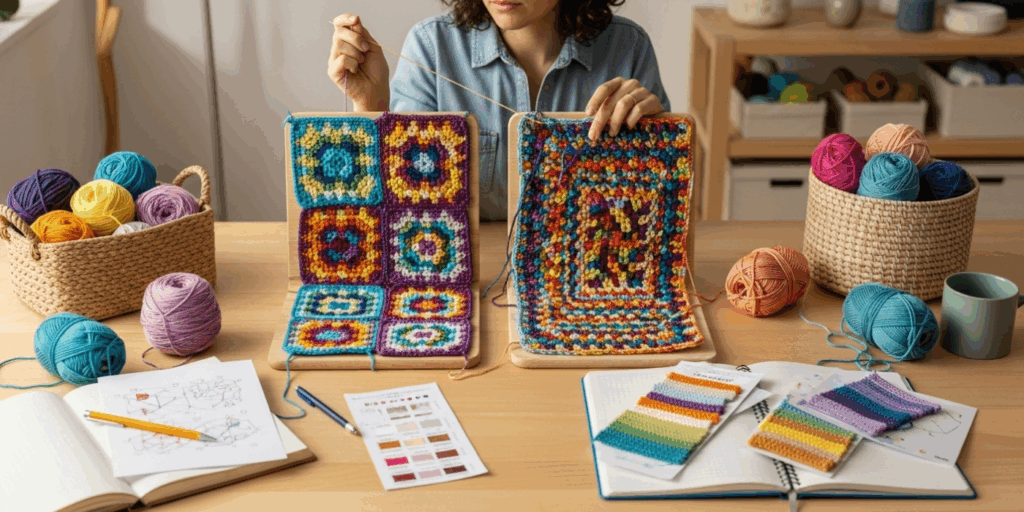
So… which technique should you use? The answer depends on your project—and your mood.
| Best for | Large blocks of color (e.g., faces, animals, landscapes) | Detailed, intricate patterns (e.g., pixels, geometry, text) |
| Yarn Management | Separate bobbins for each color | One yarn carried behind; switch within row |
| Ends to Weave | Many (one per color change) | Fewer (only at start/end of project) |
| Fabric Thickness | Lighter, less bulky | Slightly denser, can feel stiff if over-carried |
| Speed | Faster for big shapes | Slower but better for detail |
| Reversible? | No (back looks messy) | Yes (back is neat and intentional) |
Think of it this way:
Intarsia is like painting with large brushes.
Tapestry is like drawing with a fine-tip pen.
If you’re making a blanket with a giant owl in the center? Go Intarsia.
If you’re crocheting a beanie with tiny snowflakes all around? Tapestry is your friend.
Real-life example: My friend Lisa wanted to make a “Galaxy” baby blanket. She used Intarsia for the deep purple and navy background (big, smooth areas), and Tapestry for the tiny white star clusters (hundreds of little dots). The result? A cosmic masterpiece that won first prize at her local craft fair.
Start here: Pick a simple pattern—maybe a heart or a flower—with only 2–3 colors. Try it once with Intarsia. Then, try the same design with Tapestry. Notice the difference in feel, speed, and look. You’ll instantly know which technique clicks with your style.
And don’t worry—you don’t have to pick just one. Many advanced crocheters combine both in a single project. It’s like using watercolor and ink in one painting. The possibilities are endless.
Tips to Master Colorwork Crochet (Without the Frustration)
You’ve got the concepts. Now let’s talk practical tips—because colorwork can feel overwhelming if you’re not prepared.
1. Use Contrasting Colors Wisely
Don’t pick two similar shades (like navy and charcoal) if you want your design to pop. High contrast = clear definition. Try bright yellow on deep purple, or coral on teal. Your eyes—and your audience—will thank you.
2. Mark Your Rows
Use stitch markers or safety pins to mark the start of each color change row. It’s easy to lose your place, especially with complex charts. A simple marker = fewer mistakes.
3. Read Your Pattern Like a Map
Most colorwork patterns come as charts—little grids where each square = one stitch. Learn to read them! Start with black-and-white charts (they’re easier). Color them in with crayons as you go. It turns crocheting into a fun puzzle.
4. Try the “Yarn Bobbin” Hack
Wind small amounts of yarn onto cardboard or plastic bobbins. Clip them to your project with clothespins or safety pins. This keeps yarn from rolling away or tangling. I swear by this trick—it saved my sanity during my first tapestry sweater.
5. Embrace Mistakes
You’ll drop a yarn. You’ll carry a color too far. You’ll accidentally crochet two stitches in the wrong color. That’s okay. Colorwork is forgiving. You can often fix errors by unraveling just a few rows. And honestly? A little “imperfection” adds charm.
6. Start Small. Think Big.
Make a coaster. Then a potholder. Then a hat. Each small win builds confidence. Before you know it, you’ll be tackling full-sized afghans with 12 colors.
The Joy of Colorwork: More Than Just Craft
There’s something deeply calming about colorwork crochet.
When you’re focused on switching yarns, counting stitches, and watching a design emerge stitch by stitch, your mind slows down. You’re not thinking about deadlines or emails. You’re just there. In the rhythm. In the color.
Many crocheters describe it as “moving meditation.” And science backs it up: repetitive, focused handwork reduces cortisol (the stress hormone) and boosts dopamine (the feel-good chemical).
Plus, colorwork lets you tell stories.
A blanket with your child’s favorite cartoon characters.
A scarf in your alma mater’s colors.
A pillow with your dog’s portrait.
These aren’t just objects. They’re memories you’ve stitched into fabric.
And here’s the beautiful truth: you don’t need to be perfect to create something meaningful.
One of my favorite Instagram posts came from a woman in Ohio who crocheted a tapestry of her late father’s fishing hat—complete with a tiny fly on the brim. She didn’t have years of experience. She just had love, a hook, and a lot of patience.
That’s the power of colorwork.
Ready to Try It? Start Your First Colorwork Project Today
You’ve read the theory. You’ve seen the examples. Now it’s time to make something beautiful.
Here’s your simple challenge:
👉 Pick one small project this week.
Choose a free pattern with just 2–3 colors. (Try “colorwork coaster” or “tapestry flower” on Ravelry or Etsy.)
Use yarn you already own—no need to buy anything new.
Crochet for 20 minutes a day.
Don’t worry if it’s messy. Just finish it.
When you do, you’ll not only have a new piece to show off—you’ll have proof that you can do hard things. That you can learn something new. That you can turn yarn into joy.
And guess what? You’re not just making a blanket or a hat.
You’re making space for creativity in your life.
So grab your hook. Pick a color. Start a stitch.
The world doesn’t need more perfect things.
It needs more made-with-love things.
And you? You’re already on your way.
What’s your dream colorwork project?
A pet portrait? A favorite quote? A galaxy blanket?
Drop your idea in the comments below—I’d love to cheer you on!
And if you found this helpful, share it with a fellow crocheter who needs a little inspiration today.
Happy hooking. 🧶✨

Luiza Santos is a passionate crochet and knitting enthusiast who finds joy in transforming simple yarn into meaningful, handmade creations. With a deep love for texture, color, and craftsmanship, she believes every stitch carries a story. Luiza brings warmth, creativity, and years of hands-on experience to everything she makes, inspiring others to discover the beauty of fiber arts.