You’ve just finished your first scarf—maybe it’s a little lopsided, maybe the tension’s uneven—but you’re proud. You stare at it, wrapped around your neck, and think: I made this. Now, you want to make another. And another. But after a few hours, your fingers ache. Your wrist feels tight. Your thumb cramps. And you wonder… Is it me? Or is it my hook?
The truth? It’s probably your hook.
Most beginners assume all crochet hooks are created equal—that size is the only thing that matters. But here’s the secret no one tells you: the material and design of your hook can make the difference between a joyful craft session and a painful, frustrating one. Whether you’re crocheting for fun, therapy, or profit, choosing the right hook isn’t just about aesthetics—it’s about comfort, control, and longevity.
In this guide, we’ll break down everything you need to know about crochet hook materials and ergonomic features—without the jargon, without the fluff. We’ll explore how different materials affect your grip, how shape influences your wrist health, and why the “perfect” hook isn’t one-size-fits-all. You’ll learn practical tips to avoid pain, extend your crafting time, and even discover hooks that feel like they were made just for your hands.
By the end, you won’t just know what to look for—you’ll know why it matters. And you’ll walk away ready to upgrade your tools… and your craft.
Why Material Matters More Than You Think
Let’s start with the basics: crochet hooks come in all kinds of materials—aluminum, plastic, wood, bamboo, glass, even silicone. But not all of them behave the same way.
Think of it like holding a pen. A cheap plastic pen might slip in your sweaty hand. A sleek metal one might feel cold and slippery. A wooden one? It warms up, grips gently, and feels… right. The same principle applies to crochet hooks.
Aluminum hooks are lightweight and smooth, making them great for fast, fluid stitches. But they can be slippery, especially if your hands get warm or damp. If you’ve ever had a stitch slip off mid-row, you’ve probably met a too-smooth aluminum hook.
Plastic hooks are affordable and often come in colorful sets, which is why they’re popular with beginners. But they’re also the most prone to bending or breaking under pressure—and they can develop a sticky surface over time as yarn fibers cling to them.
Then there’s wood and bamboo. These materials have a natural texture that grips yarn just enough to keep stitches in place without forcing you to clutch the hook tightly. Many crocheters swear by them for long sessions because they’re warm to the touch and surprisingly durable. Bamboo, in particular, is lightweight and eco-friendly—a win-win.
Glass and acrylic hooks? They’re beautiful—almost like jewelry. But they’re heavy and can cause fatigue if you’re working on a large project. Great for display, maybe not for daily use.
And then there’s silicone-coated hooks—a newer innovation. These have a soft, rubbery grip that reduces pressure on your fingers. Perfect if you have arthritis, carpal tunnel, or just hate the feeling of hard plastic digging into your skin.
Here’s a real-life example: Sarah, a 68-year-old retired teacher, started crocheting again after her arthritis diagnosis. She tried every hook under the sun—until she found a bamboo hook with a silicone grip. “It’s like holding a warm teacup,” she told me. “I can crochet for hours now without needing a break.”
The takeaway? Your hook’s material affects how much effort your hands need to exert. The right one doesn’t just make your work look better—it makes it feel better.
The Hidden Power of Ergonomic Design
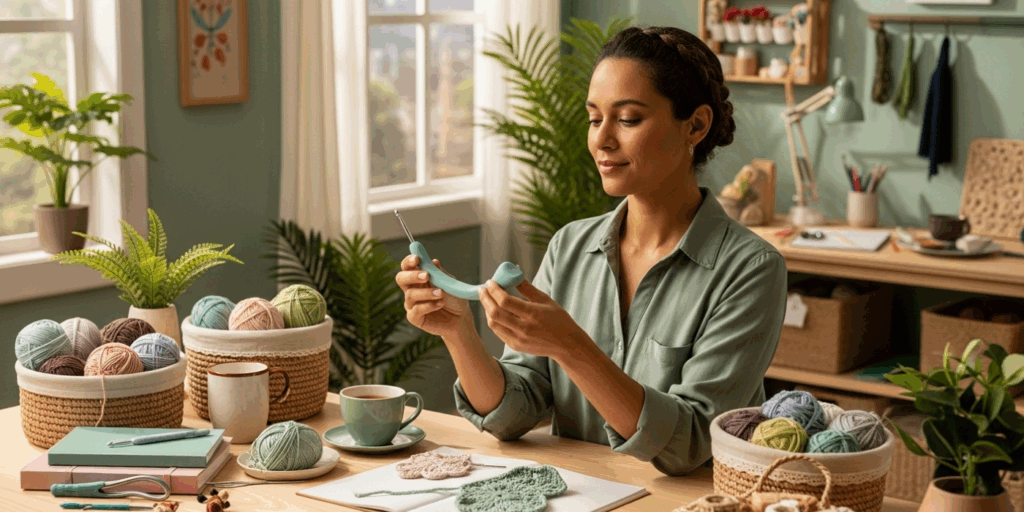
Here’s something most people overlook: the shape of your hook’s handle matters just as much as its material.
Traditional hooks have a simple, straight shaft with a tapered head. But modern ergonomic hooks? They’re designed like pens. Curved. Contoured. Even slightly angled.
Why does this matter?
Imagine holding a spoon. If it’s straight, you have to twist your wrist to scoop. But if it’s curved to fit your hand? It feels natural. Crochet is the same. A straight hook forces your wrist into a constant, unnatural angle—especially if you’re doing tight stitches like amigurumi or lacework.
Ergonomic hooks solve this. Many have rounded, wider handles that distribute pressure across your palm instead of pinching your thumb and fingers. Others have slightly bent shafts that align your wrist with your forearm, reducing strain. Some even come with thumb rests or built-in grips molded to the shape of your hand.
I spoke with a physical therapist who specializes in hand injuries among crafters. She told me, “We see so many crocheters with tendonitis because they’re using tools that don’t support their anatomy. It’s like typing on a keyboard that’s tilted wrong for 10 hours a day.”
The good news? Ergonomic hooks are more accessible than ever. Brands like Tulip, Clover, and Furls offer lines specifically designed for comfort. The Furls Streamline, for example, has a gentle curve and a soft grip that feels like it was custom-molded for your hand.
You don’t need to spend $50 to get one, either. The Clover Amour hook—a budget-friendly favorite—has a soft rubber grip and a balanced weight that makes it feel luxurious without the luxury price tag.
Try this simple test: Hold your hook like you’re about to make a stitch. Now, relax your shoulders. Can you do it without tensing your thumb or curling your wrist? If not, it’s time to try a different shape.
Your hands weren’t built for the same grip as your grandma’s 1970s aluminum hook. It’s not about being weak—it’s about being smart.
Finding Your Perfect Grip: A Personal Journey
Here’s the truth: there’s no “best” hook. Only the best for you.
I used to think I needed the thinnest, sharpest hook possible to get clean stitches. I’d buy hooks based on reviews alone—until I ended up with a drawer full of unused tools, my fingers sore and my motivation fading.
Then I tried something different: I let my hands decide.
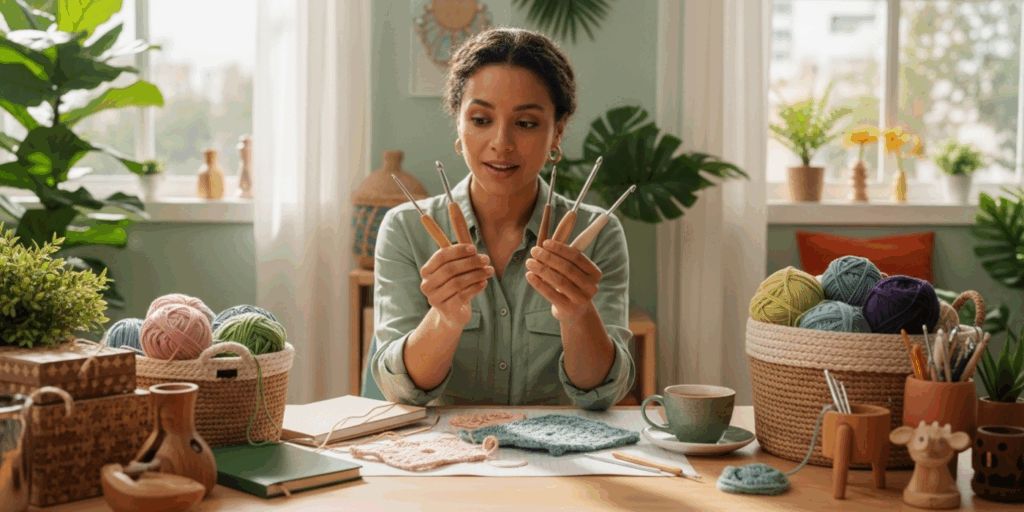
I started with a simple experiment. I took five hooks—wood, plastic, aluminum, silicone, and bamboo—and crocheted the same 10-row swatch with each one. I timed how long I could go before my hand hurt. I noted which one felt “invisible”—like it wasn’t even there.
The winner? A bamboo hook with a slight curve and a matte finish. It didn’t look fancy. It wasn’t the most expensive. But after 45 minutes, my hand felt relaxed. My stitches were even. I didn’t even notice I was holding it.
That’s the magic.
Your ideal hook isn’t about trends or aesthetics. It’s about how it feels in your hand after 20 minutes of steady use.
So here’s your challenge: Try before you buy.
- Visit a local yarn store and ask to test their demo hooks.
- Buy a small mixed pack online (many sellers offer 3–5 hook sets under $15).
- Pay attention to:
➤ Does it feel too light? Too heavy?
➤ Does your thumb cramp after 10 minutes?
➤ Does the hook spin in your fingers?
➤ Does it feel like an extension of your hand—or a foreign object?
And don’t be afraid to mix and match. I use a bamboo hook for blankets (long, slow rows), a silicone hook for amigurumi (tight, detailed work), and a metal hook for lace (when I want speed). One hook doesn’t do it all—and that’s okay.
Your hands are unique. Your hook should be too.
Beyond Comfort: How the Right Hook Boosts Your Creativity
Here’s something surprising: the right hook doesn’t just prevent pain—it unlocks creativity.
Think about it. When your hands are tired or sore, you stop crocheting. You put it down. You tell yourself, “I’ll do it tomorrow.” But tomorrow never comes.
But when your hook feels effortless? You lose track of time. You pick it up while watching TV. You crochet in bed. You start a new project just because you want to.
That’s the power of comfort.
I know a woman named Linda who started crocheting after her husband passed away. At first, she could only work for 15 minutes before her hands gave out. She felt guilty for not being “productive enough.” Then she found an ergonomic hook with a cushioned grip. Within weeks, she was making blankets for local shelters. “It didn’t just help my hands,” she said. “It helped my heart.”
When your tool supports you, your craft becomes healing—not a chore.
And let’s not forget the psychological effect of a beautiful tool. A well-designed hook feels like a gift to yourself. It says, You matter. Your time matters. Your hands matter.
That’s why so many crocheters collect hooks like they’re treasures. Not because they’re expensive—but because each one represents a moment of peace, focus, or joy.
So when you’re choosing your next hook, don’t just ask: Will this work?
Ask: Will this make me want to keep going?
Because the best hook isn’t the one that makes the prettiest stitch.
It’s the one that makes you want to stitch again tomorrow.
Practical Tips: How to Choose & Care for Your Hooks
Ready to upgrade? Here’s a quick, no-fluff checklist to guide your next hook purchase:
✅ Material Match:
- Arthritis or sensitive hands? → Bamboo, silicone, or wood
- Fast, smooth projects? → Aluminum or metal
- Budget-friendly starter? → Plastic (but avoid cheap, flimsy ones)
- Want luxury? → Glass or resin (for occasional use)
✅ Handle Shape:
- Look for contoured grips, wider barrels, or angled shafts.
- Avoid thin, straight handles if you crocheted for more than 30 minutes at a time.
✅ Weight Balance:
- Too light? You’ll feel like you’re fighting the hook.
- Too heavy? Your wrist will tire fast.
- Ideal: Feels balanced in your hand—like a well-made pen.
✅ Size Matters Too:
- Use the hook size your pattern recommends.
- But if you’re struggling with tension, try going up or down a size before changing your technique.
✅ Care Tips:
- Clean wooden hooks with a dry cloth. Avoid water.
- Wipe metal hooks with a microfiber cloth to prevent tarnish.
- Store hooks in a case or roll—never just tossed in a drawer. Scratches can snag yarn!
And here’s a bonus tip: Try a hook with a finger grip. Some come with removable silicone sleeves you can slide on and off. Great for testing comfort before committing.
You don’t need to buy 20 hooks at once. Start with one. Just one that feels right. Then, let your hands guide you from there.
The Quiet Revolution in Crochet Tools
What’s fascinating is how much crochet hook design has changed in the last decade.
Ten years ago, most hooks were mass-produced, cheap, and identical. Today? There’s a quiet revolution happening. Independent makers are crafting hooks with love—hand-sanded bamboo, custom resin grips, even hooks made from recycled ocean plastic.
Artisans like Furls and Knit Picks are listening to crocheters—not just selling to them. They’ve created communities where people share their pain points, and then design tools to fix them.
This isn’t just about craft. It’s about respect.
Respect for the time we spend making things with our hands.
Respect for the physical toll that creative work can take.
Respect for the fact that crochet isn’t just a hobby—it’s therapy, expression, legacy.
When you choose a thoughtful, ergonomic hook, you’re not just buying a tool.
You’re choosing to honor your body.
You’re choosing to keep creating.
You’re choosing to make more than blankets—you’re making peace.
Final Thoughts: Your Hands Deserve Better
You’ve poured hours into your projects. You’ve learned new stitches, corrected mistakes, and celebrated small wins. You’ve turned yarn into warmth, into gifts, into memories.
But have you ever stopped to ask: Do I truly care for the tool that lets me do this?
Most of us don’t. We treat our hooks like disposable items—until they break, until they hurt, until we give up.
But here’s the truth: your hands are your greatest asset. They’ve created beauty. They’ve brought comfort. They’ve connected you to others.
It’s time to treat them with the same care you give your yarn.
So next time you reach for your hook, pause. Feel it. Is it smooth? Is it comfortable? Does it feel like it was made for you?
If not… it’s time for a change.
Start small. Try one new hook. Notice how your hand feels after 15 minutes. Write it down. Share it with a friend. Tell someone in your local craft group what you discovered.
Because the best crochet projects aren’t the ones with the most stitches.
They’re the ones you made without pain.
The ones you kept coming back to.
The ones that reminded you: I am still here. And I still create.
Your Turn:
What’s your favorite crochet hook—and why? Did you find it by accident? Did it change your craft? Drop a comment below—I’d love to hear your story. And if you’ve ever switched to an ergonomic hook and felt the difference? Share this with someone who still struggles with hand pain. Sometimes, the best gift isn’t a blanket… it’s a better way to make one.
Happy crocheting. Your hands are waiting.

Luiza Santos is a passionate crochet and knitting enthusiast who finds joy in transforming simple yarn into meaningful, handmade creations. With a deep love for texture, color, and craftsmanship, she believes every stitch carries a story. Luiza brings warmth, creativity, and years of hands-on experience to everything she makes, inspiring others to discover the beauty of fiber arts.