Understanding yarn yardage is one of the most practical yet frequently overlooked skills in fiber arts. Whether you are knitting a delicate lace shawl or crocheting a chunky blanket, miscalculating yardage can lead to frustrating mid-project shortages or costly over-purchasing. Yarn yardage refers to the length of yarn contained within a specific unit—typically a skein, ball, or hank—and serves as the foundation for accurate project planning, yarn substitution, and budget management. In my years of consulting with independent yarn dyers and teaching workshops at fiber festivals across North America, I have seen countless makers abandon projects simply because they underestimated this critical measurement. Unlike weight alone, which varies dramatically by fiber density, yardage provides a universal metric for comparing materials. This guide delivers a comprehensive, experience-based exploration of yarn yardage and skein structures, empowering you to approach every project with confidence and precision. From decoding cryptic labels to mastering substitution math, you will gain actionable strategies that prevent waste and elevate your craftsmanship.
What This Topic Means for Crochet & Knitting Businesses
For handmade businesses, yarn yardage is not merely a technical detail—it is a direct driver of profitability, customer satisfaction, and brand reputation. In many crochet pattern businesses I have advised, inconsistent yardage calculations led to negative reviews when customers ran short of yarn despite purchasing the recommended amount. This erodes trust and increases support inquiries. Conversely, brands that provide precise yardage requirements—including buffer percentages for swatching and tension variations—build loyalty through reliability. Yarn shops, both online and brick-and-mortar, leverage yardage data to create curated project kits. For instance, a shop selling hand-dyed merino might bundle three 400-yard skeins specifically for a popular sweater pattern, eliminating guesswork for buyers. This reduces cart abandonment and increases average order value. From working with multiple crochet brands on inventory forecasting, I observed that businesses tracking yardage per product line could optimize stock levels more effectively than those relying solely on skein counts. A worsted-weight yarn with 200 yards per skein requires different purchasing strategies than a lace-weight with 1,000 yards per skein, even if both sell equally well by unit. Furthermore, transparent yardage communication mitigates returns. When a customer understands that a 50g skein of cotton contains fewer yards than a 50g skein of acrylic due to fiber density, they make informed choices. This educational approach positions your business as an authority rather than a mere vendor. Ultimately, mastering yarn yardage transforms operational efficiency and customer experience, turning a potential pain point into a competitive advantage.
Why This Strategy Works Especially Well in the Crochet Community
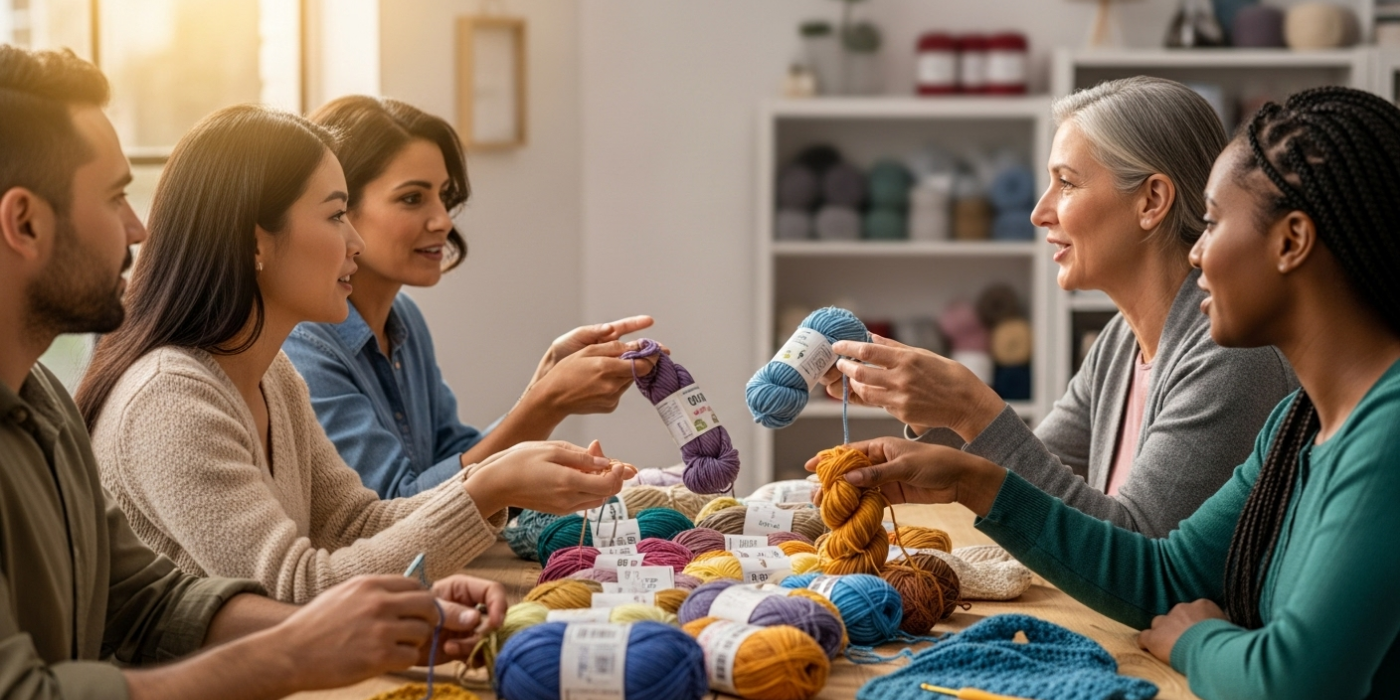
The crochet community particularly benefits from rigorous yardage awareness due to the craft’s inherent characteristics. Crochet typically consumes 25–30% more yarn than knitting for comparable projects because of its denser stitch structures and taller fabric height. A crocheted blanket using double crochet stitches will require significantly more yardage than a knitted garter stitch blanket of identical dimensions. This reality makes precise calculation non-negotiable for crocheters. Additionally, the prevalence of textured stitches—such as bobbles, popcorns, or filet crochet—further increases yarn usage unpredictably. In community forums and social media groups I monitor, yardage miscalculations rank among the top three reasons for abandoned projects, especially among intermediate makers attempting complex garments. Unlike knitting, where gauge swatches often focus on stitch count per inch, crocheters must also account for row gauge variations that directly impact vertical yardage consumption. Experienced designers often recommend that crocheters add a 15–20% yardage buffer for garments with shaping or colorwork, whereas knitters might use 10%. This community-specific nuance demands tailored education. Moreover, the rise of amigurumi and micro-crochet projects has heightened sensitivity to small yardage discrepancies. A single 50-yard shortfall can ruin a meticulously planned multi-part toy. By normalizing detailed yardage discussions—through pattern notes, video tutorials, and shop consultations—the crochet ecosystem fosters resilience against waste and frustration. This strategy works because it addresses a craft-specific vulnerability with practical, numbers-based solutions rather than vague assurances.
Materials, Tools, or Resources Needed
Accurate yardage management requires minimal but strategic tools. You do not need expensive equipment; consistency matters more than complexity. Essential items include a digital kitchen scale accurate to 0.1 grams, which allows you to weigh partial skeins and calculate remaining yardage using the formula: (remaining weight ÷ total skein weight) × total yards. A flexible measuring tape helps verify swatch dimensions when recalculating project needs. For label decoding, keep a magnifying glass handy—many indie dyers print critical yardage data in tiny fonts. Digital resources prove invaluable: Ravelry’s yarn database lets you cross-reference yardage across brands for substitution planning, while apps like YarnBuddy or StashBot enable digital inventory tracking by yardage rather than skein count. Physical tools include stitch markers to isolate swatch sections for precise measurement and a dedicated notebook for recording personal tension variations (e.g., “My half-double crochet uses 8% more yardage than pattern estimates”). From teaching inventory workshops, I emphasize that a simple spreadsheet tracking purchased yarn by fiber, weight, and total yards prevents duplicate purchases and identifies stash gaps. Crucially, invest in a consistent swatching methodology: always swatch in the actual project stitch pattern, washed and blocked as the finished item will be, since blocking can alter yardage consumption by 5–15%. These tools collectively transform yardage from an abstract concept into a measurable, manageable variable.
Yarn Types and Fiber Considerations
Fiber content dramatically influences yardage reliability and project outcomes. Natural fibers like wool, alpaca, and cotton exhibit significant yardage variation due to spinning techniques and moisture absorption. A 100g skein of superwash merino might yield 400 yards, while non-superwash merino of identical weight could provide only 350 yards due to tighter plying for durability. In my collaborations with Andean alpaca cooperatives, I observed that handspun fibers often have ±10% yardage variance between skeins—a reality commercial dyers mitigate through batch testing. Plant fibers introduce additional complexity: cotton and linen lack elasticity, causing tighter tension and higher yardage consumption in crochet. A cotton worsted-weight yarn may deliver 180 yards per 100g, whereas acrylic at the same weight provides 220 yards. This density difference means substituting cotton for acrylic without adjusting yardage calculations risks shortage. Blends require careful analysis; a 70% merino/30% nylon sock yarn typically offers more yards per gram than 100% merino due to nylon’s lightness, but the nylon content increases durability for high-wear items. Novelty yarns—bouclé, eyelash, or ribbon styles—defy standard yardage expectations. Their textured surfaces consume yarn inefficiently; a 50g skein of bouclé might contain only 60 yards versus 120 yards for smooth worsted weight. Always prioritize yardage over weight when substituting fibers. For example, replacing a 400-yard merino skein with a 400-yard cotton skein ensures comparable project length, even if weights differ. Understanding these fiber-specific behaviors prevents assumptions that lead to project failure.
Skill Level Breakdown
Beginner
Beginners should focus on foundational yardage literacy without overwhelming complexity. Start by always checking the yardage printed on yarn labels before purchasing—ignore weight alone. Practice calculating total project needs using simple formulas: (pattern yardage requirement ÷ yards per skein) = number of skeins needed, then round up. For a scarf requiring 300 yards with 150-yard skeins, purchase two skeins. Avoid substitutions initially; use the exact yarn specified in beginner patterns to build intuition. Swatch minimally—a 4×4 inch square suffices—but weigh it before and after blocking to observe yardage changes. Common beginner errors include trusting “one skein project” claims without verifying personal tension; always add one extra skein for small items. This stage builds confidence through repetition rather than advanced math.
Intermediate
Intermediate crafters must master substitution math and tension adaptation. Learn to calculate yardage per stitch: create a 10×10 stitch swatch, measure its dimensions, weigh it, then derive yards per square inch. Apply this to pattern schematics for custom sizing. Understand how stitch choice affects consumption—cables and lace alter yardage predictably. For example, a lace pattern might use 20% less yardage than stockinette for the same area. Practice substituting within yarn weight categories using yardage equivalence, not weight equivalence. If replacing a 200-yard worsted skein, select another worsted with similar yardage, not identical grams. Track personal tension deviations in a journal; many intermediates discover they consistently use 8–12% more yarn than patterns state. This data informs buffer additions for future projects.
Advanced
Advanced makers leverage yardage for innovation and efficiency. Calculate yardage requirements for fully custom designs using geometric area formulas combined with swatch data. For instance, a triangular shawl’s area = (base × height) ÷ 2; multiply by yards per square inch from swatching. Master gradient planning by dividing total project yardage into color segments (e.g., 30%/40%/30% for a three-color fade). Understand industrial considerations: commercial designers calculate yardage with ±3% tolerance for manufacturing, while handcrafters need ±10% buffers. Advanced substitution includes blending fibers—e.g., combining a 400-yard silk skein with a 350-yard wool skein by calculating weighted average yardage. Mentor others by teaching yardage literacy; this reinforces your expertise while strengthening community resilience against waste.
Step-by-Step Guide to Mastering Yarn Yardage
Follow this detailed methodology to eliminate yardage uncertainty in every project. I have refined these steps through years of pattern design and teaching.
Step 1: Decode the Label Completely
Examine every element of the yarn band. Locate the yardage (e.g., “218 yards / 200 meters”) and weight (e.g., “100g”). Note fiber content and recommended hook/needle size. Crucially, identify the dye lot number—matching lots prevents shade variation that complicates mid-project skein additions. If yardage is missing (common in hand-dyed yarns), weigh the skein and contact the dyer for specifications. Never assume standard yardage based on weight alone.
Step 2: Swatch with Project Realism
Create a swatch minimum 6×6 inches using your chosen stitch pattern. Work it exactly as the project will be constructed—including any color changes or texture elements. Wash and block the swatch identically to planned finishing methods. Measure the blocked dimensions precisely. Weigh the swatch on a digital scale. Calculate yards per square inch: (total swatch yards used ÷ swatch area in square inches). To find swatch yards used, weigh the entire skein before swatching, then weigh remaining yarn; the difference is swatch weight. Convert to yards using label data: (swatch weight ÷ total skein weight) × total skein yards.
Step 3: Calculate Total Project Yardage
For garments, break the project into geometric sections (front, back, sleeves). Calculate each section’s area in square inches using pattern schematics or measurements. Multiply each area by your yards-per-square-inch rate from Step 2. Sum all sections for total yardage. For non-geometric items like amigurumi, create a prototype of one component (e.g., a single leg), calculate its yardage, then multiply by component count. Always add a buffer: 10% for simple projects, 15% for colorwork or texture, 20% for garments requiring precise fit.
Step 4: Determine Skein Quantity
Divide total project yardage (including buffer) by yards per skein. Round up to the nearest whole number. Example: Project needs 1,250 yards with 200-yard skeins. 1,250 ÷ 200 = 6.25 → purchase 7 skeins. Verify dye lot consistency across all skeins before leaving the store or finalizing online orders. For gradient projects, calculate yardage per color segment first, then determine skeins per segment.
Step 5: Track Usage Mid-Project
Weigh your remaining yarn after completing major sections (e.g., after finishing a sweater body). Recalculate remaining yardage: (current weight ÷ original skein weight) × original yards. Compare against planned usage for remaining sections. If shortage appears likely, adjust immediately—simplify stitch patterns, reduce length slightly, or source matching yarn before tension memory fades. Document actual usage versus estimates in a project journal to refine future calculations.
Step 6: Manage Leftovers Strategically
Weigh leftover yarn and calculate remaining yards. Record this data in your inventory system with fiber and color details. Use small leftovers for swatches, embellishments, or miniature projects. Group partial skeins of similar yardage for future small-item planning. Never discard yarn under 20 yards—these accumulate for stuffing or embroidery accents.
This systematic approach transforms yardage from guesswork into a precise craft skill, preventing mid-project crises and reducing waste.
Common Mistakes and How to Avoid Them
Even experienced makers fall into predictable yardage pitfalls. The most frequent error is trusting pattern yardage estimates without personal verification. Pattern writers calculate based on their tension, which may differ significantly from yours. I have reviewed hundreds of patterns where the stated yardage assumed ideal tension, leaving tight crocheters short by 15–20%. Always swatch and recalculate. Another critical mistake involves substituting yarns by weight rather than yardage. Replacing a 100g skein of 400-yard fingering weight with a 100g skein of 300-yard worsted weight guarantees shortage, despite identical weights. Always match yardage first, then confirm weight category compatibility. Ignoring dye lots causes subtle but frustrating inconsistencies; a new dye lot added mid-sweater creates visible bands even with identical fiber content. Purchase all skeins simultaneously from the same dye lot whenever possible. For textured stitches, makers often underestimate consumption—popcorn stitches can increase yardage use by 30% versus single crochet. Swatch in the actual stitch pattern, not a basic stitch. Blocking miscalculations also sabotage projects; unblocked swatches misrepresent final dimensions, leading to incorrect yardage projections. Always block swatches before measuring. Finally, neglecting to account for seaming or edging consumes unexpected yardage. A blanket border might require 10–15% of total yarn. Include finishing elements in initial calculations. Prevention requires disciplined swatching, label literacy, and buffer inclusion—habits that become second nature with practice.
Advanced Tips and Professional Insights
Industry professionals employ nuanced strategies beyond basic calculations. When designing for publication, I always calculate yardage at three tension points: loose, standard, and tight. This generates a range (e.g., 1,100–1,350 yards) rather than a single figure, accommodating diverse makers. For colorwork, calculate yardage per color separately—stranding techniques consume more yarn than intarsia due to float tension. In stranded knitting, floats longer than 5 stitches should be tensioned carefully to avoid excess consumption. Experienced designers often recommend purchasing one extra skein of main color for complex projects, but for contrast colors used minimally, precise calculation prevents costly overbuying of expensive hand-dyed yarns. When working with hand-dyed gradients, request dyers to divide total yardage into specified segments (e.g., “400 yards each for three colors”) rather than equal weights, ensuring visual balance. For stash-busting projects, sort partial skeins by actual remaining yardage rather than original size—this reveals surprising combinations. A 75-yard remnant of lace weight might pair with a 125-yard remnant of fingering weight for a striped shawl if total yardage aligns. Professional dyers sometimes adjust plying to achieve target yardage within weight constraints; understanding this helps when substituting commercial yarns. Finally, document tension variations by project type: your tension for amigurumi may differ from garment work due to psychological factors (e.g., tighter tension for “precious” items). This meta-awareness refines future estimates.
Real-World or Hypothetical Examples
Consider a hypothetical but realistic scenario from my consulting work: A small-batch yarn dyer launched a new DK-weight merino blend labeled at 230 yards per 100g skein. A popular pattern required 1,150 yards for a women’s sweater. The dyer sold kits with five skeins (1,150 yards total), assuming exact match. However, customer feedback revealed 30% ran short. Investigation showed two issues: First, the dyer’s yarn had slightly tighter twist than the pattern’s original yarn, reducing effective yardage by 5%. Second, the pattern writer had calculated yardage at loose tension, while most customers worked tighter. The solution involved recalculating with a 12% buffer (1,150 × 1.12 = 1,288 yards) and selling six-skein kits (1,380 yards). Returns ceased, and customer satisfaction rose. Another example involves a crocheter substituting a discontinued yarn for a blanket. Original yarn: 300 yards per 150g skein. Substitute: 250 yards per 100g skein. Rather than matching weights (buying 150g of substitute), she matched yardage: needed 1,200 yards total. Original required four skeins (1,200 yards). Substitute required five skeins (1,250 yards) despite lower total weight (500g vs. 600g). This prevented shortage. In a third case, a knitter designing a lace shawl used swatch data to project yardage. Her 8×8 inch blocked swatch weighed 12g and used 45 yards. Shawl area: 1,200 square inches. Calculation: (45 yards ÷ 64 sq in) × 1,200 sq in = 844 yards needed. She purchased 900 yards (two 450-yard skeins), allowing buffer. The shawl finished with 30 yards remaining—efficient and stress-free. These examples demonstrate how methodical yardage management prevents real-world frustrations.
Customization and Adaptation Ideas
Yardage knowledge unlocks creative freedom. To resize a pattern, calculate the original garment’s total area in square inches using schematic measurements. Determine your swatch’s yards per square inch. Multiply new desired area by your rate. For example, enlarging a sweater from 36″ to 40″ bust increases area by approximately 24% (since area scales with square of linear dimensions). Apply this percentage to original yardage. For color substitutions, maintain total yardage while redistributing among hues—e.g., shift from 70% main/30% contrast to 50/50 by recalculating each color’s yardage proportionally. Texture adaptation requires swatching new stitches; a cable pattern might need 15% more yardage than stockinette, so adjust accordingly. For stash-busting, combine partial skeins by total yardage rather than weight. Three remnants totaling 350 yards can substitute for one 350-yard full skein if fiber and weight align. Gradient projects benefit from precise yardage division: for a 1,000-yard shawl with three colors, allocate 300/400/300 yards for smooth transition. When designing original pieces, sketch to scale and calculate geometric areas—circles, triangles, rectangles—then apply your personal yardage rate. This mathematical approach replaces guesswork with intentionality, enabling confident customization without fear of shortage.
Care, Maintenance, or Best Practices
Proper yarn storage preserves yardage integrity and prevents measurement errors. Store skeins in breathable cotton bags away from direct sunlight, which degrades fibers and alters weight through moisture loss. Never store yarn in plastic bags long-term; trapped humidity causes mildew that adds weight artificially, skewing future yardage calculations. For partial skeins, rewind into loose balls and label with fiber, dye lot, and remaining yards (calculated by weight). Weigh leftovers immediately after project completion while skein weight data remains fresh. Re-weigh stored yarn annually; natural fibers absorb atmospheric moisture, potentially increasing weight by 2–5% in humid climates, which would misrepresent remaining yardage if unaccounted for. When washing finished items, follow fiber-specific guidelines to prevent shrinkage that effectively “consumes” yardage through dimensional change. For example, superwash wool may grow 5% when blocked aggressively, altering perceived yardage efficiency. Always block swatches identically to final items to calibrate calculations accurately. For project continuity, photograph dye lots and label details before starting; if mid-project purchase becomes necessary, these references ensure accurate matching. Finally, maintain a digital or physical inventory log tracking each skein’s original yardage, weight, and current status—this system prevents duplicate purchases and identifies stash gaps strategically.
Monetization Opportunities
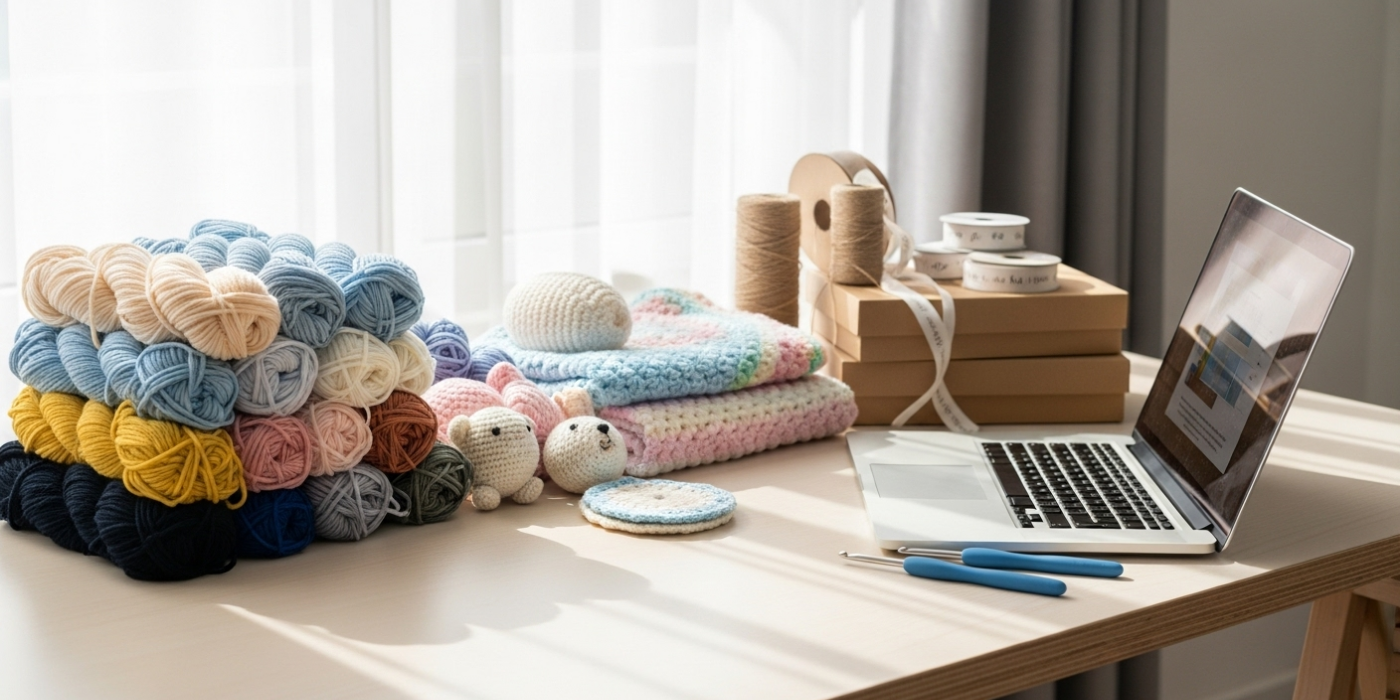
Understanding yarn yardage creates indirect monetization pathways for content creators and small businesses without aggressive sales tactics. Educational content—such as blog posts explaining substitution math or videos demonstrating swatch-based calculations—attracts organic traffic from makers seeking solutions. This audience trusts authority built through practical expertise, making them receptive to non-intrusive monetization like Google AdSense or affiliate links to recommended tools (e.g., digital scales). Pattern designers who include detailed yardage notes with buffer explanations command premium pricing and reduced support burden. Yarn shops can offer “yardage consultation” as a value-added service, either free with purchases or as a paid virtual appointment, positioning themselves as experts. For instance, a shop might charge $15 for a 20-minute session calculating yardage for a complex custom project. Workshops teaching yardage literacy—both online and in-person—generate revenue while building community loyalty. I have seen indie dyers increase kit sales by 40% simply by including yardage calculation cards with purchases. Crucially, monetization succeeds when framed as education: “Learn to calculate yardage” rather than “Buy our yarn.” This approach aligns with Google AdSense policies by providing genuine value first, with monetization as a natural byproduct of trust. Avoid promising specific income results; instead, emphasize skill-building that indirectly supports business growth through efficiency and customer satisfaction.
Frequently Asked Questions
What is the difference between a skein, ball, and hank of yarn?
A skein is a loosely twisted coil ready for immediate use. A ball is yarn wound into a spherical shape, often by the user from a skein. A hank is yarn coiled in a large loop that must be wound into a ball before use to prevent tangling. Yardage remains identical across forms for the same yarn; only the presentation differs.
How do I calculate yardage if my yarn label is missing?
Weigh the entire skein on a digital scale. Find an identical yarn online or in databases like Ravelry to obtain its standard yardage per weight (e.g., 200 yards per 100g). Calculate: (your skein weight ÷ standard weight) × standard yards. For example, a 120g mystery skein of typical worsted weight (200 yards/100g) contains approximately 240 yards.
Why does my yarn have fewer yards than the label states?
Hand-dyed or small-batch yarns often have natural variation due to plying inconsistencies. Dye absorption can also add minimal weight without adding length. Always purchase extra yardage for critical projects when using artisan yarns. Commercial yarns with significant shortfalls may be defective—contact the retailer.
Can I substitute yarns with different weights if yardage matches?
Not reliably. Yarn weight (thickness) affects drape, stitch definition, and gauge. Substituting a bulky 100-yard skein for a fingering 100-yard skein creates a completely different fabric. Match both weight category and yardage for successful substitution. Use tools like the Craft Yarn Council’s standard weight system as a guide.
How much extra yardage should I buy for a garment?
Add 10% for simple projects like scarves, 15% for textured stitches or colorwork, and 20% for fitted garments requiring precise shaping. This buffer accommodates tension variations, minor sizing adjustments, and unforeseen errors. For expensive yarns, swatch extensively to minimize buffer needs.
Does blocking change yarn yardage consumption?
Blocking does not alter the actual yarn length used, but it changes fabric dimensions, which affects perceived yardage efficiency. A swatch that grows 10% after blocking means your project will cover more area per yard than unblocked calculations suggest. Always block swatches before measuring to calibrate yardage projections accurately.
Conclusion
Mastering yarn yardage and skein dynamics transforms fiber arts from a guessing game into a precise, satisfying practice. This knowledge prevents the heartbreak of mid-project shortages, reduces waste in an increasingly eco-conscious crafting world, and empowers you to substitute materials confidently. Remember that yardage—not weight—is the universal currency of project planning, and personal tension always trumps pattern estimates. By integrating disciplined swatching, label literacy, and strategic buffering into your workflow, you build resilience against common pitfalls. The crocheters and knitters who thrive long-term are those who respect the mathematics behind the magic, using data to fuel creativity rather than constrain it. Start your next project with a swatch, a scale, and this guide beside you. Calculate deliberately, create joyfully, and never let yardage uncertainty halt your making journey again. Your future self—holding a finished object with yarn to spare—will thank you.

Luiza Santos is a passionate crochet and knitting enthusiast who finds joy in transforming simple yarn into meaningful, handmade creations. With a deep love for texture, color, and craftsmanship, she believes every stitch carries a story. Luiza brings warmth, creativity, and years of hands-on experience to everything she makes, inspiring others to discover the beauty of fiber arts.