Have you ever watched someone create a cozy blanket, a delicate scarf, or even a cute amigurumi toy with nothing but a hook and some yarn—and thought, “I wish I could do that”?
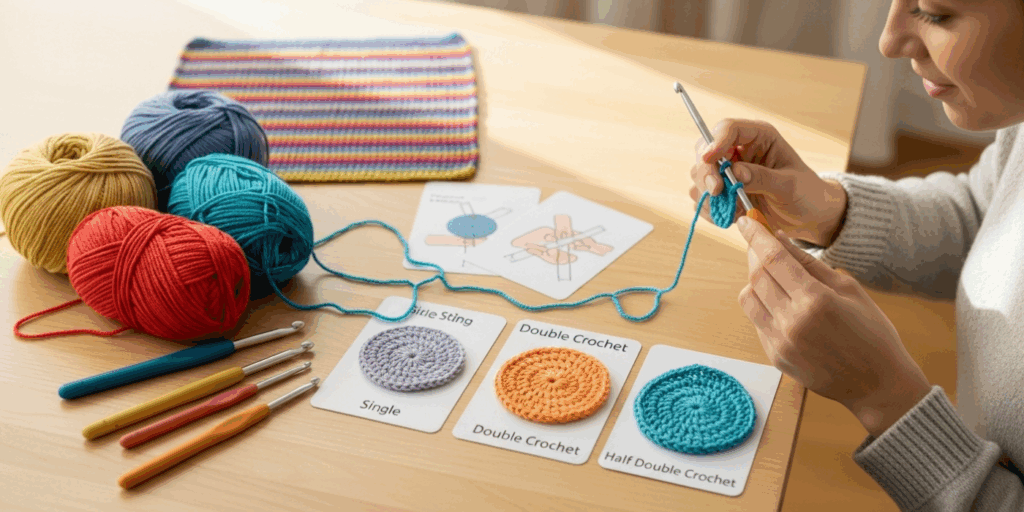
You’re not alone. Crochet isn’t just a craft—it’s a calming ritual, a creative outlet, and a way to make something beautiful with your own two hands. And the best part? You don’t need years of experience to start. In fact, the foundation of all crochet lies in just three stitches: the single crochet (sc), the half double crochet (hdc), and the double crochet (dc). Master these, and you unlock the door to thousands of patterns, projects, and possibilities.
Whether you’re picking up a hook for the first time or brushing up on forgotten skills, this guide is your friendly, no-pressure roadmap to understanding—and loving—these three essential stitches. We’ll break them down step by step, compare them visually and practically, share real-life project ideas you can start today, and even help you troubleshoot common mistakes. By the end, you won’t just know how to do them—you’ll know why they matter, and how to choose the right one for every project.
Let’s get hooked.
Why These Three Stitches Are Your Crochet Superpowers
Think of crochet stitches like words in a language. You don’t need a dictionary to have a conversation—you just need a few key phrases. The same goes for crochet. While there are dozens of stitches out there (treble, popcorn, shell, cluster… the list goes on), single, half double, and double crochet are the ABCs. They’re the building blocks of nearly every pattern you’ll ever encounter.
Here’s the truth: if you can do these three, you can make 80% of everything—from baby blankets to sweaters, dishcloths to hats. They’re the foundation. And the best part? They’re incredibly forgiving. Even if your tension isn’t perfect yet, these stitches still look great.
Let’s talk about why they’re so powerful.
- Single crochet creates a tight, sturdy fabric—perfect for bags, coasters, or anything that needs to hold its shape.
- Half double crochet is the “Goldilocks” stitch: not too tight, not too loose. It’s fast, has a lovely drape, and is a favorite for sweaters and scarves.
- Double crochet is the speed demon. It’s tall, open, and airy—ideal for lace, blankets, and projects where you want that classic “crochet look.”
These aren’t just random loops and pulls. Each stitch has a personality. And once you learn to recognize and use them intentionally, your projects will look more professional, fit better, and feel more satisfying to make.
Plus, learning them gives you confidence. When you understand the basics, you stop feeling intimidated by patterns. You start seeing them as instructions, not mysteries.
And guess what? You can learn all three in an afternoon. No fancy tools. No expensive yarn. Just your hands, a hook, and a ball of scrap yarn.
Single Crochet: The Steady, Reliable Friend
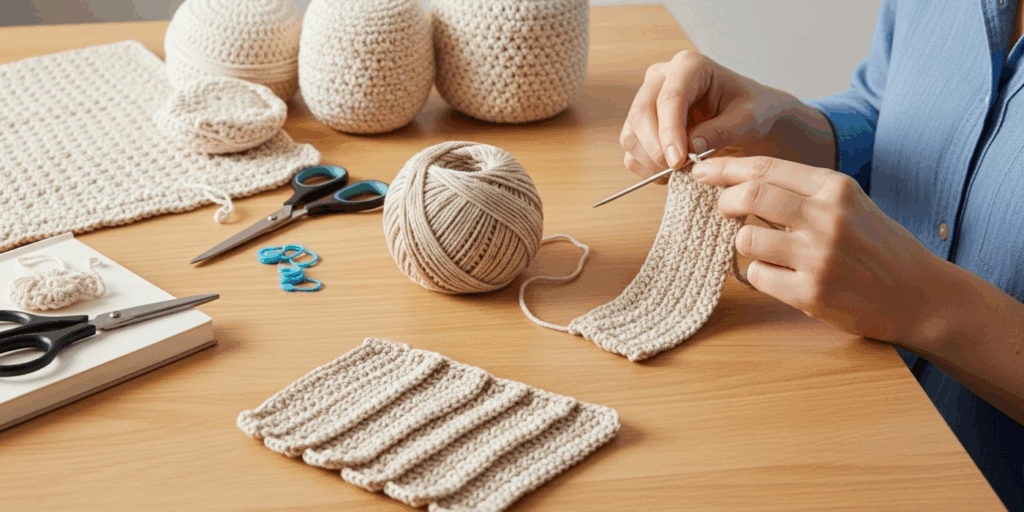
Let’s start with the OG: single crochet (sc).
If crochet were a family, single crochet would be the dependable older sibling—always there, never flashy, but absolutely essential. It’s the shortest of the three stitches, which means it creates a dense, firm fabric. That’s why you’ll find it in dishcloths, amigurumi, tote bags, and even the edges of afghans (to keep them from curling).
Here’s how to do it, step by step:
- Make a slip knot and chain the number of stitches your pattern calls for.
- Insert your hook into the second chain from the hook (this counts as your first sc).
- Yarn over (wrap the yarn over your hook from back to front).
- Pull the yarn through the chain—now you have two loops on your hook.
- Yarn over again and pull through both loops on your hook. One single crochet done!
Repeat. And repeat. And repeat.
You’ll notice something special as you work: single crochet is slow. And that’s okay. It’s meditative. It forces you to slow down, breathe, and focus. Many people find it therapeutic—perfect for unwinding after a long day.
Pro tip: If your edges are wobbly, check your turning chain. For single crochet, you usually chain 1 at the start of a new row, then turn. Don’t count that chain as a stitch—just use it to reach the right height.
Real-life win: I once made a set of six coasters using single crochet for my coffee table. They’re thick enough to absorb spills, washable, and each one took less than 20 minutes. My friends keep asking where I bought them. I just smile and say, “I made them.”
Single crochet may not be the flashiest, but it’s the stitch that builds trust—with your hands, your patience, and your creativity.
Half Double Crochet: The Sweet Spot Between Fast and Firm
Now, meet the quiet superstar: half double crochet (hdc).
Imagine you want something faster than single crochet but not as open as double crochet. You want texture without holes. Warmth without bulk. That’s hdc’s superpower.
It’s taller than single crochet but shorter than double—making it the perfect middle child. And here’s the magic trick: you yarn over before inserting your hook. That’s the difference. It creates a slightly tighter, more textured fabric with a lovely, soft drape.
Here’s how to do it:
- Chain your starting row (same as before).
- Yarn over (yes, before you insert the hook!).
- Insert your hook into the third chain from the hook (this counts as your first hdc).
- Yarn over again and pull through the chain—you now have three loops on your hook.
- Yarn over one more time and pull through all three loops. Done!
It’s one motion, three yarn overs, and boom—you’ve got a stitch that’s faster than sc and more compact than dc.
Why does this matter? Because hdc is the go-to stitch for sweaters, baby blankets, and scarves. It’s warm without being heavy, and it works up quickly. I once made a chunky hdc cowl in one evening—it took me less than 3 hours, and I’ve worn it every winter since.
Fun fact: Many designers use hdc in “granny squares” to give them a softer edge. It’s also excellent for colorwork because it doesn’t stretch as much as dc, so your stripes stay crisp.
And here’s a pro tip: if you’re struggling with tension, try using a slightly larger hook with hdc. It helps the fabric breathe without losing structure.
Think of hdc as the “just right” stitch—like Goldilocks’ porridge. Not too tight, not too loose. Just perfect for everyday projects that feel handmade, not homemade.
Double Crochet: The Speedy, Elegant Star
Now let’s talk about the celebrity of the crochet world: double crochet (dc).
This is the stitch you see in lace shawls, oversized afghans, and vintage doilies. It’s tall, open, and moves quickly. If single crochet is the steady walker and hdc is the brisk stroller, then dc is the confident jogger—gliding through rows with ease.
Here’s how to make it:
- Chain your starting row.
- Yarn over.
- Insert your hook into the fourth chain from the hook (this counts as your first dc).
- Yarn over again and pull through the chain—you now have three loops on your hook.
- Yarn over and pull through the first two loops.
- Yarn over one last time and pull through the remaining two loops. One double crochet complete!
Notice the rhythm? It’s a little more involved than sc or hdc, but once you get the flow, it becomes almost automatic. And the speed? Unbelievable. A blanket that might take 10 hours in single crochet can be done in 5–6 with double crochet.
Why use dc?
- For lightweight blankets (think spring throws).
- For lacy patterns (like filet crochet or openwork scarves).
- For projects where you want maximum warmth with minimal yarn (yes, that’s a real thing!).
I made my first dc blanket during a rainy weekend. I started with a simple grid of dc stitches and ended up with a cozy, cloud-like throw that now lives on my couch. My niece calls it “the hug blanket.” That’s the power of this stitch.
Watch out for this common mistake: Beginners often forget to chain 2 at the start of a row when working dc. That chain counts as your first stitch. If you skip it, your rows will slant. Always chain 2, turn, then work your first dc into the next stitch—not the chain.
And here’s a secret: dc is the stitch that makes crochet look “professional.” It’s the one people recognize. When you master it, you’ll feel like a true crafter.
Choosing the Right Stitch for the Right Project
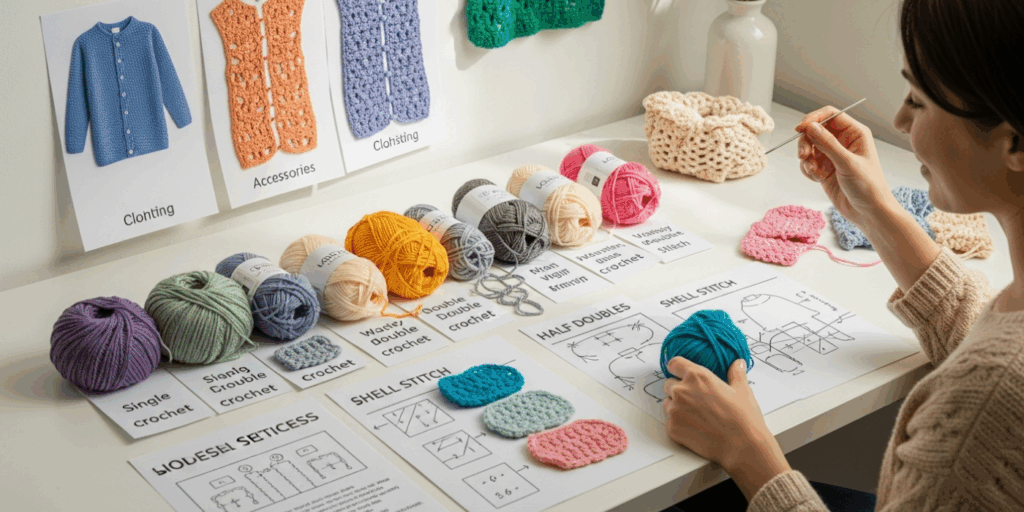
So now you know how to make all three. But how do you pick the right one?
Let’s break it down with real examples:
| Dishcloth | Single Crochet | Tight fabric traps dirt, holds shape, lasts forever |
| Baby Blanket | Half Double Crochet | Soft, warm, quick to make, no big holes |
| Winter Scarf | Double Crochet | Lightweight, airy, drapes beautifully, warms without bulk |
| Amigurumi Toy | Single Crochet | Keeps stuffing in, creates clean shapes |
| Lace Shawl | Double Crochet | Creates open, elegant patterns |
| Granny Square | Half Double Crochet (edges) | Gives a polished, finished look |
Here’s the golden rule: tightness = control. Openness = speed and drape.
Want something sturdy? Go sc.
Want something cozy and fast? Go hdc.
Want something elegant and breezy? Go dc.
And here’s the best part: you can mix them! Many patterns combine stitches to create texture. A scarf might start with hdc for warmth, then switch to dc for a lacy border. A blanket might have sc edging to keep it flat, with dc panels in the middle for visual interest.
Try this simple exercise: Make a 6-inch swatch of each stitch. Compare them side by side. Feel the difference in thickness, texture, and speed. You’ll start seeing patterns differently—not as intimidating instructions, but as creative choices.
Troubleshooting Common Mistakes (And How to Fix Them)
We’ve all been there: you’re halfway through a project, and suddenly your work looks uneven, bumpy, or too tight. Don’t panic. Most of these issues come from just a few simple mistakes.
Problem 1: My edges are crooked.
→ You’re adding or skipping stitches at the ends. Always count your stitches at the end of each row. Use a stitch marker to mark the first and last stitch of each row. It’s a game-changer.
Problem 2: My fabric is too tight.
→ You’re gripping the yarn too hard. Try relaxing your grip. Imagine you’re holding a bird—firm enough so it doesn’t fly away, but gentle enough so you don’t hurt it.
Problem 3: My stitches look messy.
→ You’re not inserting the hook in the same spot every time. Aim for the top two loops of the stitch below. Consistency is key.
Problem 4: My project is curling.
→ This usually happens with dc-heavy projects. Add a border of single crochet around the edges. It’ll lay flat instantly.
And if you’re unsure? Take a photo of your work. Compare it to a tutorial video. Sometimes seeing it helps more than reading it.
Remember: mistakes aren’t failures—they’re lessons. Every crocheter has made them. Even the pros.
The Joy of Making Something With Your Hands
There’s something deeply human about creating with your hands.
In a world of screens, algorithms, and instant gratification, crochet is a quiet rebellion. It asks you to slow down. To be present. To commit to one loop, one stitch, one row at a time.
When you make a blanket for a newborn, you’re not just using yarn—you’re weaving in love.
When you crochet a hat for a friend going through a tough time, you’re stitching in care.
When you make a simple coaster for your kitchen table, you’re creating beauty out of nothing.
These three stitches—single, half double, and double—are your tools for that kind of magic.
You don’t need to be perfect. You don’t need to make a masterpiece on day one. You just need to show up. Pick up your hook. Yarn over. Pull through.
And then do it again.
Ready to Start? Here’s Your First Simple Project
Want to put this all together? Here’s a beginner-friendly project you can finish in under 2 hours:
“The Cozy Rectangle Scarf”
- Yarn: Medium weight (worsted) yarn in your favorite color
- Hook: Size I/9 (5.5 mm)
- Stitches: Half double crochet (hdc)
- Chain: 20
- Row 1: Hdc in the third chain from hook, then hdc in each chain across. (18 hdc)
- Row 2–30: Chain 2, turn. Hdc in each stitch across.
- Finish: Fasten off. Weave in ends.
That’s it. You’ve made a scarf. And you did it with one stitch. Imagine what you’ll make next.
Final Thoughts: Your Hands Are Your Greatest Tool
You didn’t need a class. You didn’t need expensive supplies. You just needed curiosity—and a little patience.
Single crochet taught you discipline.
Half double crochet taught you balance.
Double crochet taught you flow.
Together, they’re more than stitches. They’re a language. A practice. A quiet joy.
So go ahead—grab that yarn you’ve been saving. Pull out that hook you haven’t used since last winter. Start with a chain of ten. Make one stitch. Then another.
You don’t have to be great. You just have to begin.
And when you do? You’ll be part of a centuries-old tradition of makers, dreamers, and healers—all connected by a hook, some yarn, and the simple act of creating.
What will you make first?
Drop a comment below—I’d love to hear your project ideas. And if this helped you, share it with someone who’s been wanting to try crochet but didn’t know where to start.
Your next masterpiece is just one stitch away.
Luiza Santos is a passionate crochet and knitting enthusiast who finds joy in transforming simple yarn into meaningful, handmade creations. With a deep love for texture, color, and craftsmanship, she believes every stitch carries a story. Luiza brings warmth, creativity, and years of hands-on experience to everything she makes, inspiring others to discover the beauty of fiber arts.