
You’ve spent hours crocheting cozy blankets, adorable amigurumi, and delicate lace shawls—late into the night, with a cup of tea beside you, fingers moving almost on autopilot. You’ve gifted them to friends, posted pictures online, and heard whispers like, “You should sell these!”
What if that whisper was more than just a compliment? What if your crochet hobby could become your full-time income?
You’re not alone. Millions of crafters around the world are turning their love of yarn and hooks into thriving businesses—some earning thousands a month, others building brands that inspire communities. And guess what? You don’t need a degree in business, a huge budget, or even a fancy studio to start. All you need is your hands, your creativity, and the willingness to take that first small step.
In this guide, we’ll walk you through the real, practical steps to transform your crochet passion into a profitable business—without losing the joy that made you fall in love with it in the first place. We’ll cover how to price your work fairly, where to sell it, how to build a loyal customer base, and how to scale without burning out. Plus, we’ll share real stories from crocheters who did exactly that—and how you can too.
Let’s turn those handmade treasures into a business that pays the bills… and maybe even funds your next yarn haul.
1. Your Crochet Isn’t Just a Hobby—It’s a Product
Let’s start with a simple truth: Just because you love something doesn’t mean people will automatically pay for it.
Too many crafters make beautiful items but struggle to sell them—not because their work isn’t good, but because they don’t treat it like a product. They think, “I spent 10 hours on this blanket. It’s worth $20.” But if your materials cost $15 and you’re paying yourself minimum wage for those 10 hours? You’re actually losing money.
The key? Value-based pricing.
Think of your crochet like a handcrafted coffee. A barista doesn’t charge $1 for a latte because milk and beans cost $0.50. They charge for the skill, the time, the artistry, the experience. Your crochet is the same.
Here’s how to price your work properly:
- Cost of materials (yarn, stuffing, beads, labels, packaging)
- Your time (be honest—how long does it really take? Track it for a week)
- Overhead (your electricity, internet, Etsy fees, shipping supplies)
- Profit margin (at least 30–50% above your total costs)
A simple formula:
Total Cost + (Total Cost × 0.5) = Minimum Price
Example:
Materials: $12
Time: 8 hours × $15/hour = $120
Overhead: $5
Total: $137
Minimum price: $137 + $68.50 = $205.50
That’s right—your handmade unicorn might be worth over $200. And people will pay for it—if it’s presented with confidence.
Real story: Sarah, a mom in Ohio, started selling crocheted baby booties on Etsy. At first, she priced them at $12. After learning to value her time, she raised them to $45. Sales didn’t drop—they tripled. Why? Because customers sensed quality and care. They weren’t buying a bootie. They were buying a memory.
Your crochet isn’t just thread and loops. It’s emotion. It’s tradition. It’s a piece of you. Price it like it matters.
2. Where to Sell: Beyond the Garage Sale
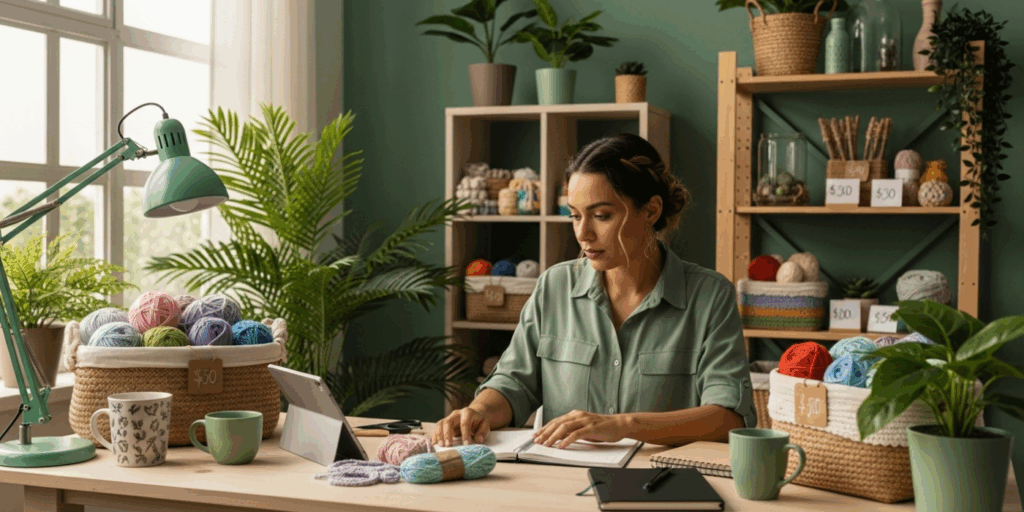
You’ve got your pricing figured out. Now, where do you actually sell?
Forget the idea that you need a website or a storefront. The internet has leveled the playing field. Here are the top 4 places to start selling your crochet—right now:
1. Etsy – The #1 marketplace for handmade goods. Over 90 million active buyers. Perfect for beginners.
→ Pro tip: Use keywords like “handmade crochet baby blanket,” “custom amigurumi,” or “boho crochet shawl.” Your title and tags matter more than you think.
2. Instagram & TikTok – Visual platforms built for crafters. Post a 15-second timelapse of you crocheting a flower, add soothing music, and watch the likes roll in.
→ Real example: @CrochetWithLila grew to 120K followers by posting “Day in the Life” reels. She now sells digital patterns and gets 50+ orders weekly.
3. Local Markets & Craft Fairs – Don’t underestimate the power of face-to-face connection. People love touching handmade items. Set up a small booth at a weekend market. Bring a QR code to your Etsy shop.
→ Bonus: Offer a free mini-pattern with every purchase. Instant email list builder!
4. Your Own Simple Website – Use Shopify, Squarespace, or even Gumroad. It looks professional, and you keep 100% of the profit (no Etsy fees).
→ Start small: One page. One product. One story. “Meet Mia, the Crochet Octopus Who Hugs Back.”
Don’t try to do all four at once. Pick one platform. Master it. Then expand.
And here’s the secret most beginners miss: People don’t buy products. They buy stories.
Your Instagram post isn’t just showing a hat. It’s showing the quiet afternoon you made it while your baby napped. The hat that kept your sister warm during chemo. That’s what sells.
3. Turn Patterns into Passive Income (Yes, Really)
Here’s the game-changer most crocheters overlook: digital patterns.
Imagine this: You spend 10 hours designing a stunning lace shawl pattern. You sell it once for $8. Then you sell it again. And again. And again. For months. For years. While you sleep.
That’s passive income.
Digital patterns cost you almost nothing to produce after the initial work. No shipping. No inventory. No returns. Just upload once, sell forever.
And the demand? Massive.
- Etsy sells over 10 million crochet patterns annually.
- Ravelry (the crochet community hub) has 10 million+ users searching for patterns daily.
- Google Trends shows “crochet pattern” searches have grown 140% in the last 5 years.
Start simple:
→ Pick one of your most-loved creations.
→ Write clear, step-by-step instructions (include photos or video links).
→ Format it as a clean PDF (Canva has free templates).
→ List it on Etsy for $5–$12.
You don’t need to be a professional designer. You just need to document what you already know.
Real success story: Maria, a retired teacher from Florida, started sharing free patterns on her blog. One day, she turned her “Cozy Cloud Blanket” into a $7 pattern. Within 6 months, she earned over $12,000—just from that one pattern. She now sells 15+ designs and makes $3,000/month passively.
You can do this too.
Bonus idea: Bundle patterns. “5 Baby Booties in One Set” or “Summer Crochet Collection.” Bundles increase perceived value—and sales.
4. Build a Community, Not Just a Customer List
Here’s the truth: Customers come and go. Communities stay.
If you want to build a business that lasts—not just a side hustle that fades—you need to connect with people on a deeper level.
How?
- Respond to every comment on Instagram.
- Share behind-the-scenes clips: your messy yarn basket, your failed first attempt at a dragon, your 3 a.m. crochet session.
- Create a freebie (like a “Beginner’s Crochet Cheat Sheet”) in exchange for emails.
- Start a Facebook Group called “Crochet & Coffee” or “Yarn & Kindness.” Let people share their projects, ask questions, and cheer each other on.
When people feel seen, they don’t just buy—they become your biggest fans.
Case in point: Lisa, a crochet teacher in Texas, started a weekly “Crochet Challenge” on Instagram. Every Monday, she posted a new stitch tutorial. People posted their versions. She featured them every Friday. Within 8 months, her email list grew to 8,000. She now runs online courses that sell out in hours.
You don’t need to be perfect. You just need to be real.
And here’s the magic: People support people they know, like, and trust.
Your authenticity is your superpower.
5. Scale Without Burning Out (The Real Secret)

You’ve made your first sale. You’ve got 10 followers. You’re excited. But then… you get 50 orders in one week.
Uh oh.
Suddenly, you’re working 14-hour days, skipping meals, crying over tangled yarn. Sound familiar?
Scaling doesn’t mean doing more. It means working smarter.
Here’s how to grow without burning out:
✅ Batch your work.
Set aside one day a week to make 5 identical blankets. Or 10 amigurumi. Efficiency = sanity.
✅ Outsource the boring stuff.
Hire a virtual assistant for $5/hour on Fiverr to pack orders or update your Etsy listings. Free up your brain for creativity.
✅ Limit your product line.
Don’t try to make everything. Focus on 3–5 bestsellers. Master them. Then expand slowly.
✅ Say no to custom orders (at first).
Custom requests are time-suckers. Instead, offer “Limited Edition” pieces with fixed designs. You control the workload.
✅ Schedule rest.
Put “No Crochet Sundays” on your calendar. Your creativity needs space to breathe.
Remember: Your business should serve your life—not consume it.
One of my favorite crocheters, Jess from Oregon, made $18,000 last year… and only worked 12 hours a week. How? She sold high-ticket custom pieces (like wedding shawls) and digital patterns. She hired a part-time packer. She posted 3x a week. And she took Fridays off to hike.
That’s the dream.
6. The Ripple Effect: Why This Matters More Than Money
Let’s pause for a moment.
This isn’t just about making money.
It’s about reclaiming your time.
It’s about proving to yourself that your hands, your creativity, your quiet hours—matter.
It’s about inspiring other women (and men!) who feel invisible in a world that values speed over soul.
When you turn crochet into a business, you’re not just selling blankets.
You’re saying: I am worthy of being paid for what I love.
You’re showing your kids that passion can pay the bills.
You’re giving someone else a handmade gift that says, “I see you.”
There’s a woman in Nigeria who sells crochet headwraps to support her three children.
There’s a veteran in Colorado who crochets to heal from PTSD—and now teaches classes at his local VA center.
There’s a college student in Canada who pays her tuition with Etsy sales.
Your crochet has power.
It doesn’t need to go viral. It doesn’t need to be perfect.
It just needs to be yours.
And when you choose to share it with the world—on your terms—you change not just your life… but the lives of everyone who receives your work.
Conclusion: Your Hook, Your Future
Let’s recap what we’ve covered:
- You’re not “just a hobbyist”—you’re a creator with real, marketable value.
- Price your work fairly—not cheaply.
- Start selling on Etsy, Instagram, or local markets. One platform. One step.
- Turn your favorite pattern into a digital product. Let it earn while you sleep.
- Build a community, not just a customer list. Authenticity sells.
- Scale smart: batch, outsource, say no, rest.
- Remember: This isn’t just about money. It’s about meaning.
You don’t need to quit your job tomorrow.
You don’t need to buy a fancy camera.
You don’t need to be “ready.”
You just need to make one more thing.
List it.
Share it.
Believe in it.
The world is waiting for your next stitch.
So—what will you create next?
👉 Your Turn:
What’s the one crochet item you’ve always wanted to sell—but haven’t yet?
Drop it in the comments below. I’ll reply with a free tip to help you get started.
And if this article sparked something in you?
Share it with a friend who’s also stitching away in silence.
Because sometimes, the greatest gift we give each other isn’t a blanket…
…it’s the courage to believe we’re worthy of being seen.
Now go on. Grab your hook.
The world needs your yarn—and your heart.

Luiza Santos is a passionate crochet and knitting enthusiast who finds joy in transforming simple yarn into meaningful, handmade creations. With a deep love for texture, color, and craftsmanship, she believes every stitch carries a story. Luiza brings warmth, creativity, and years of hands-on experience to everything she makes, inspiring others to discover the beauty of fiber arts.