Introduction
Have you ever finished a crochet project only to find it looks nothing like the photo in the pattern? The stitches are correct, your gauge was spot-on, and you followed every instruction—but something still feels “off.” Often, the culprit isn’t your technique… it’s your yarn. More specifically, it might be the ply of your yarn.
If you’ve ever wondered why two yarns labeled “worsted weight” can behave so differently, or why your scarf pills after just a few wears, understanding yarn ply could be the key. Ply—the number of individual strands twisted together to form a single yarn—plays a surprisingly powerful role in texture, durability, stitch definition, and even how your finished piece drapes.
In this article, we’ll break down what yarn ply really means, how it impacts your crochet projects, and how to choose the right ply for everything from cozy blankets to delicate lace shawls. Whether you’re a beginner just learning to read yarn labels or an experienced crocheter looking to level up your material choices, this guide will help you make smarter, more intentional decisions—so your next project turns out exactly the way you envision it.
Let’s unravel the truth about ply, one strand at a time.
1. What Is Yarn Ply? The Basics Every Crocheter Should Know
At its core, ply refers to the number of individual strands (or “plies”) twisted together to create a single yarn strand. For example:
- A 2-ply yarn consists of two thin strands spun together.
- A 4-ply yarn has four strands, and so on.
But here’s the twist (pun intended): ply doesn’t always directly equal thickness. While it used to be a reliable indicator of yarn weight—especially in the UK, where “4-ply” once meant fingering weight—that’s no longer the case globally. Today, a bulky yarn could be 2-ply, and a fine lace yarn could be 8-ply, depending on how thick each individual strand is.
So why does this matter for crocheters?
Because ply affects how the yarn behaves in your hands and on your hook. A tightly plied yarn holds its shape better and shows off stitch texture clearly. A loosely plied or single-ply yarn may bloom (soften and spread out) after washing, creating a more rustic, cozy feel—but it can also pill more easily or split during crocheting.
Think of it like rope: a single thread tears easily, but twist several together, and you get strength and stability. The same principle applies to yarn.
Understanding ply helps you anticipate how your yarn will perform—before you even make your first chain.
2. Single-Ply Yarn: Softness with a Trade-Off
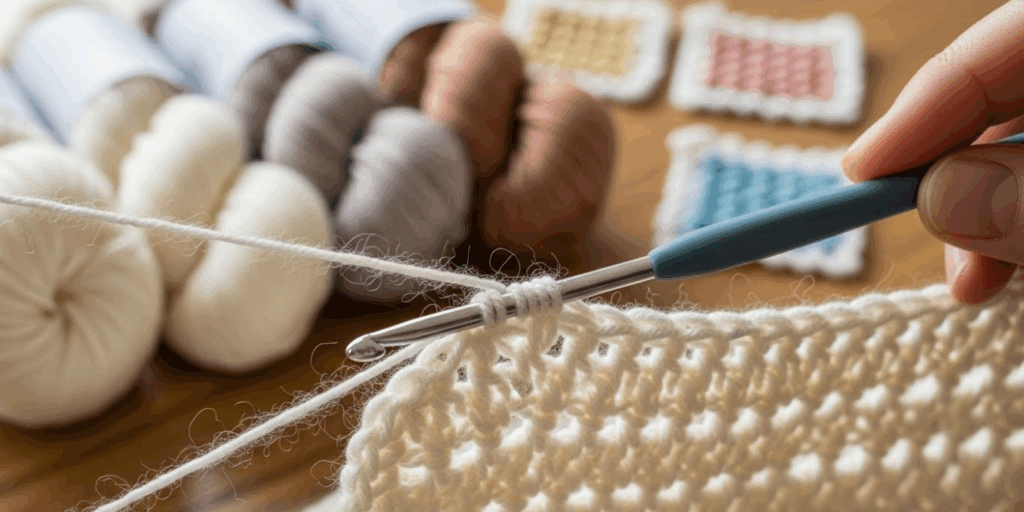
Single-ply yarns—made from just one continuous strand—have surged in popularity thanks to their ultra-soft, squishy feel and dreamy drape. They’re often used in luxury yarns made from merino wool, alpaca, or blends designed for cowls, shawls, and baby blankets.
Pros of single-ply yarn:
- Incredibly soft and cozy
- Beautiful halo (that fuzzy, ethereal glow around the yarn)
- Creates a smooth, fluid fabric perfect for drapey garments
But there are downsides:
- Prone to pilling, especially in high-friction areas (like underarms or bag straps)
- Can split easily on the hook if you’re not careful
- Less stitch definition—cables or textured stitches may look blurred
Practical tip: If you love the feel of single-ply but worry about durability, reserve it for low-wear projects like scarves, wall hangings, or decorative pillows. And always use a smooth, rounded hook (like bamboo or tulip-shaped aluminum) to reduce snagging.
I once crocheted a stunning merino wrap in single-ply yarn—only to find it pilling after two wears. Now, I save those gorgeous skeins for special pieces I’ll handle gently. Know your project’s purpose, and match your ply accordingly.
3. Multi-Ply Yarns (2-Ply and Up): Strength, Definition, and Versatility
Most commercial yarns today are multi-ply—typically 2, 3, 4, or even more plies. These yarns are twisted together with enough tension to create a balanced, durable strand that resists splitting and holds its shape beautifully.
Here’s how ply count influences your work:
- 2-ply yarns often have a slightly oval cross-section, which can create subtle ridges in your fabric. They’re common in sport and DK weights and offer a nice balance of softness and structure.
- 3-ply yarns are more rounded, leading to smoother, more even stitches. Many worsted-weight yarns fall into this category.
- 4-ply and higher tend to be very stable, with excellent stitch definition—ideal for cables, bobbles, or any textured pattern where you want every detail to pop.
Real-world example: Compare a 4-ply cotton yarn (like Lion Brand 24/7 Cotton) with a single-ply cotton. The 4-ply will give you crisp granny squares for a market bag, while the single-ply might stretch out and lose shape under weight.
Additionally, higher-ply yarns are less likely to pill because the twist holds fibers in place. That makes them great for high-use items like dishcloths, tote bags, or children’s wear.
So if your project needs to last, hold its shape, or show off intricate stitches, lean toward multi-ply options.
4. How Ply Affects Gauge, Drape, and Washability
You might be surprised to learn that ply can subtly shift your gauge, even when two yarns are labeled the same weight.
Why? Because multi-ply yarns are often denser and less compressible than single-ply. A 4-ply worsted yarn may produce slightly tighter stitches than a single-ply worsted of the same diameter, simply because the plies resist flattening under tension.
This impacts:
- Drape: Single-ply = fluid and flowy; multi-ply = structured and firm.
- Washability: Tightly plied yarns hold up better in the washing machine. Single-ply may felt or bloom unpredictably.
- Elasticity: Multi-ply yarns often have more “memory”—they bounce back after stretching, which is crucial for hats or socks.
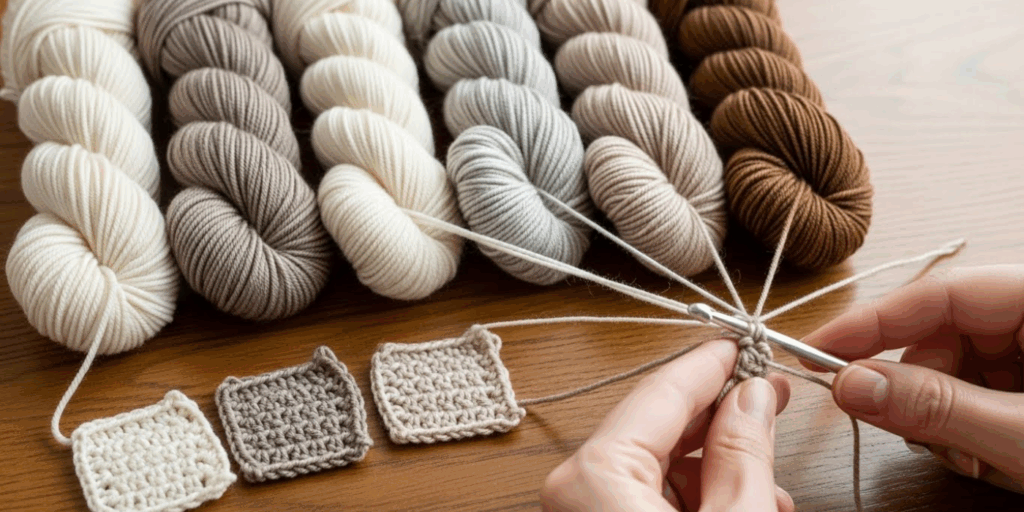
Try this test: Swatch the same pattern in a single-ply and a 4-ply yarn of the same weight. Wash and block both. You’ll likely see differences in size, texture, and softness. That’s ply in action!
Pro tip: Always check the yarn label for care instructions—and when in doubt, hand-wash projects made with delicate or single-ply yarns. Your finished piece will thank you.
5. Choosing the Right Ply for Your Project: A Simple Decision Guide
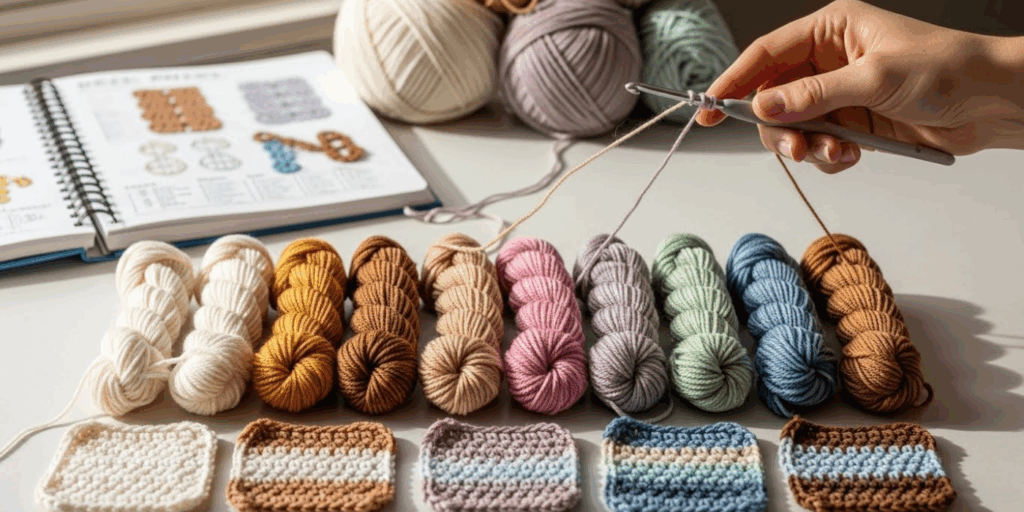
Still unsure which ply to choose? Ask yourself these three questions:
- What is the purpose of this item?
- High-wear (bags, socks, kids’ clothes) → Go for 3+ ply.
- Decorative or low-friction (shawls, wall art, stuffed animals) → Single-ply is fine.
- Do I need clear stitch definition?
- For cables, lace, or textured stitches → Choose 3- or 4-ply.
- For a soft, blended look (like a cozy blanket) → Single- or 2-ply works beautifully.
- How important is durability vs. softness?
- Prioritize softness? Lean single-ply.
- Need longevity? Choose multi-ply.
Bonus insight: Some yarns hide their ply info, especially indie brands. In that case, examine the yarn closely:
- Can you see or gently pull apart individual strands? If yes, it’s multi-ply.
- Does it look like one smooth rope with no visible separation? Likely single-ply.
Also, don’t assume “more plies = better.” A well-spun 2-ply can outperform a poorly twisted 6-ply. Quality of twist matters as much as count.
6. Common Myths About Yarn Ply—Busted!
Let’s clear up a few persistent misconceptions:
❌ Myth #1: “Ply equals yarn weight.”
✅ Truth: Ply and weight are related but not the same. A 2-ply bulky yarn exists—and so does an 8-ply lace yarn. Always check the standard yarn weight symbol (0–7) on the label, not just the ply.
❌ Myth #2: “Single-ply yarn is low quality.”
✅ Truth: Many luxury, artisanal yarns are single-ply by design. It’s a textural choice, not a sign of inferiority.
❌ Myth #3: “You can’t crochet with single-ply yarn.”
✅ Truth: You absolutely can! Just use a slightly larger hook than recommended to reduce tension and avoid splitting.
Understanding these nuances helps you shop smarter and avoid frustration. Ply is a tool—not a rule.
7. Ply Around the World: Why Labels Can Be Confusing
Here’s where things get tricky: ply labeling isn’t universal.
- In the UK and Australia, terms like “4-ply” and “DK” are still used to describe yarn weight categories (e.g., “4-ply” ≈ fingering weight).
- In the U.S., the Craft Yarn Council’s standardized system (Lace, Super Fine, Fine, Light, Medium, Bulky, etc.) is more common—and ply is rarely mentioned on mass-market labels.
- European yarns often list meters per 50g instead of ply or weight.
What should you do?
Ignore the word “ply” on the label if you’re in the U.S. Instead:
- Check the yarn weight number (0–7)
- Look at suggested hook size
- Read the meters/yards per skein
When shopping online for international yarns, use a yarn converter tool or compare meterage to a yarn you already know.
This global inconsistency is why swatching is non-negotiable—no matter how confident you feel in your yarn choice.
Conclusion
Understanding yarn ply isn’t about memorizing technical terms—it’s about learning to “read” your yarn like a seasoned crocheter. Ply influences how your fabric feels, how long it lasts, and how faithfully it reflects your stitchwork. By paying attention to whether your yarn is single-ply or multi-ply, you gain creative control over texture, drape, and durability.
Remember:
- Single-ply = soft, drapey, dreamy—but handle with care.
- Multi-ply = durable, defined, reliable—for everyday wear and intricate designs.
The next time you pick up a skein, take a moment to examine its structure. Give it a gentle tug. Notice how it feels on your hook. That small act of curiosity can transform your projects from “almost right” to “exactly perfect.”
Now it’s your turn: What’s your favorite ply to work with—and what project taught you its true character? Share your story in the comments below! Whether you swear by 4-ply cotton for dishcloths or live for the squish of single-ply merino, your experience helps build a wiser, more connected crochet community.
Happy stitching—and may your yarn always behave exactly as you hope!

Luiza Santos is a passionate crochet and knitting enthusiast who finds joy in transforming simple yarn into meaningful, handmade creations. With a deep love for texture, color, and craftsmanship, she believes every stitch carries a story. Luiza brings warmth, creativity, and years of hands-on experience to everything she makes, inspiring others to discover the beauty of fiber arts.